Watch live: tonight at 20:00 CET, the semi-final of “Natsionalna Selektsiya 2026” begins, with seven acts advancing to next Saturday’s grand final. A live stream link is available below.
Tonight at 20:00 CET, “Natsionalna Selektsiya 2026”, officially gets underway, at the end of which Bulgaria’s representative for Eurovision 2026 will be chosen. Tonight’s show will feature the semi-final, in which 15 contestants will compete for seven places in the grand final, scheduled for January 31st (next Saturday) at 20:00 CET. During the semi-final, each contestant will perform one of their previously released hits, rather than an original song intended for Eurovision. The Bulgarian song for Eurovision 2026 will be selected during a special broadcast on February 28th.
The national selection is being held at the studios of the Bulgarian national broadcaster BNT in Sofia, the capital of Bulgaria. The show is hosted by Georgi Lyubenov, Boryana Gramatikova, and Vladimira Ilieva. The results will be decided by a panel of five judges, who will rank the performances and award between 1 and 5 points. At the same time, viewers will be able to vote online via BNT’s official website. The song receiving the highest number of online votes will earn 15 points, with points descending down to one point for the lowest-ranked entry.
To watch the semi-final live from 20:00 CET until 23:00 CET:

Bulgaria’s National Selection: Full contestant lineup
- Fiki – A Bulgarian singer of Turkish descent who is popular in Bulgaria, and the son of well-known Bulgarian singer Toni Storaro, who performs in Bulgaria’s characteristic pop and chalga genres. He took part in the opening ceremony of the 2012 Summer Olympic Games as part of an international choir that included singers from 110 countries, and began developing a solo career in 2013.
- Mihaela Fileva – A Bulgarian singer, songwriter, and dancer. She participated in the Bulgarian version of the show “The X Factor” and has since become a popular singer whose songs have reached the top of the charts several times.
- Mihaela Marinova – A Bulgarian pop singer who also took part in the Bulgarian version of “The X Factor”. Her song “Stapka Napred” (in English: “A Step Forward”) became a huge hit in Bulgaria, and several of her other songs have finished in first place on the charts.
- DARA – Singer Dara Nikolaeva Yotova, who is known only by her first name, is one of the biggest pop stars in Bulgaria and likely the main favourite to win the Bulgarian national selection. Dara’s songs are also familiar to many Eurovision fans around the world, and her name has often come up as a leading candidate to represent Bulgaria at Eurovision. She has collaborated with countless artists in the Bulgarian music industry, including Mihaela Fileva, whom she will face in the national selection.
- Kerana – The stage name of Yulia Yordanova, whose versatile style blends alternative rock, pop, and theatrical elements. She gained recognition following her participation in the television show “The Voice”.
- VALL – The stage name of Valeria Voykova, an 18-year-old artist who began singing in early childhood and reached the Bulgarian version of “Got Talent”, where she received the Golden Buzzer – a relatively rare achievement. She also took part in “The Voice” and reached the live shows.
- Veniamin – An emerging Bulgarian artist who quickly gained popularity in 2024 with his song “Po Dobar” (in English: “Better”). He won a Bulgarian singing reality show in 2025 and became one of the leading artists in the industry.
- Elizabet – A Bulgarian pop and R&B singer who became known after participating in the Bulgarian edition of “The Voice”, where she reached the semifinals. In 2024 she released the song “Nostalgia“, which became one of the biggest hits in Bulgaria.
- Mona – A Bulgarian singer who specialises in pop and chalga, blending modern pop with traditional Bulgarian music. One of her best-known songs is “Živa” (in English: “Alive”), which became a hit.
- Preyah – A Bulgarian singer-songwriter of Nigerian descent who focuses on pop and R&B. She took part in several television shows in Bulgaria until, in 2013, she signed her first recording contract and broke through. She has also collaborated with Mihaela Fileva, who will compete against her in the selection, on a song that reached eighth place on the Bulgarian charts.
- Dia – The stage name of Diana Mircheva, a young artist who combines Bulgarian folk music with electronic styles such as dubstep and trap. This interesting blend could be a good fit for Eurovision.
- Roksana – A Bulgarian singer who specialises in pop and chalga and incorporates Romani influences into her style. Roksana took part in the Bulgarian version of “The Voice” and reached the final.
- Molets – A well-known Bulgarian duo that blends modern music with traditional influences. They have an extensive discography and have won awards in the Bulgarian music industry.
- INERGLOW – A three-member Bulgarian pop-rock band formed in 2017 that has achieved significant success on Bulgarian radio. Their song “Chained in Love” reached first place on the Bulgarian charts.
- Dara Ekimova – A young singer and rising star in the Bulgarian music industry, who became famous mainly via social media.
Dates of “Natsionalna Selektsiya 2026”:
-
Semi-final – Saturday, January 24th, 2026.
-
Grand final – Saturday, January 31st, 2026.
-
Song selection show – Saturday, February 28th, 2026.
The Bulgarian Selection Process: Innovative & Unique
Each candidate will receive a score from the five jury members between 1 and 5, while the public – voting via BNT’s website – will award 15 points to the act in first place, 14 to second, 13 to third, and so on. The seven artists with the highest combined scores from the jury and the public will qualify for the second and final stage. In the second stage, which will take place a week later, on January 31st, the seven qualified artists will perform again and will sing one of their previous hits.
They will once again be judged by a jury panel consisting of five different members, as well as by the public. The five jury members will again award each artist a score from 1 to 5, while the public – in another round of voting via BNT’s website – will give 7 points to their favourite artist, 6 points to their second favourite, 5 points to their third, and so forth. The artist who receives the highest overall total will become Bulgaria’s representative at Eurovision 2026. In the event of a tie, the public vote will be decisive.
On February 28th, Bulgaria’s song will be chosen. The artist selected in the previous stage will perform three songs, written by a writing team chosen by BNT. The public and the judges from the two previous performances will select the song – judges will award 3 points to their favorite song, 2 to the second, and 1 to the third, with the public applying the same scoring. In case of a tie, the public vote will prevail again.
Additionally, the broadcaster revealed new rules ahead of the competition. Under the rules, BNT must ensure that candidates have no past or public activities that contradict the EBU values or could damage the competition’s reputation. The broadcaster’s checks include: disqualification of those who publicly opposed the competition, disqualification of candidates who might use their participation for non-competitive purposes, and obligating artists to adhere to the EBU Code of Conduct.
Bulgaria’s Eurovision Journey
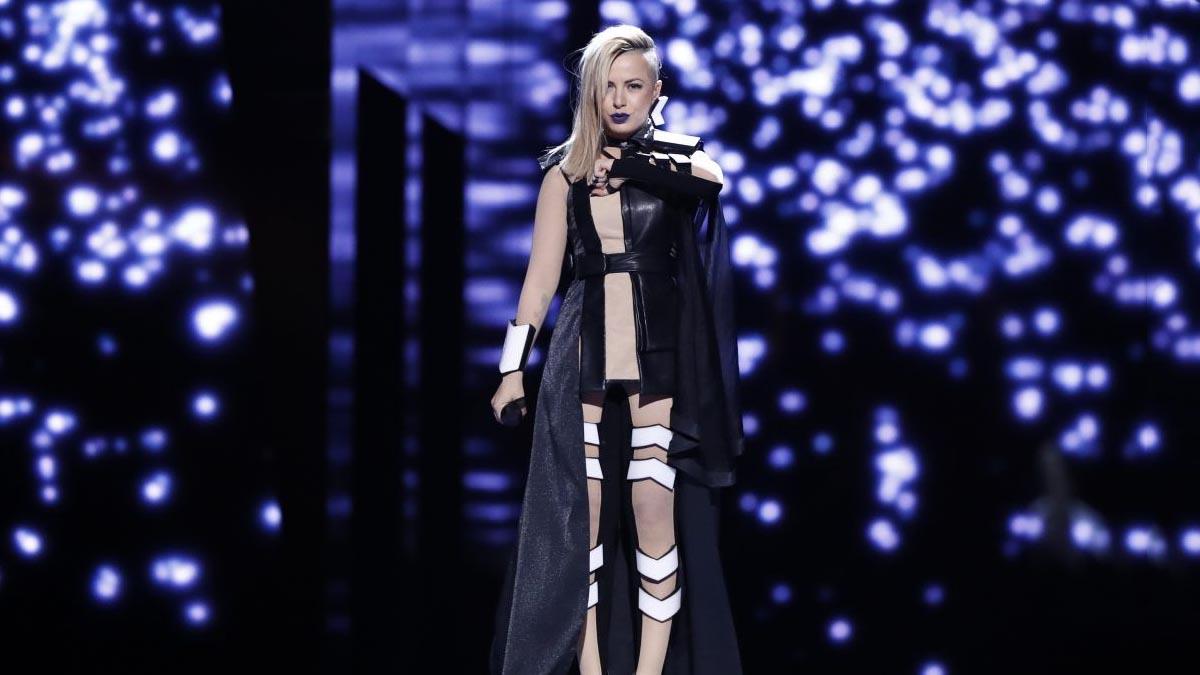 Bulgaria joined the Eurovision Song Contest in 2005 and has competed 14 times since. Its debut entry, performed by the band Kaffe with the song “Lorraine”, finished 19th in the semifinal and did not qualify for the final.
The country achieved its first-ever qualification for the final in Eurovision 2007 in Helsinki, Finland, when Elitsa Todorova and Stoyan Yankoulov reached 5th place with their energetic entry “Water”. The duo later returned to the contest in Malmö, Sweden, in Eurovision 2013 with “Samo Shampioni” (in English: “Only Champions”), finishing 12th in the second semifinal and failing to qualify. Between 2008 and 2013, Bulgaria did not reach any finals.
Since joining Eurovision, Bulgaria has missed six editions of the contest. The country first withdrew in 2014 (Copenhagen, Denmark) due to financial reasons, and its absence continued in 2015 (Vienna, Austria).
In 2016, Bulgaria made a powerful comeback when Poli Genova, representing the nation for the second time, performed “If Love Was A Crime” in Stockholm, Sweden. She broke Bulgaria’s previous record, finishing in 4th place. This success came after failing to qualify for the Eurovision 2011 final in Düsseldorf, Germany, with her song “Na Inat” (in English: “Stubborn”), which placed 12th in its semifinal.
A year later, Kristian Kostov represented Bulgaria with “Beautiful Mess”, achieving the country’s best-ever result by finishing second, setting a new national record.
Bulgaria at Eurovision 2022
For Eurovision 2022, Bulgaria sent Intelligent Music Project with their song “Intention”, which interrupted Bulgaria’s streak of successes as they failed to qualify for the final for the first time since Eurovision 2013. The band finished sixteenth out of seventeen countries in the first semi-final held in Turin, Italy, receiving a total of 29 points, split to 11 points from juries and an additional 18 points from public voting. Following this participation, drummer Stoyan Yankoulov became the first artist to represent Bulgaria three times at Eurovision after participating in both Eurovision 2007 and Eurovision 2013.
Eurovision 2026: This will be Bulgaria’s 15th participation in the Eurovision Song Contest. Bulgaria joined the competition in 2005 and achieved its best result in Eurovision 2017 when the singer Kristian Kostov finished in second place with the song “Beautiful Mess”.

Email: [email protected]
Phone: +972-50-9441919
Neta Geffen is a respected journalist at Euromix, Israel’s leading news site for Eurovision coverage. Since 2010, Neta has been closely following the Eurovision Song Contest, bringing with him extensive experience, profound knowledge, and a broad understanding of the history, politics, and cultural influences that shape the event every year.
Neta publishes articles, analyses, and up-to-date reviews on all Eurovision developments, including musical trends, format changes, political influences, and audience reactions across Europe and Israel. Thanks to a deep connection to the contest’s history, Neta provides readers with wide-ranging context—from the impact of political events on results, to in-depth analyses of songs and languages within the competition. Neta specializes particularly in the Eurovision rock genre, Balkan ballads, and native language entries, with a special focus on Italian and Greek songs.