Moldova: A political statement by a leading Moldovan “Selecția Națională” contender jeopardizes his continued participation, raising complex questions about freedom of expression and Eurovision’s strict neutrality rules.
An unusual controversy is shaking Moldova’s “Selecţia Naţională”, after contestant Satoshi, competing with his song “Viva, Moldova!“, published a political statement on his Instagram account. The post was directly linked to his song and his intention to participate in the Eurovision Song Contest 2026. The move places Moldova’s national broadcaster TRM and the EBU before a complex dilemma concerning the boundaries of freedom of expression on one of the world’s most-watched cultural stages.
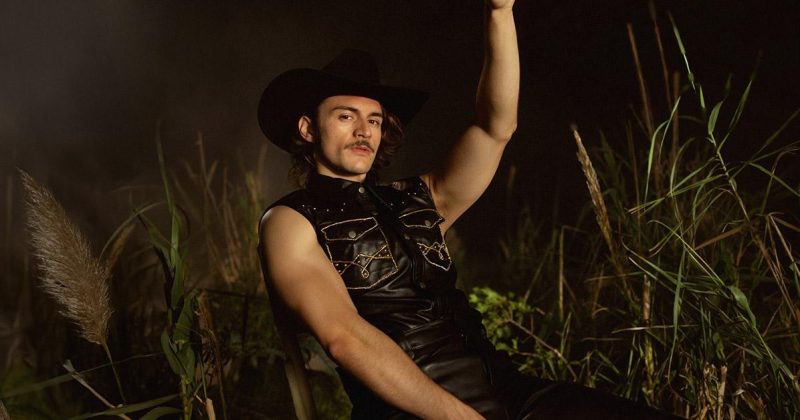

In a post that gained wide circulation, Satoshi published an explicit political statement, directly connecting his personal views to his song and to the Eurovision stage itself. Among other things, he wrote:
“I do not support genocide…. If someone has something to say, to manifest I don’t see a more suitable and wider platform to say loud”. I do not regard participation in a competition alongside a certain country as support for that country. […] If someone has something to say, to demonstrate — I see no broader or more suitable platform than this one to say out loud what they have to say. I believe that expressing an opinion is meant to be spoken, not silenced”.
The very framing of Eurovision as a “platform” for conveying a political message crosses a clear red line, as defined both in Moldova’s “Selecţia Naţională” regulations and in the official rules of the EBU. Furthermore, Satoshi pinned the post on his Instagram profile to ensure prominent visibility and tagged both the official Eurovision account and the Moldovan Eurovision page, directly linking his political stance to his song and his participation in the competition.
Under the rules of “Selecţia Naţională”, every contestant is fully bound by the Eurovision rules as established by the EBU. The implication is unequivocal: any breach of EBU regulations automatically constitutes a violation of the national preselection rules. This mechanism is designed explicitly to safeguard the competition’s neutrality.
View this post on Instagram
The Line That Puts Participation in Question
The Eurovision Code of Conduct explicitly prohibits artists from linking political statements to their participation in the contest and from using Eurovision as a platform for political, ideological, or geopolitical messaging of any kind. The rationale behind this prohibition is clear: preserving the contest as a cultural and musical space free from political agendas, particularly amid ongoing international tensions.
In this case, Satoshi did not merely express a general political opinion; he explicitly emphasized that Eurovision itself is the appropriate stage for delivering that message a formulation that strengthens claims of a direct rules violation. According to sources familiar with the regulations, this represents a clear boundary that Moldova’s national broadcaster TRM, cannot simply overlook.
Beyond the technical dimension, the affair reignites a highly sensitive debate surrounding antisemitism, the politicization of culture, and the delicate balance between personal freedom of expression and binding international rules. While Satoshi’s supporters argue for his right to voice his views, the Eurovision Song Contest operates under clear regulations that are not subject to individual interpretation. Using the contest as a vehicle for political messaging fundamentally undermines Eurovision’s core identity.
One Statement, Far-Reaching Consequences
Moldova’s national broadcaster TRM, may disqualify Satoshi from the remainder of the selection process, even if he qualified to the final and enjoys strong public support. Failure to take such action could place Moldova in direct conflict with the EBU and jeopardize the legitimacy of its participation in the contest or, at minimum, force a last-minute replacement of its representative if selected.
All eyes are now on TRM’s decision. Will the broadcaster act in strict accordance with the regulations and disqualify the contestant, or will it attempt to pursue an interim solution that could provoke sharp criticism from the EBU? Either way, Moldova’s Eurovision preselection has overnight transformed from a seemingly straightforward musical event into a charged arena of controversy, with implications that may resonate far beyond national borders.
Moldova in Eurovision 2024
Natalia Barbu represented Moldova in the first semi-final of Eurovision 2024 with the song “In the Middle”, after winning first place in the local national final. The song reached 13th place in the first semi-final, with only 20 points, and did not qualify for the grand final. This is Moldova’s lowest result in Eurovision since 2016, when Moldova reached 17th place in the semi-final.
Eurovision 2026: This will be Moldova’s 20th participation in Eurovision. Moldova joined the competition in 2005 and achieved its best result in Eurovision 2017 when SunStroke Project finished in third place with the song “Hey Mamma”.

Email: [email protected]
Phone: +972-53-9514754
A writer and content creator with a strong specialization in the Eurovision scene, particularly across Eastern Europe and post-Soviet countries. His work highlights the artistry, storytelling, and cultural variety that define the contest, offering readers a deeper look into both established performers and emerging voices.
As a skilled translator and polyglot, he brings a unique linguistic and cultural understanding to his analysis and coverage..