
Spain has once again delayed its Eurovision 2027 decision, while the EBU has granted the country additional time. With elections approaching, could these developments be paving the way for an unexpected comeback?
Could Spain be preparing for an unexpected return to Eurovision 2027? Months after withdrawing from the 2026 contest over Israel’s participation, several developments are keeping the possibility of a comeback alive. Spanish national broadcaster RTVE has repeatedly postponed its decision on whether to extend the boycott, while the European Broadcasting Union (EBU) has granted Spain additional time to confirm its participation. With general elections approaching on November 29, the timing raises an intriguing question: could RTVE be waiting to see which way the political winds blow? And could the EBU’s extension be helping keep the door open for Spain’s return?







The Boycott That Has Yet to Be Confirmed
Despite the uncertainty, RTVE President José Pablo López has made his position clear. On September 22, he announced his intention to propose extending Spain’s withdrawal from Eurovision into 2027, as long as Israel remains in the competition.
López argued that despite changes introduced by the EBU to the contest’s rules, significant ethical concerns remained regarding Israel’s participation. He maintained that the political and humanitarian circumstances behind Spain’s original withdrawal had not been sufficiently addressed. However, his announcement was not a final decision. That authority rests with RTVE’s board of directors, which must formally consider and vote on the proposal.
The board was expected to discuss Spain’s participation on November 17, but the meeting was postponed once again. With no final decision announced, the repeated delays leave room for speculation: are they simply administrative setbacks, or could the broadcaster be keeping its options open?
Could Spain’s Elections Change the Picture?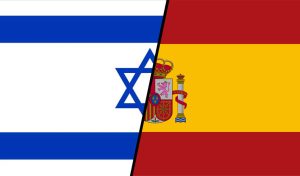
The timing of the latest postponement is particularly significant. Spain is heading into general elections on November 29, just days before the deadline for confirming its Eurovision participation.
The centre-right People’s Party (PP) is seeking a return to power, while the right-wing VOX party could become a potential coalition partner or provide parliamentary support. Both parties have expressed opposition to boycotting Eurovision over Israel’s participation, contrasting with the position taken by Prime Minister Pedro Sánchez’s government.
A change in government could therefore bring renewed political discussion about Spain’s participation in the contest. However, it would not automatically reverse RTVE’s decision. The broadcaster’s board does not change automatically following an election, and its current members reportedly have approximately four years remaining in their terms.
Nevertheless, the approaching elections introduce another element of uncertainty. With the broadcaster yet to make a final decision, could the outcome of the vote influence its next steps?
The EBU Leaves the Door Open
Adding another interesting development to the story, the EBU has granted Spain and Slovenia a special extension to decide whether they will participate in Eurovision 2027 in Burgas, Bulgaria. Both countries withdrew from Eurovision 2026 over Israel’s participation, and the EBU acknowledged the complexity surrounding their decisions.
Spain now has until December to clarify its position, with the EBU General Assembly scheduled for December 4. Crucially, this allows RTVE to make its decision after the November 29 general elections. The extension does not necessarily indicate that the EBU expects Spain to return. However, combined with RTVE’s repeated postponements, it leaves the possibility of a comeback open rather than closing the door on another year of participation.
Is Spain Preparing for a Comeback?
Spain’s potential return would be significant for Eurovision. As one of the Big Five, alongside France, Germany, Italy, and the United Kingdom, Spain has long been among the contest’s major participating countries, contributing financially to the EBU and traditionally qualifying automatically for the grand final.
Its withdrawal in 2026 marked a significant development in the controversy surrounding Israel’s participation, and another absence in 2027 would extend that dispute into a second consecutive year.
For now, there is no official indication that RTVE intends to reverse its position. López’s proposal to continue the boycott remains on the table, and the board has yet to vote on it. However, the combination of repeated delays, an extended deadline, and upcoming elections raises questions about whether Spain’s Eurovision future is as settled as previously believed.
Could these developments be laying the groundwork for Spain’s return, or will the broadcaster ultimately stand by its boycott?
Spain in Eurovision 2025
“Esa Diva” (in English: “That Diva”) is the title of the song performed by singer Melody, who represented Spain at Eurovision 2025 in Basel, Switzerland.
Spain finished 24th with 37 points – 27 points from the juries, placing 21st, and only 10 points from the televotes, placing 22nd. In the last 20 years, Spain managed to finish only 3 times in the top 10.
Eurovision 2025: This was Spain’s 65th participation in Eurovision. Spain joined the competition in 1961 and won it twice consecutively in 1968 and 1969. Spain has hosted the contest on its territory only once in 1969 and, since then, has had the longest waiting time since its last victory – 56 years.

Email: [email protected]
Phone: +972-50-9441919
Writer and content creator specializing in the Eurovision field. Her writing emphasizes professional analysis and a wide range of opinions.