
Listen: The Estonian national broadcaster ERR has revealed today the songs that will compete in “Eesti Laul 2026.” The Estonian entry for Eurovision 2026 will be chosen on February 14th.
The Estonian national broadcaster ERR revealed today (Thursday) the twelve songs competing in “Eesti Laul 2026”, which will take place on Saturday, February 14th, 2026. The winner of the local competition will represent the country at Eurovision 2026, which will be held in Vienna, Austria.
A jury of 34 members selected twelve songs to participate in the competition. As in last year’s edition, there will be no semi-finals, and all twelve songs will compete in the grand final to be held on February 14th at Unibet Arena in Tallinn, the same venue that hosted Eurovision 2002. The hosts of “Eesti Laul 2026” will be Karl-Erik Taukar, and Karl Kivastik, known as Korea, a member of Estonian representatives in Eurovision 2024, 5Miinust.







“Eesti Laul 2026” Entries:
- Noep – “Days Like This”
Songwriters: Andres Kõpper, Vallo Kikas, Yvonne Dahlbom - Marta Pikani – “Kell Kuus”
Songwriter: Marta Pikani - Grete Paia – “Taevas Jai Ules”
Songwriters: Grete Paia, Jorma-Jan Erik, Gevin Niglas, Ragnar Sepp - Uliana Olhyna – “Rhythm of Nature”
Songwriters: Uliana Olhyna, Ariana Arutjunjan - Vanilla Ninja – “Too Epic to Be True”
Songwriter: Sven Lõhmus - Ollie – “Slave”
Songwriter: Oliver Mazurtšak - Getter Jaani – “The Game”
Songwriter: Sven Lõhmus - ANT & Minimal Wind – “Wounds (Don’t Wanna Fall)”
Songwriters: Taavi-Hans Kõlar, Paula Pajusaar, Ant Nurhan, Katrina Merily Reimand - Robert Linna – “Metsik Roos”
Songwriter: Robert Linna - Laura Prits – “Warrior”
Songwriters: Laura Prits, Edgars Jercums, Jānis Jačmenkins - Stockholm Cowboys, Stig Rasta & Victor Crone – “Last Man Standing”
Songwriters: Stig Rästa, Victor Crone - Clicherik & Max – “Jolly Roger”
Songwriters: Max Õispuu, Erik Soasepp, Jānis Jačmenkins
Click the song title to listen!
Among The Contestants – Many Familiar Names:
- Stig Rästa – represented Estonia at Eurovision 2015, with Elina Born with the song “Goodbye To Yesterday” and finished in seventh place. This year will be the 14th time that Stig Rästa competes in both “Eurolaul” and “Eesti Laul”.
- Victor Crone – an Estonian-Swedish singer who represented Estonia at Eurovision 2019 with the song “Storm” and finished in 20th place. He has also competed several times in Melodifestivalen.
- Getter Jaani – represented Estonia at Eurovision 2011 with the song “Rockefeller Street” and finished in 24th place.
- Vanilla Ninja – represented Switzerland in the 2005 Eurovision Song Contest with the song “Cool Vibes” and finished in eighth place. They also took part in “Eurolaul” in 2003 and 2007. Band member Lenna Kuurmaa participated four more times in “Eesti Laul” – in 2010, 2012, 2014, and 2017. Her highest achievement was second place twice, in 2010 and 2012. Another member of the band, Piret Järvis, presented Estonia’s votes at Eurovision 2011.
- Minimal Wind – competed in “Eesti Laul” in 2022 together with Elisabeth Tiffany and finished in second place. They returned alone in 2025 and finished in ninth place.
- Grete Paia – competed in “Eesti Laul” four times, in 2013, 2016, 2019, and 2022. Her highest achievement was in her first participation, finishing second.
- Ollie – competed in “Eesti Laul” in 2023 and 2024, and in both contests finished in second place.
- ANT – competed in “Eesti Laul” in 2025 and finished in fifth place.
- Robert Linna – competed in”Eesti Laul” in 2021 together with his father, Estonia’s Eurovision 1996 representative Ivo Linna, and they finished in 11th place.
How Will Estonia Continue Choosing Its Entry for Eurovision 2026?
After the songs have been revealed, all that’s left is to wait for the grand final of “Eesti Laul 2026”. Unlike last year’s national final, this year’s competition will include only twelve songs – four fewer than last year. The grand final will take place on February 14th, maintaining the no-semi-final format introduced last year, which was the first time this format returned since 2010.
Voting in the final will consist of two rounds. In the first round, the top three songs will be chosen based on a combination of public votes and scores from an international jury comprised of seven members. In the second round, public voting alone will determine which of the three finalists will represent Estonia in Eurovision 2026.
Estonia in Eurovision: Tough Start, But a Successful Resume
Estonia has participated in the Eurovision Song Contest 30 times, with one victory, one absence, and one additional occasion when their participation was canceled – in Eurovision 2020, when the entry by Uku Suviste and his song “What Love Is” was canceled due to the COVID-19 pandemic.
Estonia is considered a persistent and strong country in the competition, having been absent only once (not by their own choice), and achieving several notable successes. However, every beginning is difficult… In its debut participation in 1994, Estonia struggled and finished in 24th place out of 25 countries, a result that caused its only absence from Eurovision in 1995. But with its return in 1996, Estonia recorded several impressive and high achievements, including the victory by Tanel Padar, Dave Benton, and the duo 2XL at Eurovision 2001, and Sahlene’s third place on home ground the following year. With the introduction of semi-finals, Estonia experienced five difficult years in the competition, failing to qualify for the final in every contest between 2004 and 2008.
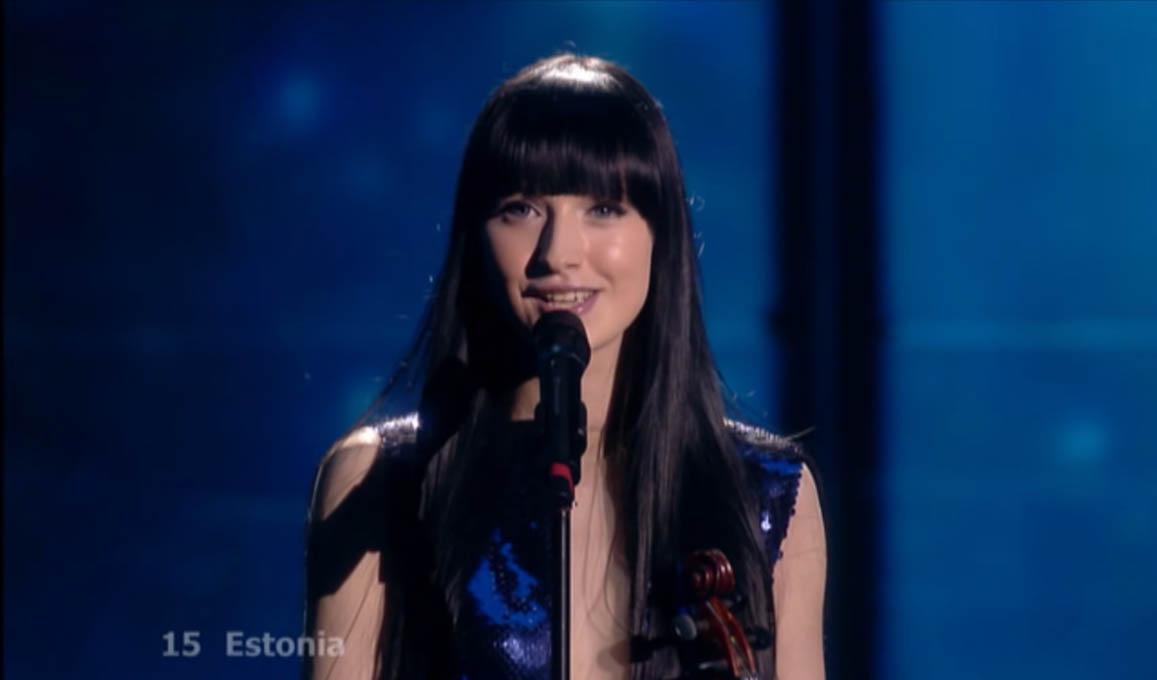 Ahead of Eurovision 2009, Estonia changed the name of its national selection contest. Change of venue, change of luck? Eurovision 2009 seemed to confirm this, as the band Urban Symphony reached sixth place in Moscow, Russia, with their song “Randajad“.
In Eurovision 2010, Estonia again failed to reach the final, but quickly recovered and began qualifying more frequently. The years were not easy, as in 2016 Estonia recorded its worst result – last place, and in 2017 its path was fraught with issues, mostly technical. However, since Eurovision 2018 Estonia has succeeded in returning and cementing its status as a successful country.
Today, Estonia manages to secure more spots in the final than to lose them, and even when forecasts are against it, Estonia keeps its head high and manages to bring its representatives to the final stage. Since 2018, Estonia has qualified for the final in six out of seven competitions held. Will Estonia continue this streak and reach the final again in Vienna? Ma Ei tea (I don’t know)…
 Estonia has won Eurovision once, at Eurovision 2001, and reached the top five four more times: twice in third place, at Eurovision 2002 and Eurovision 2025, once in fourth place at Eurovision 2000, and once in fifth place at Eurovision 1996. Estonia has also placed seven more times in the Top 10, including three sixth places (in 1999, 2009 and 2012), once seventh place (in 2015), and three eighth places (in 1997, 2018 and 2023).
Estonia at Eurovision 2025
“Espresso Macchiato” is the name of the song performed by the singer Tommy Cash, who represented Estonia in Eurovision 2025. The singer reached third place in the grand final with 356 points. Estonia received 258 points from the televoting, placed second, and 98 more points from the jury vote, placed ninth.
This result is Estonia’s best since their third place in Eurovision 2002, 23 years ago.
Eurovision 2026: This will be Estonia’s 31st participation in Eurovision. Estonia joined the contest in 1994 and achieved its best result in Eurovision 2001 when singers Tanel Padar, Dave Benton and 2XL, won first place with the song “Everybody”.

Email: [email protected]
Phone: +972-50-9441919
Ilay Gaist is a leading Israeli content creator and writer specializing in the Eurovision Song Contest. He is a well-known commentator with extensive expertise in the contest’s history, rules, and dynamics. His passion for Eurovision drives him to deliver rich, professional, and innovative content to his audience.
Ilay holds a bachelor’s degree in Arabic and has a multilingual background. He also engages in cultural research, with a particular focus on global culinary traditions and the evolution of local cuisines around the world.