
Austrian authorities revealed that Eurovision 2026 in Vienna faced 500 cyberattacks targeting access control systems alongside intense street protests.
The big celebration of music in Vienna has come to an end, but it is now emerging that a large-scale security drama took place behind the scenes. Law enforcement authorities in Austria released official and worrying data regarding the security operation for Eurovision 2026, revealing that nearly 500 cyberattack attempts were recorded against the systems of the competition during the event week.
According to the head of the Austrian Federal Police, Michael Takach, the cyberattacks targeted both the official Eurovision website and the digital access control systems used by security guards at the gates of the venue, Wiener Stadthalle. The attackers’ goal was to create heavy congestion at the gates, disrupt the operation of the systems, and even disable them completely. However, thanks to early technological preparation, the cyber teams managed to block these attempts without any significant malfunctions or disruption to the flow of the audience.
Siege in Vienna: 3,500 Police Officers and Special Forces From Germany
The technological threat was only one front facing the public drama that accompanied the competition. Eurovision 2026 took place under unprecedented security: around 3,500 Austrian police officers patrolled the city throughout all days of the event, joined, in an unusual step, by commando and special operations forces from neighboring Bavaria, Germany.
At the same time, the Austrian Ministry of the Interior conducted close electronic monitoring of social networks in the weeks leading up to the grand final. According to the official report, the authorities identified an extreme increase in the level of polarization in public discourse surrounding the competition, with special attention paid to potential threats related to the sensitive security situation in the Middle East.
Wave of Protests and Arrests at the Last Minute Before the Final
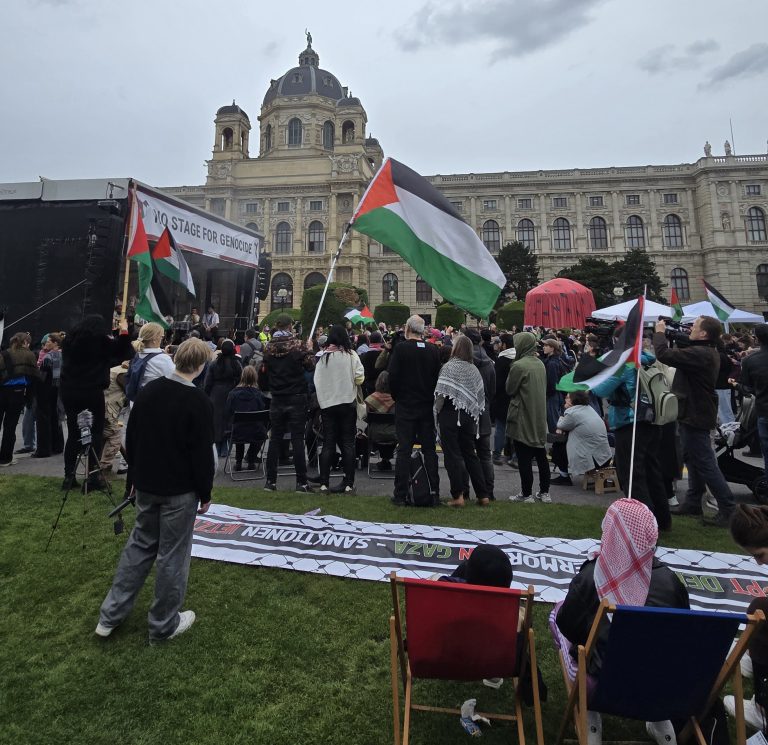
The tension reached its peak on the streets of Vienna, where several stormy demonstrations took place, the vast majority of which were in protest against the participation of the Israeli entry in the contest.
A few moments before the start of the grand final broadcast, the local police were forced to intervene and disperse a pro-Palestinian demonstration that had not received legal approval. During these clashes, the police arrested 14 protesters, bringing the total number of arrests during the Eurovision week to 16 detainees.
Despite the particularly challenging and volatile security environment, the Austrian authorities concluded the operation successfully and emphasized that the Eurovision week passed without serious incidents and without casualties. All broadcasts and accompanying events took place as scheduled, and the television production flowed smoothly, in what became one of the most complex logistical and security operations in the history of the contest.