A comprehensive look at all the technical failures, camera mishaps, and live broadcast bloopers that overshadowed the inaugural contest in Bangkok.
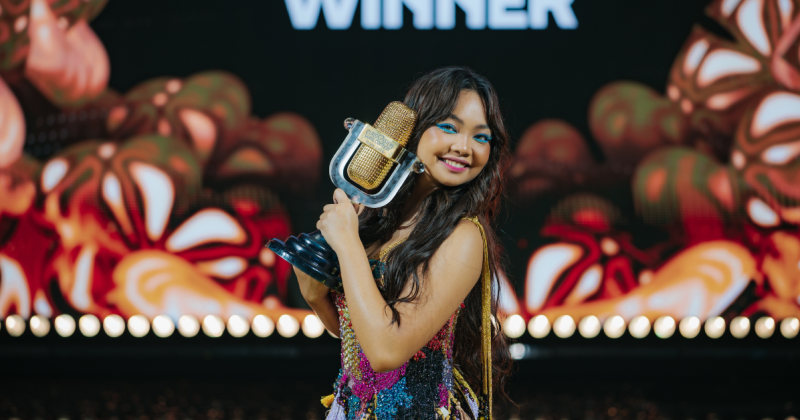
The historic Eurovision Asia 2026 final has just concluded in Thailand, and following a breathtaking night of drama, CARMELLE has won the competition representing Philippines making history.
But the contest’s debut broadcast was full of technical difficulties. From lighting malfunctions during the opening ceremony to sound problems and interrupted performances, several unexpected incidents affected the competition throughout the evening.



Lighting Malfunction During the Opening Ceremony
The first technical problem appeared within the very first seconds of the broadcast. The show opened with a festive introduction designed to showcase Bangkok, the host city of the first-ever Eurovision Song Contest Asia.
The opening sequence was a wonderful addition to the show, but unfortunately, it was accompanied by an unfortunate technical issue. During the performance, dancers appeared wearing special lighting equipment attached to their backs, with each dancer featuring a unique design. However, one of the lighting devices was malfunctioning, with only half of it lighting up properly.
Cambodia’s Performance Hit by a Series of Problems
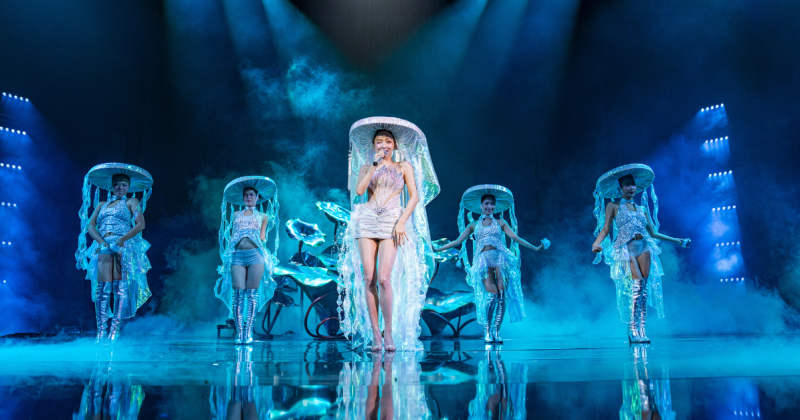
The opening ceremony malfunction was only a preview of what was yet to come. Cambodia’s performance experienced several much more noticeable technical difficulties.
One of the most embarrassing moments occurred when the screen suddenly went completely black for several seconds. As a result, viewers were left watching a blank screen at the very moment when the performance was supposed to reach its climax.
However, the lighting problem was not the only issue. During that same crucial moment, the singer also delivered a particularly high and unpleasant note, resulting in a noticeable vocal slip. The moment became one of the most awkward and uncomfortable vocal mishaps seen across the Eurovision competitions and their various editions.
Laos’ Performance Affected by Microphone and Sound Problems
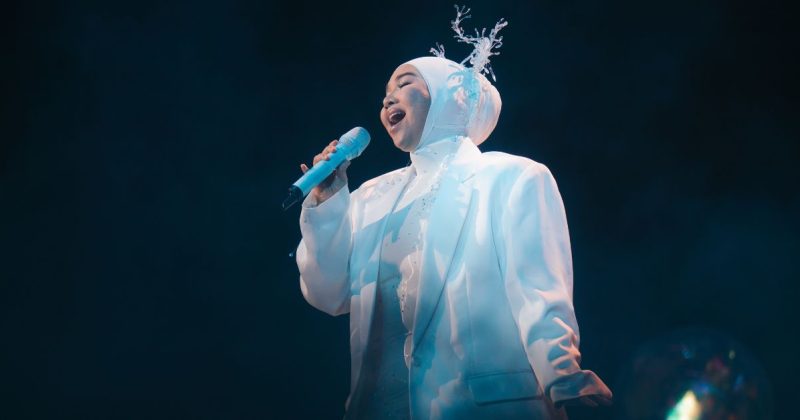
One of the most significant technical problems of the evening occurred during the performance of one of the fan favorites, Thinla, representing Laos with the catchy song “BAE“, which earned her fifth place in the competition.
Already at the beginning of the performance, the singer experienced a significant problem with her in-ear monitor. Thinla was even seen removing the device during the performance, as the technical issue continued to affect her on stage.
The malfunction had a clear impact on her performance, putting the singer in a difficult position in front of the audience and preventing her from delivering the song to the best of her abilities.
A similar situation occurred during Junior Eurovision 2026, when the Netherlands requested action following a dramatic microphone stand malfunction. In the case of Laos, a request was also made to the European Broadcasting Union (EBU) to upload a corrected version of the performance to the official YouTube channel.
After all participating countries had completed their performances, the presenters informed viewers that, due to the technical malfunction, the decision had been made to upload a version of Thinla’s performance without the embarrassing technical issue.
The Camera That Failed to Move On
Another technical mishap occurred during one of the transitions between segments. When the camera was supposed to move away from one shot and switch to another, it remained focused on the same presenter, even though the segment had already ended.
One of the other presenters could even be heard shouting from outside the frame that the segment was over. Despite this, the camera failed to move on and continued showing the presenter.
Carmelle’s Victory Performance Cut Short
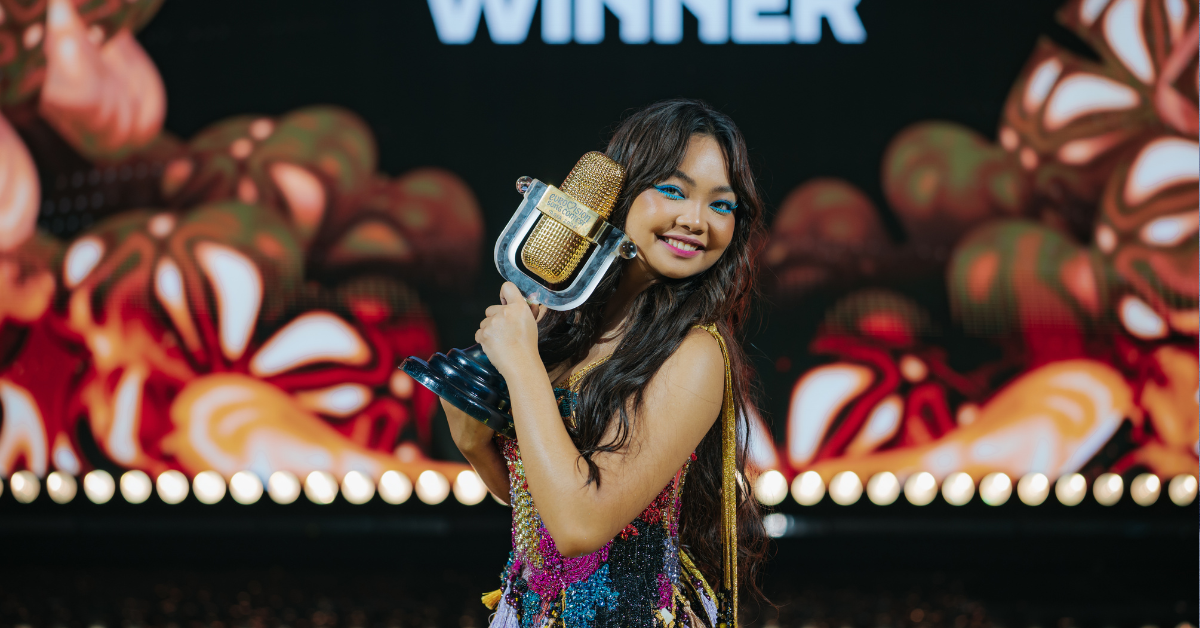
One of the evening’s most disappointing moments took place after the announcement of the winner.
Following Eurovision tradition, the winning artist is expected to return to the stage after the results and perform their winning song once again as part of the victory celebrations.
This time, however, things did not go as planned. Carmelle (Carmelle Allyza Collado), representing the Philippines, had just made history by winning the first-ever Eurovision Song Contest Asia with her song “Sobra-Sobra” (in English: “Too Much”).
Unfortunately, the broadcast of the winning performance was cut short due to scheduling and broadcast time limitations. This left many viewers disappointed, as the moment that should have been the perfect conclusion to the historic first edition ended earlier than expected.
Despite the technical difficulties, Eurovision Song Contest Asia made its historic debut in Bangkok, bringing together artists and audiences from across the continent. However, the numerous mishaps throughout the evening raised questions about the production and technical preparations behind the competition’s first edition.
Eurovision Asia 2026 – Full Results
| Place | Country | Artist / Song | Total | Jury | Public |
|---|---|---|---|---|---|
| 1 | Philippines | Carmelle – “Sobra-Sobra” | 211 | 93 | 118 |
| 2 | Thailand | Mang & Daou – “Aroma” | 170 | 62 | 108 |
| 3 | Vietnam | Tóc Tiên – “Em Tiên” | 164 | 83 | 81 |
| 4 | Malaysia | Aina Abdul – “Bluest Sky” | 152 | 82 | 70 |
| 5 | Laos | Thinla – “Bae” | 139 | 61 | 78 |
| 6 | Bhutan | Nyendra – “Lhayi Semo” | 126 | 55 | 71 |
| 7 | South Korea | Junhee – “Deep Dive” | 113 | 61 | 52 |
| 8 | Mongolia | Beck – “Chamguigeer (Without You)” | 94 | 57 | 37 |
| 9 | Nepal | Pratik Himal Rai – “Ananta Maya” | 69 | 35 | 34 |
| 10 | Cambodia | Monetrey – “I Let You Go” | 61 | 33 | 28 |
| 11 | Bangladesh | Beatmosphere – “Tumi Ele” | 35 | 16 | 19 |
All You Need to Know About Eurovision Asia
The Eurovision brand continues its global expansion with Eurovision Song Contest Asia, launched in collaboration with the European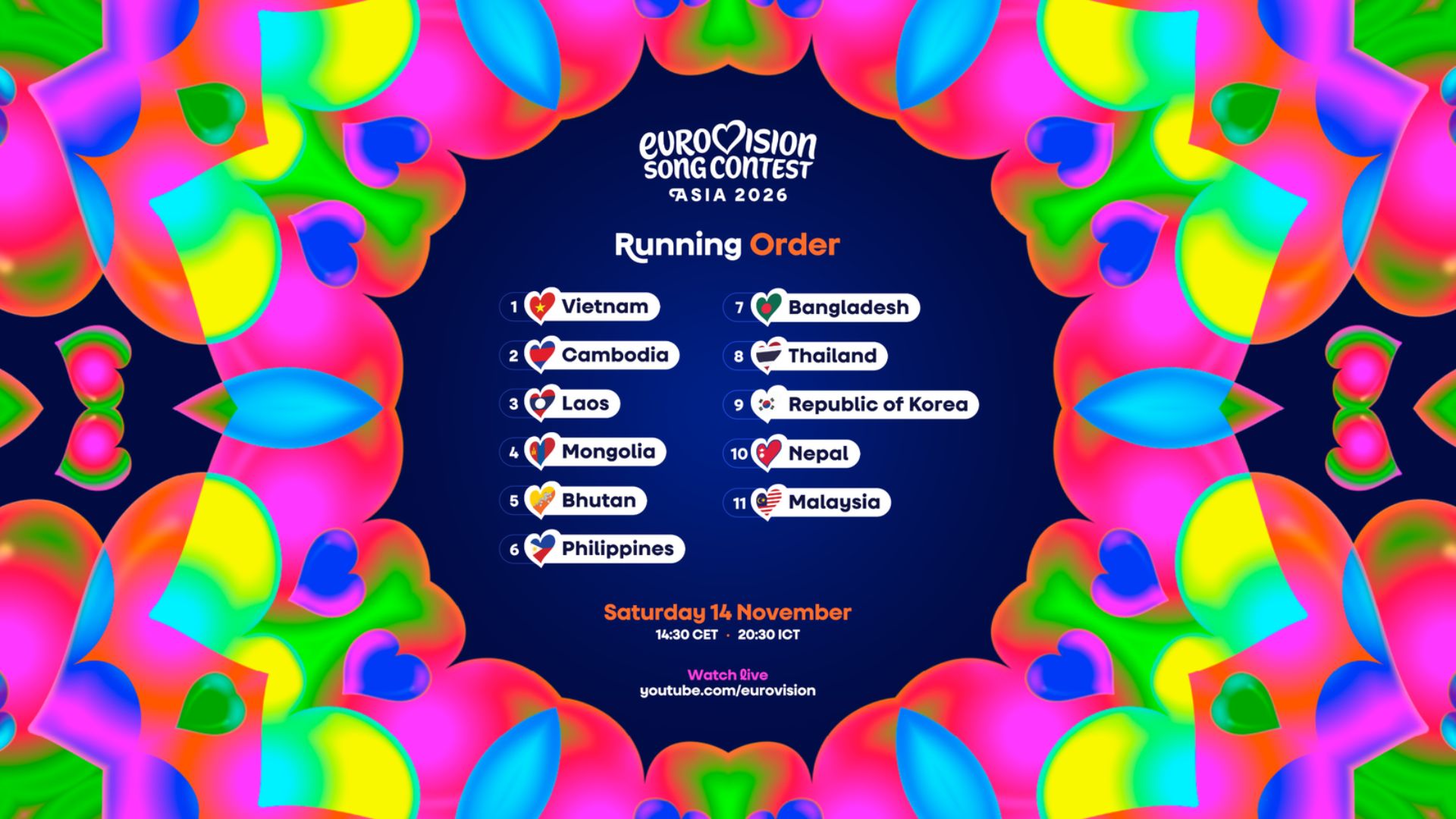 Broadcasting Union (EBU) to mark the 70th anniversary of the original contest. Following the American Song Contest in 2022, which was not renewed for a second season, this new chapter aims to bring the beloved Eurovision format to a new continent and reach a massive potential audience of over 600 million viewers. Unlike the American adaptation that focused on a single nation, this is a large-scale, multi-national competition. The inaugural Grand Final will take place on November 14, 2026, at the One Bangkok Forum arena in Thailand, preceded by a Preview Show on November 13. Hosted by media figures Woody Milintachinda and Cindy Bishop, this historic edition will feature 11 countries: Thailand, South Korea, Vietnam, Philippines, Bangladesh, Mongolia, Nepal, Laos, Bhutan, Malaysia, and Cambodia.
Unlike the European format, the contest in Asia operates under a centralized production model. It is produced by the international production company Voxovation in partnership with the leading Asian production company S2O. This structure subsidizes the selection process in various countries, allowing nations with limited budgets to participate. Additionally, the winning country will not automatically host the contest the following year but will instead be invited to perform as a guest artist at the traditional Eurovision. The voting system has also been adapted for the continent, based entirely on a unified, free digital platform that combines televoting with professional juries, giving unprecedented decisive power to the international audience through the “Rest of the World” voting. Furthermore, ZOOP will serve as the exclusive social partner of the event, enabling fans to take an active role in the digital experience.