Dorin Or is the twelfth contestant to bid farewell to HaKokhav HaBa. 9 contestants remain in the race, including Shira Zloof, Nave Levi, Agam Hazan, and Shaked Solomon. Full recap of Episode 27.
In 13 days, the grand finale of “HaKokhav HaBa for Eurovision 2026” will take place, featuring four finalists. The winner of the competition will represent Israel at the Eurovision Song Contest 2026, which will be held in Vienna, Austria, on May 12th, 14th, and 16th.
10 contestants remain in the competition so far, but by the end of tonight’s episode, only the top 9 will continue.
The production presents tonight the continuation of a new challenge that has not been done in previous seasons. Each contestant chose a hit song to perform alongside a live band. However, during the song, a signal appeared on the screen – after which they had to continue singing a-cappella, without the band’s backing. Keeping rhythm, staying in tune, and maintaining composure became crucial.
The two contestants who received the lowest scores of the night faced elimination, and the judging panel was tasked with choosing which of the two would be eliminated.




Nave Levi
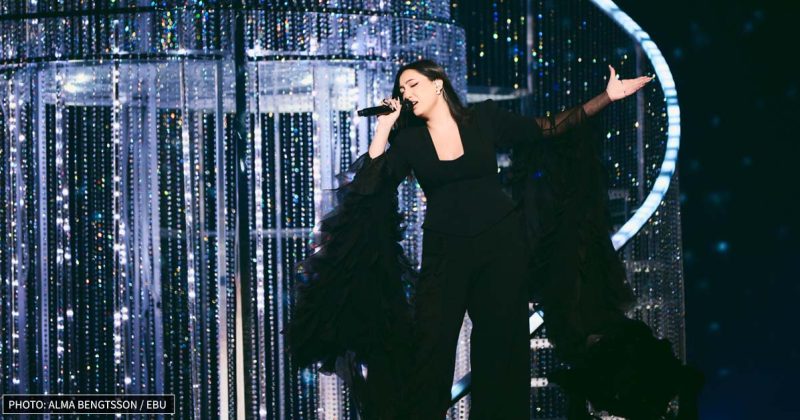
Nave Levi chose to sing the song “Mademoiselle” (originally by Lihi Toledano). Nave performed the song in a different version from the original, bringing it into an Israeli/Mediterranean style. It was refreshing to see him step out of his comfort zone and try a genre different from what he had previously sung in the competition. He successfully completed the a-cappella challenge, maintaining a stable and precise voice throughout the performance. Unfortunately, the song didn’t seem to reach great heights, and during the performance, he held onto the piano beside him and did not move from his spot. Still, he kept the rhythm and authenticity of the original version. After the performance and the judging, Lihi Toledano surprised Nave by joining him on stage and singing a few lines from the song. Nave joined her in beautiful, perfectly matched harmony.
Shiri said:
“You’re simply a special being, and I think there are people who have an ‘ora’ – that’s what you have. If you take your voice, your music, and your drive to be number one seriously, you can achieve it. Just like you improved your personal life with the help of your parents, you can bring that here too”.
Assaf said:
“Many singers have a big gap between their personality and their stage presence. You don’t. You bring all of yourself into this, and no one can compete with that. You’ve greatly improved your ability to let go on stage. I’m not sure this is Eurovision material, but I love you”.
All five judges voted in his favor. Nave received 88%, setting the bar for the next contestant — hoping they score lower.
Agam Hazan
Agam Hazan chose to perform the song “How Far I’ll Go” (from the movie “Moana”). Agam’s voice is soft and pleasant to the ear, perfectly fitting the song’s style. She delivered it with great precision. Disney songs and musical theater numbers fall well within Agam’s strongest and safest range. The song gradually developed, and during the a-cappella section her voice sounded emotional, yet she maintained stability. Throughout the performance, she engaged the audience and had them clapping along. It seems that the song could have built up to a stronger peak – it felt as though she stayed within her comfort zone instead of daring more.
Assaf began:
“You sang very beautifully. Beyond completing the task with outstanding success, you commanded the stage. I really liked your confidence and calmness; you phrased it beautifully, and it was an excellent performance”.
Itay added:
“I really like you, and the cute songs might be your forte, but at this stage, you need to lift the ceiling higher—not by shouting. For me, it was enough, but nothing beyond that”.
Keren and Itay voted against her. Agam received 66%.
Shaked Solomon
Shaked Solomon chose to perform the song “Ananim” (originally by Yishai Levi). From the very start of the performance, Shaked’s strong and steady stage presence was evident. He sang with confidence and vocal precision, and the judges quickly showed their excitement. His a-cappella section was executed with breathtaking accuracy and emotion. After that, the song continued to build and explode with energy, captivating both the audience and the judges. It looks like this was one of his best performances on the show — he has incredible abilities.
Eden said:
“You’re the best Mizrahi singer I’ve heard in a long time. Your vocal control, your dynamic range, and your tone are fantastic. I’d like to see you bolder and edgier — you’re shy, and I wonder if that fits Eurovision. What could change my mind would be some spice and daring”.
Assaf explained his vote against and said:
“Vocally, you’re an amazing singer. You’re full of emotion and sensitivity, and you sing with incredible precision. What’s most charming about you as a person — which is also your weakness as a performer — is your humility. But I fear that in Eurovision, your gentleness and innocence might get lost”.
Four judges voted in his favor, Assaf voted against. Shaked received 79%.
Dorin Or
Dorin Or chose to perform the song “Leylot VeKlalot” (originally by Omer Adam). She delivered the song in her own unique style, continuing her spoken-word approach by opening with a recitation of her text that smoothly transitioned into singing the song’s lyrics. She adapted the song to suit her personality, staying true to herself while managing the sung parts taken from the original version. The a-cappella segment didn’t start well and didn’t feel significant or reflective of her vocal abilities. It disrupted the song’s flow and created a sense of stagnation that diminished the excitement and momentum built at the beginning.
Itay said:
“I think if you find a higher, more spiritual melody that fits the verses, it will come together as one piece. What you say are words that cut like knives, but if you compose them with a touch of melody, it’ll go deeper. Even Shira Zloof does spoken word, but she brings melody into it”.
Shiri added:
“I completely agree that you’re amazing and I really love you, but for me personally, it didn’t work. I didn’t understand the phrasing of the first verse – something didn’t sweep me away.”
Assaf and Shiri voted against her. Dorin received 52%.
Shira Zloof
Shira Zloof chose to perform the song “Kol HaZman HaZeh” (originally by Ravid Plotnik). Shira began the song with beautiful, gentle singing that quickly led into a rap section where she both sang and spoke the words. The song was arranged differently from the original, yet Shira made it entirely her own, performing it elegantly and pleasingly. The song shifted into a fast-paced rap where she didn’t miss a single word, before transitioning sharply — yet musically fittingly — into powerful singing. Her a-cappella section featured soft, calm rap that rose into stunning, slightly rock-influenced vocals. A brilliant performance that, in my view, proves her ability to bring versatility to Eurovision!
Itay said:
“At first, it felt ordinary — the Shira I know — but then when you broke out and shouted, I felt your soul. I love when your edgy, raw side comes out — I really, really liked that”.
Eden said:
“I was completely confused at first. I didn’t like the arrangement or the direction—it didn’t move me—but then you hit me with punches to the face: both rap and emotion. I couldn’t deny your talent”.
Keren added:
“I wasn’t confused at all. For years I haven’t come across such a talented creator. For me, you’re the best thing here”.
All five judges voted in her favor. Shira received 86%.
After the judges’ desicision between Agam and Dorin, Dorin Or became the Twelfth contestant eliminated from the show.
“HaKokhav HaBa” for Eurovision
 Ahead of Eurovision 2026, the Israeli national broadcaster decided to continue its collaboration with Keshet 12 in selecting the next Israeli representative for the contest. This partnership between the broadcaster and Keshet has brought Israel seven consecutive qualifications to the Grand Final, highlighted by Netta Barzilai’s victory with the song “Toy”, which brought Eurovision to Israel.
We’ll be here throughout the entire season, reporting on all the latest news, updates, and predictions – stay tuned!
Follow us on Instagram | YouTube | TikTok | Twitter
Israel at Eurovision 2025
“New Day Will Rise” is the song performed by Yuval Raphael, who was chosen to represent Israel after winning the 11th season of “HaKokhav HaBa”. Israel advanced to the final after winning the second semi-final with 203 points and finished second overall with 357 points in the grand final. Israel ranked first in the public vote but only 14th with the jury. This marks the third consecutive year that Israel has reached the top five – an unprecedented achievement.
Eurovision 2026: This will be Israel’s 48th participation in Eurovision. Israel joined the contest in 1973 and has won four times. Its most recent victory was at Eurovision 2018 with the song “Toy”, performed by singer Netta Barzilai.

Email: [email protected]
Phone: +972-50-9441919
Ilay Gaist is a leading Israeli content creator and writer specializing in the Eurovision Song Contest. He is a well-known commentator with extensive expertise in the contest’s history, rules, and dynamics. His passion for Eurovision drives him to deliver rich, professional, and innovative content to his audience.
Ilay holds a bachelor’s degree in Arabic and has a multilingual background. He also engages in cultural research, with a particular focus on global culinary traditions and the evolution of local cuisines around the world.