Spain has withdrawn from Eurovision 2026 in protest and stripped Benidorm Fest of its pre-selection role, yet former representative Melody is still forced to perform there due to a strict contract clause.
The Benidorm Fest 2026 final, taking place this Saturday (14 February), was originally meant to be the event where Spain selected its representative for the Eurovision Song Contest. Spain, however, has officially withdrawn from Eurovision 2026 in Vienna in protest against Israel’s participation, as part of an aggressive campaign led by the Spanish national broadcaster RTVE.
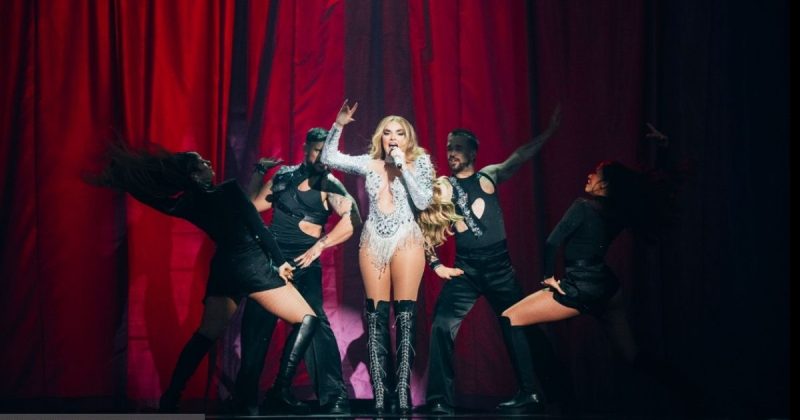
Although the festival has effectively become a local music competition that will not send any act to Europe, the backstage drama refuses to die down. At the centre of the storm is Melody, who represented Spain at Eurovision 2025 and finished in a disappointing 24th place. Melody, who is in complete disconnect from the broadcaster and has even strongly criticised its conduct, will appear in the final despite the deep tensions and the fact that she previously declared she would only return if “the conditions changed”.





The Absurdity of the “Chanel Clause”
Melody’s forced appearance stems from a strict legal provision in the contract she signed, referred to by Spanish media as the “Chanel Clause” (La cláusula Chanel). The clause was created after Chanel – Spain’s representative at Eurovision 2022, where she finished 3rd – refused to appear in the 2023 national selection. As a result, RTVE decided to require all future winners “to be available to perform at the events selecting the next Eurovision representative.”
The irony is hard to ignore: the clause was designed to promote Eurovision, but now, with Spain boycotting the contest over Israel’s participation, Melody is compelled to honour a contract that has lost its original context. The singer tried to project business as usual and said in a video to fans: “I’ll be with you at the final”, yet it is clear to everyone that this is a legal obligation being enforced amid extremely strained relations between the artist and the broadcaster.
Bad Blood Since Basel
Melody’s return to the Benidorm stage is highly charged. Her relationship with RTVE collapsed after the disappointing result in Basel, when she blamed the production for the poor outcome, saying: “I would rather finish low with my own mistakes than with the mistakes of others.” This statement was not forgotten in the broadcaster’s corridors and set off a chain of unpleasant events.
The low point came on New Year’s Eve, when the channel chose to mock Melody live on a satirical programme, portraying her as a ridiculous character obsessed with herself.
A Pattern of Heavy‑Handed Tactics?
For many European viewers, it is hard not to notice a clear pattern connecting these incidents: the Spanish national broadcaster appears to have adopted a harsh and uncompromising approach in its handling of both artists and international politics.
The same broadcaster that has taken the extreme step of boycotting Eurovision and withdrawing from the contest is also the one that decided to publicly “settle scores” with its own representative on live television and to enforce strict legal sanctions against her. RTVE increasingly seems to have replaced the spirit of Eurovision with a spirit of small‑scale political point‑scoring and internal score‑settling, both outwardly and inwardly.
RTVE’s “Payback”: Banning Interviews with Competitors
As part of the lessons drawn from the “Melody affair”, the broadcaster has tightened the conditions even further this year. The contract for the 2026 participants (who, as noted, will not go on to Eurovision) now includes a clause prohibiting them from giving interviews to rival media outlets, a move introduced after Melody voiced criticism on other channels.
This Saturday she will step onto the Benidorm stage. The smiles may be there, but for viewers at home the aftertaste is likely to be bitter: a musical celebration overshadowed by a political boycott, and a singer forced to perform in front of a broadcaster that has turned its back on her.
Spain in Eurovision 2025
“Esa Diva” (in English: “That Diva”) is the title of the song performed by singer Melody, who represented Spain at Eurovision 2025 in Basel, Switzerland.
Spain finished 24th with 37 points – 27 points from the juries, placing 21st, and only 10 points from the televotes, placing 22nd. In the last 20 years, Spain managed to finish only 3 times in the top 10.
Eurovision 2025: This was Spain’s 65th participation in Eurovision. Spain joined the competition in 1961 and won it twice consecutively in 1968 and 1969. Spain has hosted the contest on its territory only once in 1969 and since then holds the longest waiting time since its last victory – 56 years.

Email: [email protected]
Phone: +072-50-9441919
Noy Yehoyada is an Israeli journalist and content creator at the EuroMix team since 2024, bringing a personal, feminine, and LGBTQ+ voice into the Eurovision sphere. A devoted Eurovision fan since the age of 16, she plays an active role in covering the contest—including on-site reporting at Eurovision 2025 in Basel and across European pre-party events. Alongside her writing and commentary, Noy plans the editorial schedule for the website, closely tracks national selections and song reveals, participates in live broadcasts, and creates digital content focusing on representation, musical diversity, and emotional connections.
Beyond her work at EuroMix, Noy has over six years of experience in the cosmetics and pharma industries, with a background in sales, personal consulting, and managing beauty departments. She enjoys pop, rap, contemporary art, and traveling in Europe—and especially loves songs that make her want to dance, as well as those that tell a story.