Denmark’s Eurovision 2026 representative, Søren Torpegaard Lund, held his first rehearsal in Vienna with the song “Før vi går hjem”. Stay tuned for all updates from Austria.
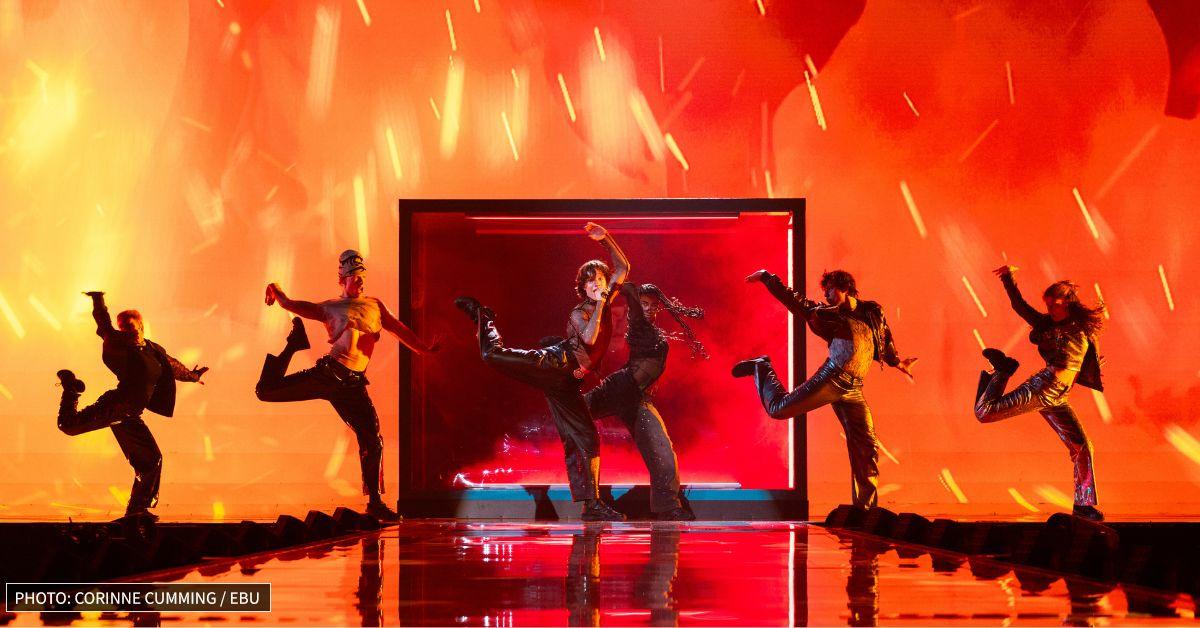
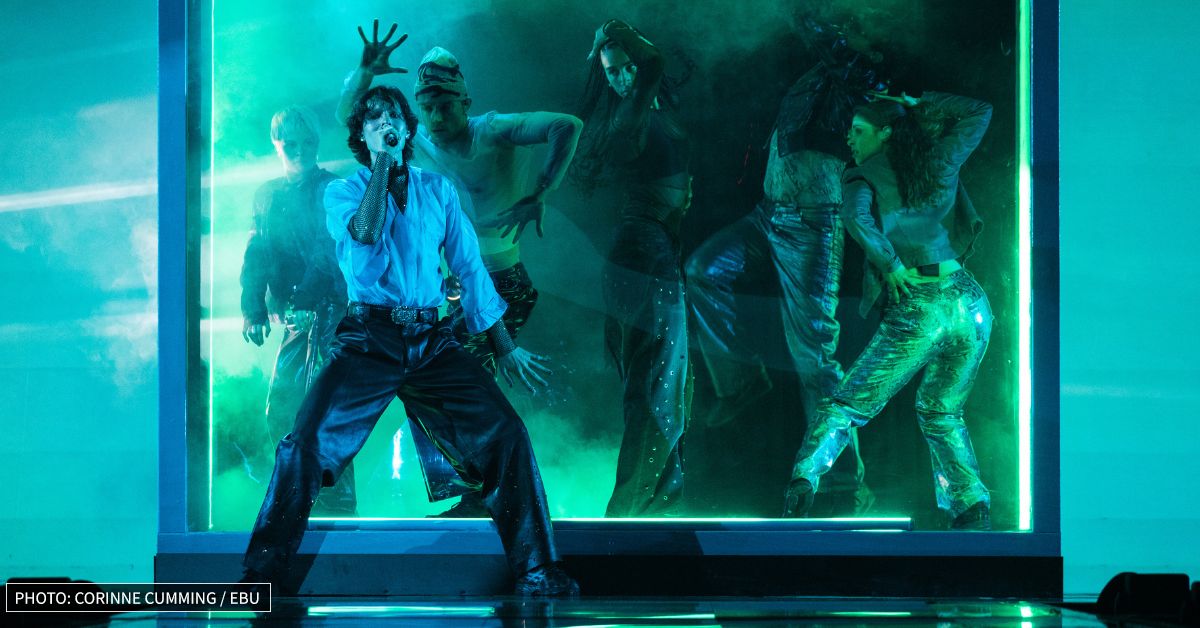
The stage in Vienna, Austria, hosted a first rehearsal that felt less like a test run and more like a performance already perfected. Søren Torpegaard Lund stepped up with “Før vi går hjem” (In English: “Before We Go Home”) carrying a hermetically sealed concept: the famous box from Denmark’s “Dansk Melodi Grand Prix” was transferred as-is to the Eurovision stage. No dismantling, no rebuilding — as if any alteration might risk losing a gram of its magic. From the very first note, it is clear: this is not an adaptation to a new stage, but a precise reconstruction with targeted upgrades.
Denmark’s First Rehearsal: More Details
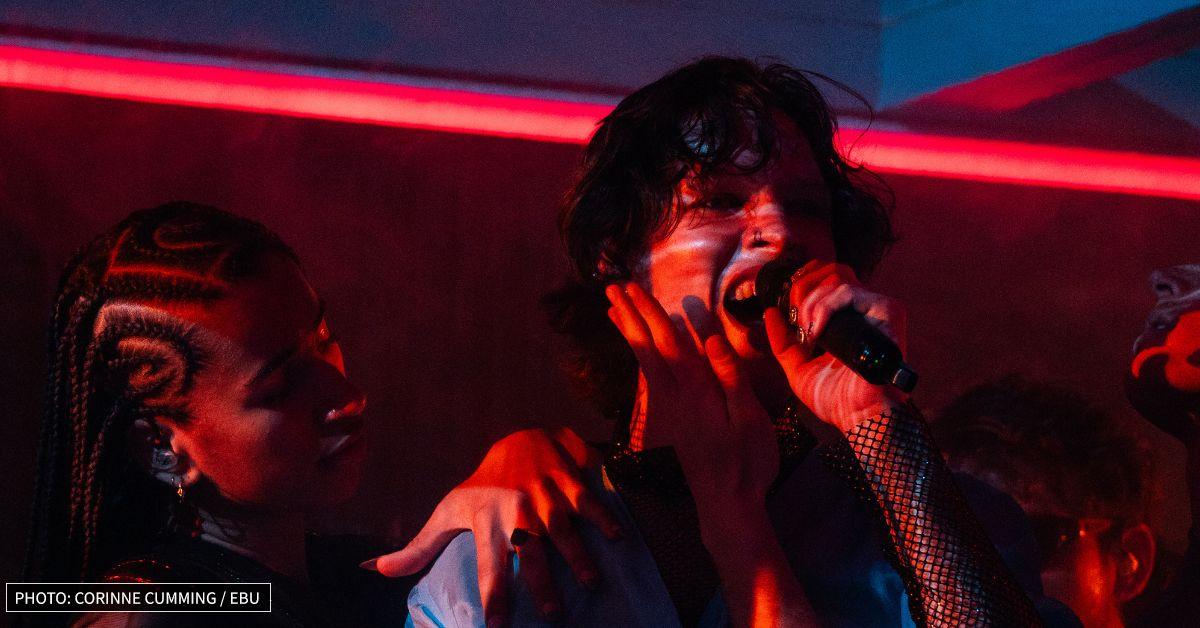
At the beginning of the song, Søren stands inside the box dressed in black leather trousers and a glowing aquamarine shirt. Red tube lights within the structure begin to pulse and intensify as the song progresses, deliberately creating a suffocating visual atmosphere. Then comes the moment that shifts the focus entirely: the shirt is ripped off, revealing a sparkling black mesh top underneath. This element, combined with intense movement already in the first verse, raises the temperature on stage even before the chorus hits.
From the Box to the Storm — and from the Storm to Fire
Toward the end of the performance, Søren steps out of his “sweat box” and moves to the front of the stage. The floor and screens behind him fill with a digital storm, clouds, and sweeping motion that surrounds him from every direction. But this is not the peak: in the final 20 seconds, the graphics transform into giant flames that consume both the screen and the floor. This transition completes a visual arc that begins with contained heat and ends in fully visible fire.
Vocal Stability Despite Relentless Movement
One of the standout details of this first rehearsal is Søren’s vocal stability while executing demanding choreography. Even as the physical intensity increases and breathing should become heavier, the singing remains precise and powerful. Between run-throughs, vocal warm-ups could be heard that left delegation members visibly astonished.
Recreating the concept may sound conservative on paper — but on the Vienna stage, it comes across as a confident move that refuses to take unnecessary risks. The question is not whether it will work again, but how intensely it will burn in front of millions of viewers.