RTVE manager Sergio Calderón hints at a 2027 return as Christer Björkman warns that Spain’s absence is driving up EBU participation fees.
Eurovision 2026 is still one week away from its commencement in Vienna, but several nations are already looking ahead toward Eurovision 2027. In Spain, which withdrew from the current competition due to the participation of Israel, the door is being left open for a potential return following a surprising statement from the Spanish national broadcaster, RTVE.

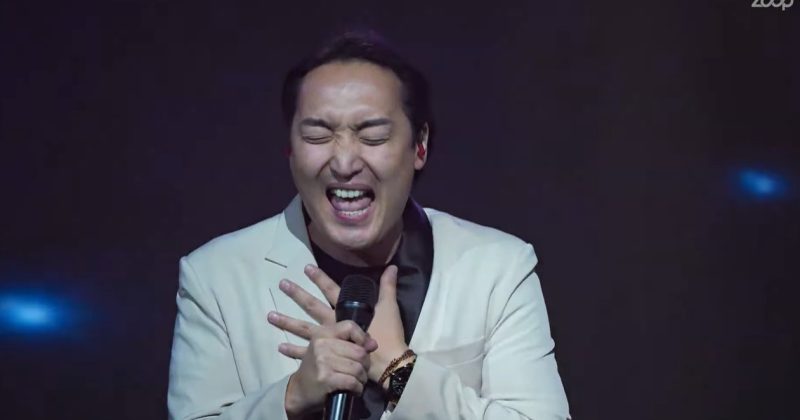

The Spanish national broadcaster stated that it “understands the concern” expressed by the EBU regarding the complex state of the competition. Veteran Swedish producer Christer Björkman, who is considered one of the most senior and influential figures behind the scenes of the contest and produced the recent Eurovision 2025 in Basel, revealed in an interview with the Swedish national broadcaster SVT that the withdrawal of Spain has severely damaged the Union’s financial balance. As a result, Björkman predicts a significant increase in the participation fees that will be collected from the countries for the 2027 edition.
The manager of RTVE, Sergio Calderón, responded to several media outlets in Spain regarding possible contacts between the parties concerning a potential return to the contest, stating:
“Starting from May 17th, we will see if the conditions for future participation exist”.
The contest director, Martin Green, also addressed the situation regarding Spain and the other withdrawing nations, stating:
“We miss these countries and want them to return. We will do everything in our power to bring them back to the competition”.
Politics and Boycotts: The Spanish Senate Investigation
As a reminder, the Spanish national broadcaster RTVE announced last December its complete withdrawal from Eurovision 2026 and even declared that it would not broadcast the contest at all, in protest against the refusal of the EBU to disqualify Israel. This extreme move is not isolated from the internal political context: the Spanish government, led by Pedro Sánchez, relies on a coalition with far-left parties and leads a harsh diplomatic line against Israel.
This conduct by the national broadcaster recently led to the establishment of an investigation committee in the Spanish Senate, intended to examine the politicization and government involvement in the decision to boycott the competition. Curiously, while the Senate investigates the biases of the national broadcaster, the EBU chose to back RTVE and expressed “deep concern” regarding the investigation, claiming a violation of broadcasting independence. Currently, it appears that political struggles and hypocrisy are not only harming the Spanish audience but are directly damaging the European production budget and placing a heavier burden on the rest of the participating nations.
Eurovision 2026 – Dates and times
Eurovision 2026 will take place in May, continuing the long‑standing tradition.
Here are the exact dates:
- First semi‑final: Tuesday, May 12th, 2026
- Second semi‑final: Thursday, May 14th, 2026
- Grand final: Saturday, May 16th, 2026
For those asking “What time does Eurovision 2026 start?”, each live show is scheduled to begin at 21:00 CET, making it accessible to viewers right across the continent.
Spain in Eurovision 2025
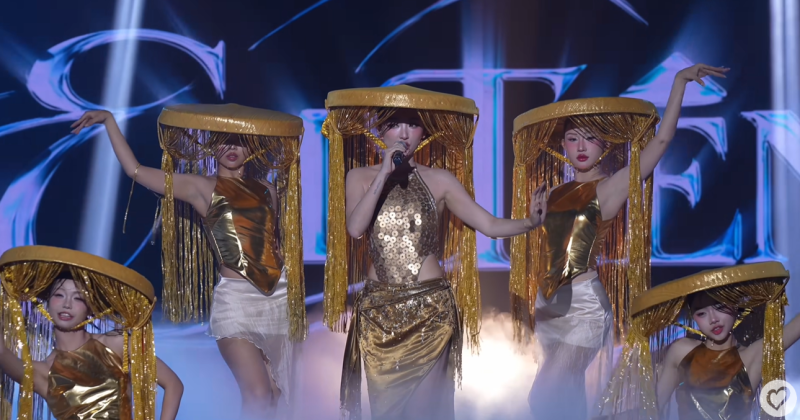
“Esa Diva” (in English: “That Diva”) is the title of the song performed by singer Melody, who represented Spain at Eurovision 2025 in Basel, Switzerland.
Spain finished 24th with 37 points – 27 points from the juries, placing 21st, and only 10 points from the televotes, placing 22nd. In the last 20 years, Spain managed to finish only 3 times in the top 10.
Eurovision 2025: This was Spain’s 65th participation in Eurovision. Spain joined the competition in 1961 and won it twice consecutively in 1968 and 1969. Spain has hosted the contest on its territory only once in 1969 and since then holds the longest waiting time since its last victory – 56 years.

Email: [email protected]
Phone: +972-50-9441919
Ilay Gaist is a leading Israeli content creator and writer specializing in the Eurovision Song Contest. He is a well-known commentator with extensive expertise in the contest’s history, rules, and dynamics. His passion for Eurovision drives him to deliver rich, professional, and innovative content to his audience.
Ilay holds a bachelor’s degree in Arabic and has a multilingual background. He also engages in cultural research, with a particular focus on global culinary traditions and the evolution of local cuisines around the world.