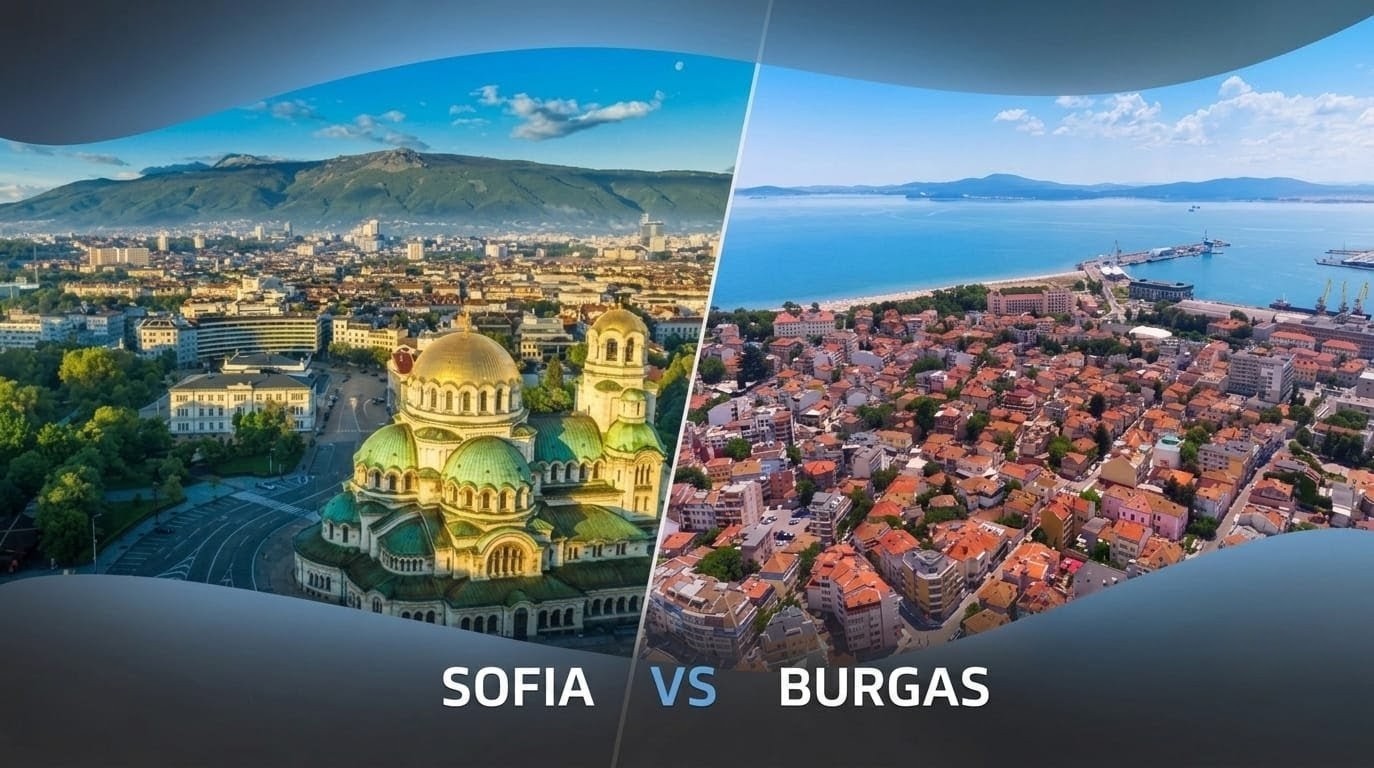
BNT rejected Sofia’s bid for Eurovision 2027 in favor of Burgas, sparking a failed local protest and revealing hidden arena and sustainability plans.
Last night (Friday), a protest organized by residents of Sofia was scheduled to take place in front of the Bulgarian national broadcaster (BNT) headquarters under the banner “We want Eurovision 2027 in Sofia”, following the selection of the tourist city Burgas as the host city.
In a statement, the organizers argued that it is very difficult to professionally justify choosing Burgas over the capital, especially for a massive international event like the Eurovision Song Contest. They emphasized that Sofia possesses a large stadium, an international airport with a direct and fast metro connection to the city center, advanced transportation, and the largest supply of accommodations in the country. On the surface, everything indicated that a legitimate demonstration was being organized, but when the time came, no one showed up to protest.








The absence of the demonstrators at the protest location is quite amusing given the fact that they had every argument in the world as to why Sofia should have been chosen over Burgas. Beyond the technical data, the organizers mentioned that the right to host the competition arrived thanks to the historic victory of the singer Dara at Eurovision 2026. Dara herself even stated publicly that she prefers to see the contest held in Sofia. “And yet, Burgas was chosen,” the organizers claimed, questioning the criteria used in the selection and whether political considerations played a role
Politics Behind the Scenes?
The protesters also noted that Sofia might have been pushed into a corner due to political struggles within the country. Sofia is currently managed by political figures identified with the opposition, who are not part of the government. The protesters warned that the massive cultural event has become a political playing piece ahead of the upcoming local and presidential elections. Despite all the preliminary preparation for the demonstration, it ultimately ended in one big failure, and it seems the residents of Sofia will manage to cope with the selection of Burgas. Even though the coastal city is the one that won the race to host Eurovision 2027, Sofia is still expected to receive many tourists thanks to the contest and gain international exposure.
New Details on Sofia’s Eurovision Bid
Beyond the protest, new details are being revealed regarding Sofia’s bid to host the competition, which was ultimately rejected. According to the documents submitted on behalf of the Bulgarian capital, the solution to the main drama was changing the name of the “Arena 8888” stadium to “Arena Eurovision”, following the European Broadcasting Union (EBU) rules that prohibit the appearance of sponsor names in the venues hosting the contest. The plan also included the use of the small existing hall next to the stadium as the press center, while a temporary structure would be established in the parking lot area for the participants and delegations.
One of the most interesting aspects of the proposal concerned the transportation infrastructure. The plans included the construction of a pedestrian bridge over Asen Yordanov Boulevard, which would connect the stadium with the Sofia Technology Park and a future subway station. Even though the city did not ultimately win the tender to host the event, it appears that the construction of the bridge will go ahead anyway, as it is part of a broader project to expand the subway system.
Sustainability and Bulgarian Culinary: The Full Venues Plan
Sofia’s plan also included hosting the Eurovision Village and the official opening ceremony of the contest at the Palace of National Culture. The historic Yunak Stadium located in Borisova Garden, alongside the Toplotsentrala cultural center and the beloved Euroclub, were intended to serve as the arena for the “Eurovision Youth Stage”, dedicated to young Bulgarian artists.
As part of its proposal to host the competition, the city presented a comprehensive plan that included holding the allocation draw during the month of January at the historic Ivan Vazov National Theatre, and transforming the Vitosha Boulevard pedestrian street into the ‘Eurovision Food Street’, which would offer Bulgarian culinary experiences to visitors. Additionally, the proposal placed significant emphasis on the transportation network: the central avenue connecting the airport to the city center was planned to temporarily change its name to ‘Eurovision Boulevard’, minibus lines were promised to link the event centers, and a completely free public transportation system was offered for all delegations, journalists, and accredited staff.
Furthermore, the plan was characterized by a green and sustainable vision, featuring the establishment of free water stations, encouragement of the use of reusable bottles, energy-efficient equipment, and the extensive deployment of recycling stations across all event complexes, similar to what was done at the recent Eurovision in Vienna.
Last Wednesday, it was revealed that Burgas won the bid to host the upcoming Eurovision Song Contest, overtaking Sofia’s proposal. This will mark the first time Bulgaria hosts Eurovision, following the historic victory of DARA at Eurovision 2026, which took place in Vienna, Austria, last May.
Alongside the announcement of the host city, the dates for the contest were also revealed:
-
First Semi-Final: May 11th (Tuesday)
-
Second Semi-Final: May 13th (Thursday)
-
Grand Final: May 15th (Saturday)
For Burgas, this will be the first time hosting a Eurovision event, whereas Sofia previously hosted Junior Eurovision in 2015. The designated venue, “Arena Burgas”, can accommodate around 15,000 spectators during music shows. Unlike last year, the host city is not the capital of the winning country – a trend seen in contests between 2019 and 2025.
Burgas is the fourth-largest city in the country, with a population of approximately 189,086 as of December 2025.
According to a poll conducted on the EuroMix website, 67.62% of respondents selected Sofia as the most suitable city to host the competition. However, it appears that the European Broadcasting Union and BNT did not agree with the EuroMix audience’s choice, believing instead that Burgas possesses the appropriate infrastructure to host the contest.
Eurovision 2027: The 71st Eurovision Song Contest will be held in Burgas, Bulgaria, following the country’s first historic win with the song “Bangaranga” performed by DARA. This will be the first time the contest is hosted in Bulgaria.

Email: [email protected]
Phone: +972 50-944-1919
A leading journalist and content creator in the Eurovision field.