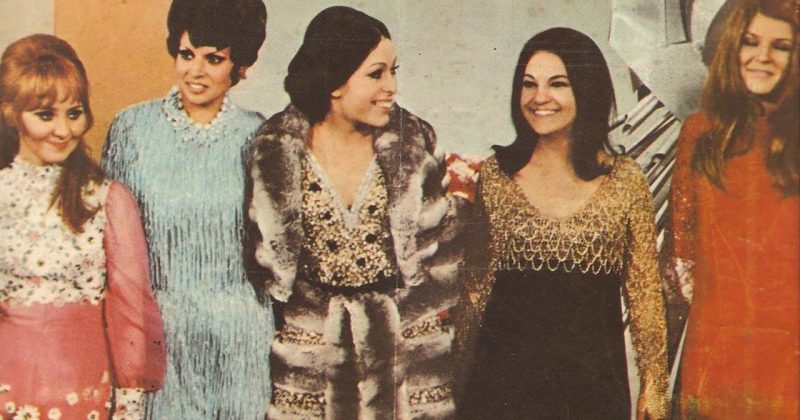
Lulu, who tied for first place with three others at Eurovision 1969 with “Boom Bang-a-Bang”, recently took part in a personal interview where she revealed some deep struggles, how she overcame them-and the way it connects to her forthcoming album “Let the Girl Sing Out”.
In the Eurovision universe, 1969 is famous for having the first ever tie for the gold medal at the contest. Four participants all managed to accumulate the same number of points, among them Lulu from the UK. Her sweet, bubblegum style song “Boom Bang-a-Bang” won over European juries and stood out a bit from the other contenders to lead the British to (a shared) victory. However, one person was not thrilled with it all, the artist herself.
Lulu did not mind winning at all, it was the song itself that really bothered her. See, the singer did not appreciate the track perhaps as much as the rest of the panels did across Europe. In her words with Shaun Curran of inews.co.uk:
“I would have a lot of going home and crying and saying, ‘Do I have to do that song? It’s not me.'”
In fact, this was a microcosm of her career for a while.
Lulu, born Marie McDonald McLaughlin Lawrie, grew up in a tenement apartment in Glasgow, Scotland with three other siblings. While things were tight financially in her home, there were other deeper and darker things happening that would shape her forever.
In a memoir released in late 2025, Lulu revealed something that she’d never spoken about before. In her “war zone” of a home as she called it, her father had an alcohol addiction that would constantly spill over into severely beating her mother, leaving Lulu and her siblings to witness it all, only to hide it from the neighbors for fear of the stigma surrounding addiction and abuse. Lulu attributes her insecurities, people-pleasing, and her own future issues with alcohol later mainly to what she went through back home as a small child.
Despite her volatile upbringing, Lulu achieved fame rather quickly. At age 14, she released “Shout”, and it rocketed her to immediate success. She was relocated to London to collaborate with her erstwhile manager Marion Massey and thus her career began. Lulu released hit after hit, and five years later she won Eurovision. And for years, she kept on singing and pumping out her songs.
This all came at quite the cost, however. “I had an act,” she says.
“I was told to change my name, change my accent, change my character. I tried to do the best I could do. And it was an act that actually stuck to me very closely because I lived in terror of not being perfect,”
she said in the interview. Her fame came from bending to the industry and shaping herself into someone she hardly recognized. She wanted to include American rock and gospel, for example, but instead was steered towards light entertainment and tv shows. The “rough-edged” teenager from Glasgow was “smoothed” into a woman the public would go along with.
But Lulu went on singing, and rubbed shoulders with the likes of Jimi Hendrix, The Beatles, Elton John, Tom Jones and The Who. She parted ways with her manager in 1989 in search of better material and opportunities, and more hits followed. And throughout it all, she drank.
Lulu eventually came to a point where she decided to look at her life, her accountabilities, her responsibilities, and where she may have taken too much of it all. In 2013, she sought treatment out in sunny southwestern Arizona, where she learned she had been suffering from C-PTSD all those years, and became sober. Now, years later, Lulu seems to have taken a different approach in her career and life, her new album “Let the Girl Sing Out”, coming out in January 2027, will be co-written by Lulu and her brother Billy, a songwriter himself, giving her the room she’s always wanted to be creative and, in essence, just to be herself. She tributes the album cover song to her younger self, but also to the women in the music industry today, she calls:
“There are so many, and they’re all killing it. I want to honor the young women today. Because it was hard when I started. And there were very few of us,”
The dance track “I’m in Love Again” expresses her newfound sense of freedom, spirit, and joy, with her head high for the future, this will be Lulu’s 16th studio album at age 77. She may not have had a perfect time and still may have challenges, but despite it all, she brings hope, positivity, and love not just to Eurovision fandom, but to the entire world.