
Estonia’s national broadcaster ERR has confirmed that 155 songs have been submitted to “Eesti Laul 2027”, through which the country will choose its representative for Eurovision 2027 in Burgas, Bulgaria.
The Estonian national broadcaster ERR has announced that 155 songs have been submitted for the national selection “Eesti Laul 2027”, which will determine Estonia’s entry for the Eurovision Song Contest 2027.
Following ERR’s confirmation of its participation in Eurovision 2027 and its decision to once again use the “Eesti Laul” format to select its Eurovision representative and song, the national broadcaster has now revealed that 155 songs were submitted to the competition.






Fewer Submissions Than in Previous Years
The figure represents a decline compared with the previous two editions of the Estonian selection. In 2026, 171 songs were submitted to Eesti Laul, while 175 songs were submitted in 2025. This means that this year’s total is 16 songs lower than last year and 20 songs lower than in 2025, of the 155 songs submitted this year, 60 are in Estonian, while 95 are in foreign languages. One of the songs even makes use of an invented language.
Alongside Estonian songwriters, the 2027 edition has also attracted significant international participation. Creators from more than 20 countries submitted songs to the competition, including songwriters from neighboring Finland and Latvia, as well as creators from the United States and Australia.
Riin Vann, producer of “Eesti Laul”, noted that the Estonian selection is becoming increasingly international each year, with collaborations between Estonian artists and songwriters and creators from abroad continuing to expand.
Countdown Begins: Key Dates for Eesti Laul 2027
The qualifying artists and creators will be revealed to the public no later than October 29th, 2026, with the songs themselves set for official release on November 27th. The grand final of “Eesti Laul 2027” will air live on January 30th, 2027, from the Unibet Arena.
To guarantee complete fairness, the selection of the 12 songs advancing to the grand final will be conducted via “blind judging” by a panel of at least 25 music industry professionals and fans, who will not know the identities of the artists or creators behind the entries.
Estonia’s decision to take a proactive step against boycott trends signals a clear stance from the Estonian national broadcaster. It aims to keep politics off the musical stage and ensure that anyone entering the national selection does so with full, professional commitment to representing the nation honorably through to the end.
Estonia in Eurovision: Tough Start, But a Successful Resume
Estonia has participated in the Eurovision Song Contest 30 times, with one victory, one absence, and one additional occasion when their participation was canceled – in Eurovision 2020, when the entry by Uku Suviste and his song “What Love Is” was canceled due to the COVID-19 pandemic.
Estonia is considered a persistent and strong country in the competition, having been absent only once (not by their own choice), and achieving several notable successes. However, every beginning is difficult… In its debut participation in 1994, Estonia struggled and finished in 24th place out of 25 countries, a result that caused its only absence from Eurovision in 1995. But with its return in 1996, Estonia recorded several impressive and high achievements, including the victory by Tanel Padar, Dave Benton, and the duo 2XL at Eurovision 2001, and Sahlene’s third place on home ground the following year. With the introduction of semi-finals, Estonia experienced five difficult years in the competition, failing to qualify for the final in every contest between 2004 and 2008.
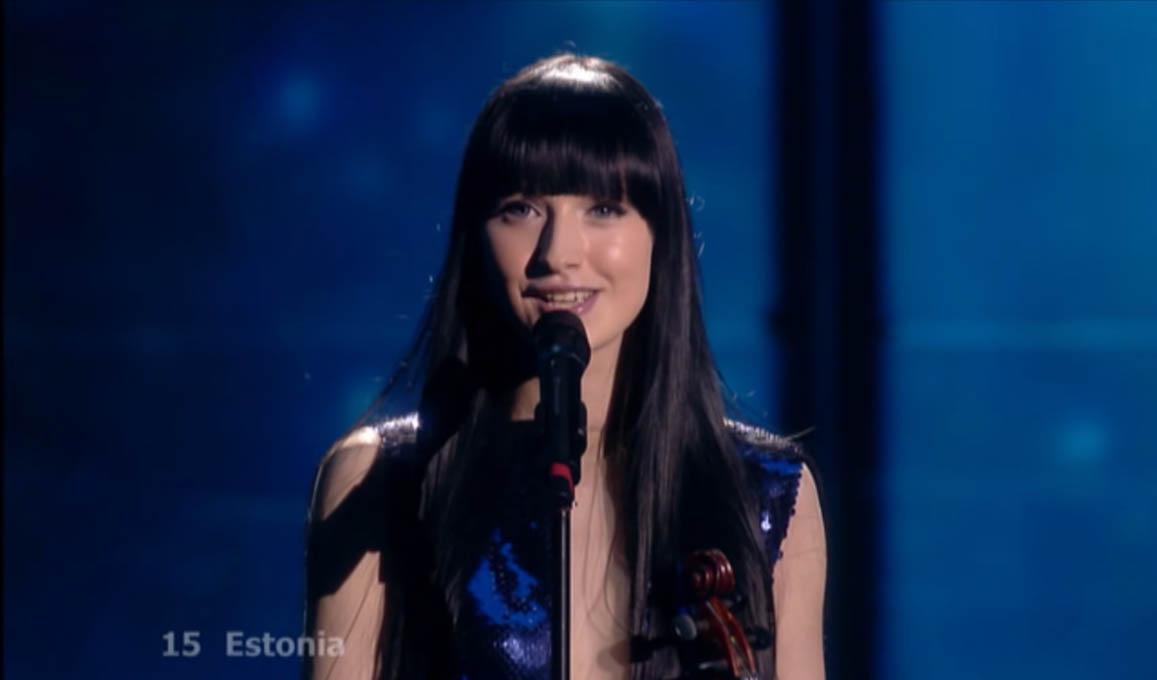 Ahead of Eurovision 2009, Estonia changed the name of its national selection contest. Change of venue, change of luck? Eurovision 2009 seemed to confirm this, as the band Urban Symphony reached sixth place in Moscow, Russia, with their song “Randajad“.
In Eurovision 2010, Estonia again failed to reach the final, but quickly recovered and began qualifying more frequently. The years were not easy, as in 2016 Estonia recorded its worst result – last place, and in 2017 its path was fraught with issues, mostly technical. However, since Eurovision 2018 Estonia has succeeded in returning and cementing its status as a successful country.
Today, Estonia manages to secure more spots in the final than to lose them, and even when forecasts are against it, Estonia keeps its head high and manages to bring its representatives to the final stage. Since 2018, Estonia has qualified for the final in six out of seven competitions held. Will Estonia continue this streak and reach the final again in Vienna? Ma Ei tea (I don’t know)…
 Estonia has won Eurovision once, at Eurovision 2001, and reached the top five four more times: twice in third place, at Eurovision 2002 and Eurovision 2025, once in fourth place at Eurovision 2000, and once in fifth place at Eurovision 1996. Estonia has also placed seven more times in the Top 10, including three sixth places (in 1999, 2009 and 2012), once seventh place (in 2015), and three eighth places (in 1997, 2018 and 2023).
Estonia at Eurovision 2026
“Too Epic To Be True” is the song that was performed by the girl group Vanilla Ninja, which represented Estonia as song number 9 in the first semi final on May 12th, in Vienna, Austria. The song reached 11th place in the semi final with 79 points.
The song was written by Estonian composer Sven Lõhmus, who wrote many songs that represented Estonia at Eurovision in 2005, 2009, 2011, 2017, and also the song that represented Estonia at the Junior Eurovision Song Contest in 2024. The song is performed entirely in English.
Eurovision 2027: This will be Estonia’s 32st participation in Eurovision. Estonia joined the contest in 1994 and achieved its best result in Eurovision 2001 when singers Tanel Padar, Dave Benton and 2XL, won first place with the song “Everybody”.
Email: [email protected]
Phone: +972-53-9514754
A writer and content creator with a strong specialization in the Eurovision scene, particularly across Eastern Europe and post-Soviet countries. His work highlights the artistry, storytelling, and cultural variety that define the contest, offering readers a deeper look into both established performers and emerging voices.
As a skilled translator and polyglot, he brings a unique linguistic and cultural understanding to his analysis and coverage..