
Spain’s broadcaster RTVE considers extending its Eurovision boycott into 2027 due to Israel’s participation. Explore the political backdrop behind the vote.
Spain could decide in November whether to continue boycotting Eurovision 2027 over Israel’s expected participation in the contest. According to Spanish media reports, the Spanish national broadcaster RTVE’s board is expected to discuss the country’s future in Eurovision on November 17th, less than two weeks before the general election that could bring down the current government, which strongly opposes Israel. Is this a legitimate decision-making process or a cynical and unacceptable move?



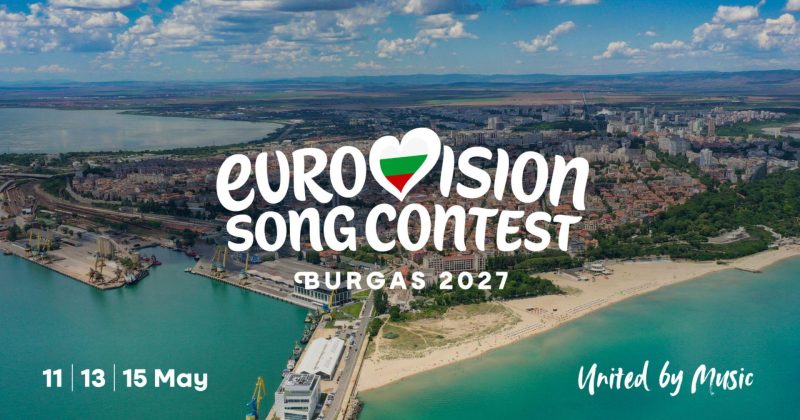



Spain may decide in November whether to continue its Eurovision boycott in response to Israel’s expected participation in the 2027 contest. The issue was not included on the agenda of RTVE’s board meeting on October 15th. The next meeting is scheduled for November 17th, although a special meeting could potentially be convened earlier.
On September 22nd, RTVE President José Pablo López, who has previously made remarks described as bordering on antisemitism, announced his intention to propose that the board extend Spain’s Eurovision withdrawal into 2027 for as long as Israel remains in the competition. He made the statement while appearing before the parliamentary committee overseeing RTVE’s activities.
Spain has already withdrawn from Eurovision 2026, but no decision has yet been made regarding 2027. López is expected to present the board with a proposal to extend the withdrawal for another year. The European Broadcasting Union has stated that it respects the process and is awaiting the board’s decision.
The Election Adds a Political Dimension to the Decision
According to a report by The Objective, the planned discussion will take place just 12 days before Spain’s general election, scheduled for November 29th. The timing could give the decision a politically contentious dimension. Opinion polls suggest that the government of Pedro Sánchez, which has strongly opposed Israel, could fall following the election. The timing would allow RTVE, which operates under the government’s authority and includes numerous representatives affiliated with Sánchez’s party, to continue the boycott despite the possibility that Spanish voters may not support such a policy.
Spain’s general election is taking place amid political divisions over relations with Israel and the country’s participation in Eurovision. In May 2026, Prime Minister Pedro Sánchez expressed support for RTVE’s decision not to participate in that year’s contest. In contrast, according to Spanish media reports, the People’s Party (PP) and Vox, which are expected to form a government together if current polling proves accurate, oppose Spain’s withdrawal from the competition and support improving diplomatic relations with Israel.
Against this backdrop, the question of Spain’s Eurovision participation could become part of the broader debate over the country’s policy towards Israel and the role of politics in an international music competition. However, this does not necessarily mean that Eurovision will be a central issue in the election, nor does it establish that the anticipated decision is intended to benefit any particular political party.
Strong backlash and complaints over the boycott
According to a report by RTVE’s public ombudsman, more than 100 submissions dealt directly with the Eurovision Song Contest, with the overwhelming majority focusing on the controversial decision to boycott the event.
Of the submissions received, 96 were official complaints that strongly criticized RTVE’s decision not to participate in or broadcast Eurovision 2026, making Eurovision the subject of the largest number of complaints against RTVE during the quarter.
The second-largest issue, with 95 official complaints, concerned what was described as biased coverage by RTVE of the “Global Sumud Flotilla” to the Gaza Strip, which was led by Swedish Eurovision 2009 representative Greta Thunberg’s daughter.
Spain in Eurovision 2025
“Esa Diva” (in English: “That Diva”) is the title of the song performed by singer Melody, who represented Spain at Eurovision 2025 in Basel, Switzerland.
Spain finished 24th with 37 points – 27 points from the juries, placing 21st, and only 10 points from the televotes, placing 22nd. In the last 20 years, Spain managed to finish only 3 times in the top 10.
Eurovision 2025: This was Spain’s 65th participation in Eurovision. Spain joined the competition in 1961 and won it twice consecutively in 1968 and 1969. Spain has hosted the contest on its territory only once in 1969 and, since then, has had the longest waiting time since its last victory – 56 years.

Email: [email protected]
Phone: +972-53-9514754
A writer and content creator with a strong specialization in the Eurovision scene, particularly across Eastern Europe and post-Soviet countries. His work highlights the artistry, storytelling, and cultural variety that define the contest, offering readers a deeper look into both established performers and emerging voices.
As a skilled translator and polyglot, he brings a unique linguistic and cultural understanding to his analysis and coverage..