Montesong scandal in Montenegro: Krstinja Todorović attacks judge Nina Žižić after Tamara Živković’s win. Organizers condemn contestants’ conduct amid festival chaos.
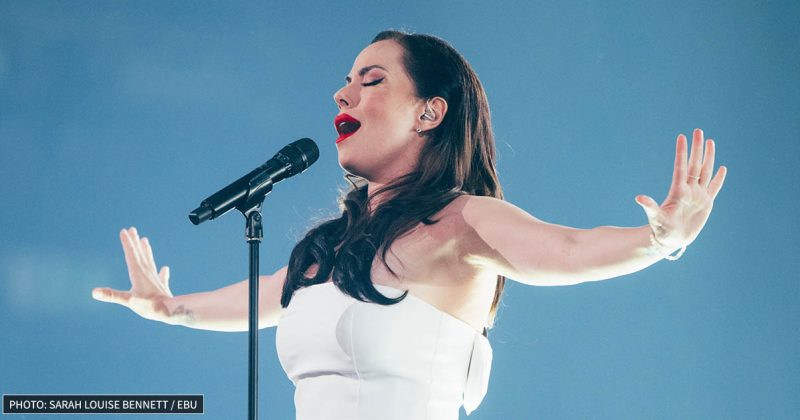
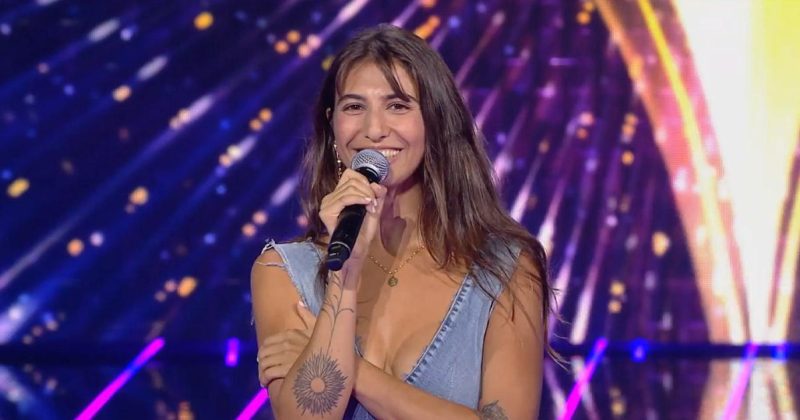
It seemed Montenegro had peacefully chosen its representative for Eurovision 2026, Tamara Živković, during a festive and uneventful evening. But the real drama began once the cameras stopped rolling. Krstinja Todorović, who placed fourth in the national final “Montesong”, launched a harsh and personal online attack against head juror and former Montenegrin representative Nina Žižić.



“How are you not ashamed?”
Todorić’s outrage erupted after discovering that Žižić, as the head of the jury, had awarded her just four points for her performance of “Oli Oli.” On Instagram, the disappointed singer posted a passionate series of stories attacking Nina’s professional and personal credibility.
“I would like to ask Mrs. Žižić – that was her name, right? – what criteria she used to distribute her points,” Todorović wrote angrily. She went on to mock Nina’s previous Eurovision performance in Basel: “Considering your ‘brilliant performance’ at Eurovision, how are you not ashamed? You’ll never manage to sabotage a good song – get that through your head.”
The attack didn’t stop there. Todorović shared followers’ mocking comments and added her own sharp remarks: “The audience still laughs at you and remembers every off-key note. Arrogance will be your downfall. You’ll always have a ‘choked throat’ until the end.” She further noted that though she once respected Nina as a veteran colleague, that respect had vanished: “I ignored your off-key notes at Eurovision, but tonight you showed just how arrogant you truly are.”
Festival organizers respond: “Behavior that crosses all red lines”
The Montesong festival management, led by director Danijel Alibabić, quickly responded to the incident with an official and strongly worded statement.
“As the festival director, I wish to express full support and protection for jury members Asja Džogović and Nina Žižić, who were the targets of inappropriate verbal attacks by certain contestants,” the statement read. “Such conduct is completely unacceptable, contradicts the principles of culture, professionalism, and respect, and I strongly condemn it.”
The production also disclosed that several disappointed contestants went further by withdrawing from an official post-show event just one night before it was due to take place, seemingly in protest of the results. “This kind of action clearly reflects a lack of professionalism and responsibility toward the organizers and the audience,” the management declared, distancing itself from the participants involved.
הצגת פוסט זה באינסטגרם
“Mass no-show”: the event that was canceled
The organizers’ frustration stemmed chiefly from the cancellation of a performance at Podgorički Pazar – the traditional Christmas and winter market held annually in the capital, Podgorica. According to prior arrangements, the Montesong finalists were expected to perform at Independence Square the night after the competition. However, the event was called off after several participants refused to appear at the last moment as an act of protest. Alibabić denounced it as “unprofessional and irresponsible toward the event organizers and the audience.”
Nevertheless, the festival head clarified that three contestants should be exempt from criticism: Andrea Demirović, Tina Džankić, and Luka Radović. In his clarification, Alibabić emphasized that these artists “never confirmed their participation in the first place for legitimate reasons, and therefore did not cancel last minute” – thereby directing the blame mainly toward the others, particularly Todorović.
A history of scandals: déjà vu from last year
This is far from the first time Montenegro’s selection process has been overshadowed by controversy, and Nina Žižić’s name seems to reappear at the center of it all. Just last year, ahead of Eurovision 2025, her victory came amid public debate and transparency questions.
The rock band NeonoeN, who won the national selection and were initially set to represent Montenegro, withdrew (or were possibly pushed out in a disputed process) following claims of rule violations regarding the song’s release date. Their departure paved the way for Nina’s representation. It appears those tensions have yet to fade, and Žižić once again finds herself at the center of turmoil—this time as a judge, not a contestant.
Currently, Nina Žižić has not commented publicly on the matter, but Montenegro’s path to the Eurovision stage in Vienna is clearly not a calm one.
Tamara Živković – Who Are You?
 Tamara Živković is a Montenegrin musician who burst into the Eurovision fan scene last year when she replaced a withdrawn artist in the national pre-selection “Montesong 2024.
Following that withdrawal, she sought to represent Montenegro in 2025 with the song “Poguban Let”. Despite being one of the fan favorites, she eventually reached ninth place. This year, competing again with “Nova Zora”. she entered as a leading contender – and ultimately won the national selection. Over the past year, she has released several singles that, unfortunately, did not achieve significant commercial success.
Montenegro in Eurovision 2026
“Nova Zora” (“A New Dawn”) is the song to be performed by Tamara Živković, representing Montenegro at Eurovision 2026 in Vienna, Austria on May 12th, 14th and 16th. The track was written by Boris Subotić, the notable composer behind last year’s Montenegrin entry “Dobrodošli”, and co-produced with Marko Drežnjak.
The song “Nova Zora” is a dramatic female empowerment anthem, depicting a journey of awakening and liberation from a stifling and toxic relationship. The protagonist refuses to be redefined, choosing strength over submission. Through vivid imagery of storms, rain, and fire, the lyrics portray emotional upheaval leading to rebirth – a “new dawn” symbolizing freedom, independence, and self-renewal.

Email: [email protected]
Phone: +072-50-9441919
Noy Yehoyada is an Israeli journalist and content creator at the EuroMix team since 2024, bringing a personal, feminine, and LGBTQ+ voice into the Eurovision sphere. A devoted Eurovision fan since the age of 16, she plays an active role in covering the contest—including on-site reporting at Eurovision 2025 in Basel and across European pre-party events. Alongside her writing and commentary, Noy plans the editorial schedule for the website, closely tracks national selections and song reveals, participates in live broadcasts, and creates digital content focusing on representation, musical diversity, and emotional connections.
Beyond her work at EuroMix, Noy has over six years of experience in the cosmetics and pharma industries, with a background in sales, personal consulting, and managing beauty departments. She enjoys pop, rap, contemporary art, and traveling in Europe—and especially loves songs that make her want to dance, as well as those that tell a story.