After 13 contestants in Portugal’s “Festival da Canção” threatened a boycott over Israel’s participation, Bandidos do Cante say they want to represent Portugal at Eurovision 2026 and remind everyone – music comes first.
For the first time since the contestants for Portugal’s Festival da Canção were announced, one competing act has declared that it will not boycott Eurovision 2026. The group Bandidos do Cante are the first – and so far the only – contestants to state openly: If we win, we will represent Portugal on the Eurovision stage in Vienna, Austria. The band’s statement comes after 13 other contestants in the competition announced that they would boycott Eurovision in protest of Israel’s participation. Within this charged climate, the members of Bandidos do Cante choose a different path – conciliatory, unifying, and above all optimistic.

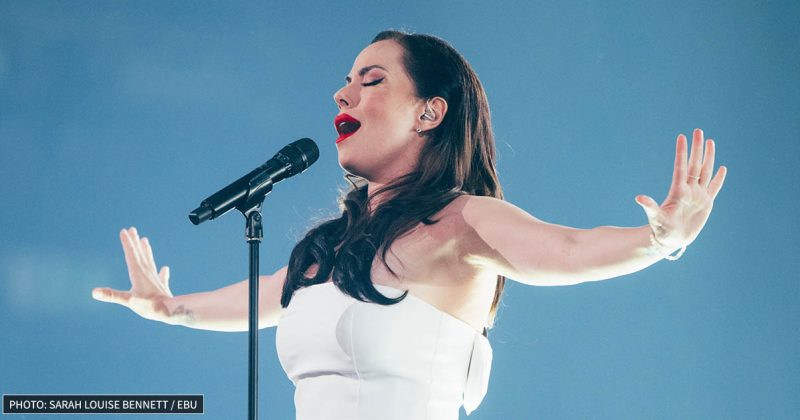




“Believe in the power of songs to bring people together”
Bandidos do Cante are made up of five childhood friends from Alentejo, Portugal. The group’s musical style is a modern interpretation of Cante Alentejano – a Portuguese musical tradition based on a cappella vocal performance, which was added in 2014 to UNESCO’s list of Intangible Cultural Heritage of Humanity.
In a statement published on their official Instagram account, the group became the first contestants in Portugal’s national selection to declare that they are willing and ready to represent the country at Eurovision. This stands in contrast to 13 of the 16 Portuguese contestants who have chosen to boycott the contest due to Israel’s participation, alongside numerous statements issued by past and present artists across Europe.
הצגת פוסט זה באינסטגרם
The text, which carries a refreshing, responsible, and optimistic tone throughout, opens with a conciliatory message. The band emphasized that they do not judge or oppose those who choose a different course of action. In their view, music is not merely a tool for protest – but first and foremost a bridge between people. They continued:
“As a group, we have different sensitivities and opinions on issues that go far beyond our artistic work. Therefore, we do not feel that there must be a single, unified stance taken in the name of the band on complex international matters. Each of us thinks independently, with mutual respect – and from this diversity, our music is born”.
This statement stands out as a point of light amid a storm that has darkened the current Eurovision season. In the face of hostility, hatred, and harsh rhetoric directed at anyone who dares to take part in the competition, Bandidos do Cante adopt a conciliatory stance and remind us all of what lies at the heart of Eurovision:
“We believe that Festival da Canção and Eurovision exist, first and foremost, to celebrate songs, composers, and artists. These are stages where music unites and gives voice to human creativity, especially in difficult times. For us, the core of these events lies in shared art and in the way it connects us”.
“Music Can Bring People Together, Even When the World Pushes in the Opposite Direction”
One of the elements that sets the band apart is the message they seek to convey – a human, inclusive, and non-confrontational message. Their music emphasizes unity, identity, belonging, and authenticity.
At the end of their statement, the group stressed that if they are chosen to represent Portugal at Eurovision, they will do so:
“with responsibility, dignity, and self-respect. We will take with us what defines us to all four corners of the world – always with a positive approach, in a spirit of unity, and with the understanding that music can bring people together, even when the world often pushes in the opposite direction”.
They concluded by saying:
“we believe that at the core of it all, we share the same desire: a more humane, more solidary world, with more music – and above all, peace”.
“There Is Room for Everyone”
The words of the band members offer a conciliatory voice that, unfortunately, has rarely been heard during the current Eurovision season. At a time when any involvement with Eurovision is perceived by many as a stain on the contestants themselves, it is worth returning to the competition’s original purpose.
Irish Eurovision winner Dana Rosemary Scallon expressed a similar sentiment in an interview, stating that “The essence of the song contest is to be a safe space and to unite through music”. She noted how disappointed she is by the current turmoil and added that she “Hopes music can be a space where people are able to come together”.
A comparable voice was heard last month from Greek national final contestant Xannova Xan, who said in an interview to our website that Eurovision is “A music competition, not a political one. Music is love – it is what unites people”. As hatred occupies such a central place this season, she added that she “believes politics should be kept separate from Eurovision” – a principle many seem to have forgotten.
(The full interview is available here.)
The Boycott in Portugal
Bandidos do Cante are the first among all contestants in “Festival da Canção” to take a position different from that of the other artists, who jointly announced two weeks ago that they would boycott the competition if they were to win, as a protest against Israel’s participation. This move is made possible by a new clause added to the festival’s regulations, according to which the winner of the national selection is no longer obligated to represent Portugal at Eurovision – unlike in previous years. At this stage, only two contestants have yet to make their position on the matter public.
Portugal’s national broadcaster RTP has stated that it voted in favor of the new regulations and supported Israel’s participation during the General Assembly of the EBU, a decision that has led to internal opposition among employees.
Artists’ Revolt – Protest Step or Part of a Trend?
 Following these decisions, a storm erupted across Europe, triggering a wave of criticism calling for the conference’s resolutions to be reversed. Iceland, Ireland, The Netherlands, Slovenia and Spain chose to withdraw from Eurovision 2026 due to Israel’s participation, and quite a few former Eurovision participants joined the wave as well – Eurovision 2024 winner Nemo announced that he is returning his winner’s trophy to the EBU as a protest against Israel’s participation, and numerous former representatives in the contest were quick to praise him for “the brave decision”. Following Nemo, Eurovision 1994 winner Charlie McGettigan decided to return his winner’s trophy as well and to join the protest In addition, three other past winners sharply criticized the conference’s decisions – and with them many others – and it seems this has almost turned into a kind of “trend”.
Now, the participants in Portugal’s Festival da Canção have also joined the protest, and the artists’ declaration raises many questions: Does this step come from a genuine place – or are they also simply part of the trend? Why did the artists choose to revolt precisely now? After all, it has been known that since the beginning of the war between Israel and Gaza two years ago there has been criticism by fans and artists over Israel’s participation in Eurovision.
It appears that the artists’ move does not truly stem from a purely genuine protest. Under the current circumstances, the artists have significant backing, and the revolt no longer appears to be breaking boundaries. The trend has already become part of the routine, and as a result, artists who previously would not have dared now suddenly find the courage to protest.
Possible Implications – Could the Revolt Change Portugal’s Eurovision Selection Process?
The chances that one of the revolting participants will win “Festival da Canção 2026” are quite high (81.25%). But Bandidos do Canta’s commitment to representing the country certainly gives a hint of optimism.
In response to the turmoil, the Portuguese national broadcaster RTP stated last week that despite the artists’ revolt, the country will still send a representative to the upcoming contest in Vienna and clarified:
“Regardless of the decision taken by the artists who signed the declaration, whose content we understand, RTP will once again organize Festival da Canção and confirms its participation in Eurovision 2026, together with the overwhelming majority of EBU member countries”.
Although RTP sounds determined that the representative will be chosen through Festival da Canção, the issue raises many questions about the selection process – what will the broadcaster do if one of the boycotting artists wins the festival? Will it choose one of the four artists who did not sign the declaration? Might it replace the boycotting artists with other participants? Or will it instead select another artist entirely via an internal selection? For now, all that remains is to wait and see.
Dates of “Festival da Canção 2026”:
- First Semi-Final – Saturday, February 21st, 2026.
- Second Semi-Final – Saturday, February 28th, 2026.
- Grand Final – Saturday, March 7th, 2026.
“Deslocado” (in English: “Displaced”) is the song that will be performed by NAPA band, representing Portugal in Eurovision 2025 in Basel, Switzerland. Portugal finished 21st with 50 points, ranked 19th in jury vote and 21st in public vote.
Eurovision 2026: This will be Portugal’s 57th participation in the Eurovision Song Contest. Portugal joined the competition in 1964 and achieved its best result in Eurovision 2017 when singer Salvador Sobral won first place with the song “Amar pelos dois”.

Email: [email protected]
Phone: +972-50-9441919
Writer and content creator specializing in the Eurovision field. Her writing emphasizes professional analysis and a wide range of opinions.