Iceland joins the boycott against Israel: The Icelandic national broadcaster RÚV has officially withdrawn from Eurovision 2026. A total of 35 countries are expected to participate in the contest in Vienna.
In recent minutes, the Icelandic national broadcaster RÚV announced Iceland’s official withdrawal from Eurovision 2026. The decision was reached this evening following a decisive discussion by the broadcaster — just before the final registration deadline for the contest. Iceland is now the fifth country to announce its withdrawal from the upcoming contest, which will be held in Vienna, Austria and joins Spain, The Netherlands, Ireland and Slovenia, all of which made similar decisions last week due to Israel’s participation.
The official withdrawal statement read:
“In light of the ongoing public debate in Iceland and the reactions to the EBU’s decision last week, it is clear that neither joy nor peace will prevail around RÚV’s participation in Eurovision. Therefore, RÚV concludes that it must inform the EBU today that it will not take part in next year’s contest”.
The announcement came after public protests in Iceland intensified today, as dozens demonstrated outside the broadcaster’s offices, calling on RÚV to boycott the contest.



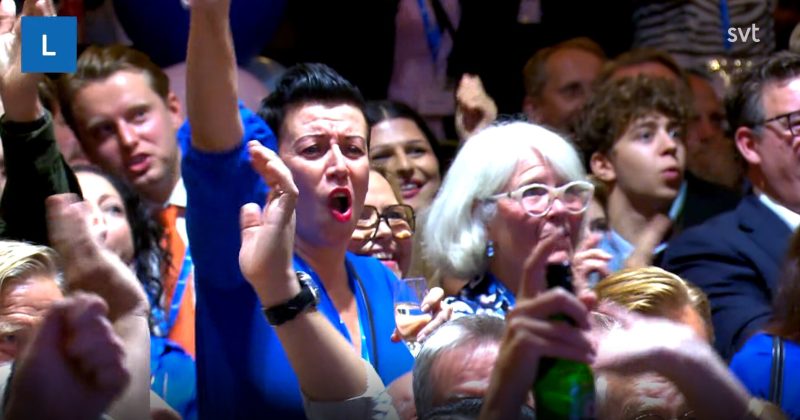

Signs of Withdrawal Were Already There?
Over the past year, Iceland has been among the most vocal critics of Israel’s participation in Eurovision. Last week, RÚV stated that Israel should not be allowed to compete in Vienna and threatened to withdraw if permitted to do so.
RÚV Chairperson Stefán Jón Hafstein publicly expressed disappointment with the European Broadcasting Union’s decisions. In October, Hafstein published an article listing several dramatic arguments for Israel’s disqualification, led by the UN special inquiry report accusing Israel of committing genocide in Gaza.
“It has long been evident that the Israeli government violates international law, commits crimes against humanity, uses starvation as a weapon of war, and orchestrates massacres that have killed tens of thousands of civilians”.
He wrote. Hafstein further mentioned that over 200 international organizations – including the Red Cross, Amnesty International, and UN-affiliated bodies – condemned Israel’s policies. In Iceland itself, hundreds of unions united under the movement “The Nation Against Genocide”, organizing large-scale demonstrations and cultural boycotts, including against the public broadcaster.
He also compared the situation to Russia’s expulsion after invading Ukraine:
“The EBU determined that Russia caused a crisis and damaged the contest’s reputation – and that is exactly what Israel’s government has done”.
According to him, the union exhibits selective consistency and double standards.
“That’s a polite way to describe the nonsense used to justify Israel’s participation but not Russia’s”.
He added that the suffering in Gaza is no less severe than in Ukraine, and in both cases, national leaders are “partners in crime”.
Hafstein further accused Israel of using Eurovision as a propaganda tool, investing heavily to influence voting outcomes. He suggested that the contest organizers even manipulated live broadcast audio to suppress protests in real time. For him, there is nothing “apolitical” about a state accused of genocide seeking legitimacy through music.
He emphasized that Israel’s conduct contradicts the EBU’s founding principles, including media freedom and public service. According to Hafstein, Israel obstructed journalists’ access — even those from member broadcasters — and censored Gaza-related reporting. Organized killings of journalists, he said, represent yet another red line.
In July, Hafstein had urged the EBU to allow Israel to compete only under a neutral flag.
Despite its criticism, RÚV welcomed Eurovision’s new rule changes, particularly strengthening jury influence in semifinals. Network CEO Stefán Eiríksson said: “It is clearly a step in the right direction”. That comment confused fans about Iceland’s intentions until the very last moment.
Iceland traditionally records some of the highest Eurovision ratings – with over 95% viewership each year – making its withdrawal particularly dramatic.
Iceland Joins the Withdrawals Wave
Five countries have now confirmed their withdrawal from Eurovision 2026 over Israel’s participation:
-
Ireland – RTÉ
-
The Netherlands – AVROTROS
-
Slovenia – RTVSLO
-
Spain – RTVE
-
Iceland – RÚV
Björk Started a Discussion – Iceland Falls Under Pressure
In recent days, world-renowned Icelandic artist Björk has become a central figure in the national debate after publicly urging Iceland to withdraw. Her call sparked a media storm and unparalleled pressure on RÚV’s leadership.
How Many Countries Will Compete Eurovision 2026? Probably 35…
Roughly 35 countries are expected to compete in Eurovision 2026. As Martin Green, the contest’s executive producer, stated last week following the previous withdrawals, five broadcasters might withdraw from the contest over Israel’s participation, meaning about 35 nations will likely participate in Vienna.
Despite the turbulence, the EBU’s clarification brings financial stability and removes a major concern for participating countries, including Israel:
-
The participation fee remains unchanged.
-
There is no change to the production or membership budgets.
-
The contest will proceed as planned in Vienna.
Iceland in Eurovision 2025
“Róa” is the name of the song performed by the duo Væb, who represented Iceland at Eurovision 2025. Iceland advanced to the grand final after ranking sixth in the first semi-final with 97 points. In the grand final, Iceland finished in 25th place with 33 points,all from the public voting, placing them 17th, while the juries ranked them last with 0 points.
This year, Iceland participated in the grand final after two years of failing to qualify. In 2023, Diljá failed to advance to the final with her song “Power”. In 2024, Hera Björk placed last in the first semi-final with the song “Scared Of Heights”.
Eurovision 2025: This was Iceland’s 37th participation in Eurovision. Iceland joined the competition in 1986 and achieved its best result in Eurovision 1999 and Eurovision 2009 after finishing second twice.

Email: [email protected]
Phone: +972-50-9441919
Ilay Gaist is a leading Israeli content creator and writer specializing in the Eurovision Song Contest. He is a well-known commentator with extensive expertise in the contest’s history, rules, and dynamics. His passion for Eurovision drives him to deliver rich, professional, and innovative content to his audience.
Ilay holds a bachelor’s degree in Arabic and has a multilingual background. He also engages in cultural research, with a particular focus on global culinary traditions and the evolution of local cuisines around the world.