Who will represent Portugal at Eurovision 2026? After 13 contestants in “Festival da Canção” threatened a boycott due to Israel’s participation, André Amaro announces he will not boycott the contest.
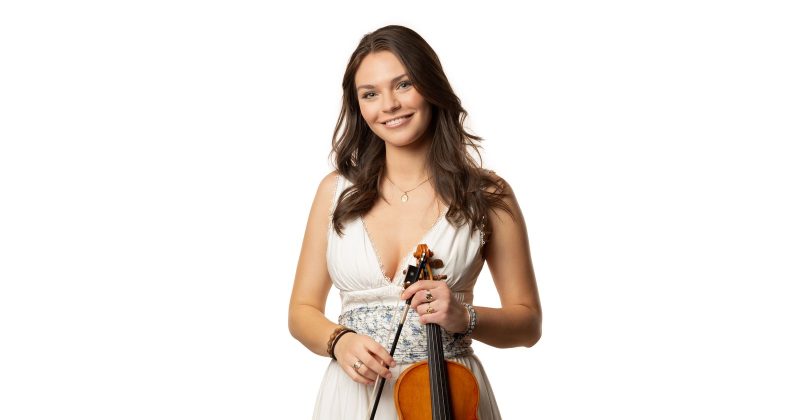
For the second time since the contestants of “Festival da Canção 2026” were announced, and about a month before the semi-final stage, another contestant has declared that he will not boycott Eurovision 2026. André Amaro joins Bandidos do Cante – the only act before him willing to represent Portugal on the Eurovision stage in Vienna, Austria. The contestants’ statements come after 13 other contestants in the competition announced that they would boycott Eurovision due to Israel’s participation. Only one contestant has yet to reveal their position on the matter.



A Reason for Unity
According to Portuguese reports, André Amaro, who will compete in the first semi-final of the festival, confirmed that he is willing to represent Portugal at Eurovision if he wins the contest. As the competition approaches and after all the songs were released earlier this week, Amaro was asked whether he would participate in Eurovision if he were to win “Festival da Canção”.
Amaro, who until that point had not commented on or revealed his views regarding the boycott in which 13 of the 16 contestants are taking part this year, confirmed his stance and explained his decision not to boycott Eurovision. “I have great respect for everyone’s opinion”, he said, referring to his fellow contestants, while stating that he wants his music to “be a reason for unity”. He added, “My music can also bring about change”.
“Believe in the power of songs to bring people together”
The only act that will, for now, compete with André Amaro for a ticket to the Eurovision stage is Bandidos do Cante, who wrote in a post on their Instagram account last month that they
“Believe that Festival da Canção and Eurovision exist, first and foremost, to celebrate songs, composers, and artists. These are platforms where music unites and gives a voice to everyone’s creativity, especially in difficult times”.
One of the things that sets the band apart – both in their songs and in their statement – is the message they aim to convey: it is human, connecting, and non-confrontational, with their music emphasizing unity, identity, belonging, and authenticity. At the end of their statement, they emphasized that if they are chosen to represent Portugal at Eurovision, they will do so
“With responsibility, respect, and self-respect. We will take what defines us to the four corners of the world. Always with a positive approach, in a spirit of unity, and with the understanding that music can bring people closer, even when the world often pushes in the opposite direction”.
הצגת פוסט זה באינסטגרם
Listen to the songs of the three contestants:
Andre Amaro – Dá-Me a Tua Mão:
Bandidos do Cante – Rosa:
Sandrino – Disposto a tudo:
The Boycott in Portugal
As mentioned, André Amaro and Bandidos do Cante are the only contestants in “Festival da Canção” to take a different stance from the other participants, would boycott the competition if they were to win, as a protest against Israel’s participation. This move is made possible by a new clause added to the festival’s regulations, according to which the winner of “Festival da Canção 2026” is not obligated to represent Portugal at Eurovision – unlike in previous years.
Portugal’s national broadcaster RTP has stated that it voted in favor of the new regulations and supported Israel’s participation during the General Assembly of the EBU, a decision that has led to internal opposition among employees over the decision and “enormous pressure”, as described by the network’s chairman, from various organizations, labor unions, and political actors who demanded that Portugal withdraw from the competition as long as Israel remains a participant.
Artists’ Revolt – Protest Step or Part of a Trend?
 Following these decisions, a storm erupted across Europe, triggering a wave of criticism calling for the conference’s resolutions to be reversed. Iceland, Ireland, The Netherlands, Slovenia and Spain chose to withdraw from Eurovision 2026 due to Israel’s participation, and quite a few former Eurovision participants joined the wave as well – Eurovision 2024 winner Nemo announced that he is returning his winner’s trophy to the EBU as a protest against Israel’s participation, and numerous former representatives in the contest were quick to praise him for “the brave decision”. Following Nemo, Eurovision 1994 winner Charlie McGettigan decided to return his winner’s trophy as well and to join the protest In addition, three other past winners sharply criticized the conference’s decisions – and with them many others – and it seems this has almost turned into a kind of “trend”.
Now, the participants in Portugal’s Festival da Canção have also joined the protest, and the artists’ declaration raises many questions: Does this step come from a genuine place – or are they also simply part of the trend? Why did the artists choose to revolt precisely now? After all, it has been known that since the beginning of the war between Israel and Gaza two years ago there has been criticism by fans and artists over Israel’s participation in Eurovision.
It appears that the artists’ move does not truly stem from a purely genuine protest. Under the current circumstances, the artists have significant backing, and the revolt no longer appears to be breaking boundaries. The trend has already become part of the routine, and as a result, artists who previously would not have dared now suddenly find the courage to protest.
Possible Implications – Could the Revolt Change Portugal’s Selection Process?
The chances that one of the revolting participants will win “Festival da Canção 2026” are quite high . But Bandidos do Canta’s and Andre Amaro commitment to representing the country certainly gives a hint of optimism.
In response to the turmoil, the Portuguese national broadcaster RTP stated last week that despite the artists’ revolt, the country will still send a representative to the upcoming contest in Vienna and clarified:
“Regardless of the decision taken by the artists who signed the declaration, whose content we understand, RTP will once again organize Festival da Canção and confirms its participation in Eurovision 2026, together with the overwhelming majority of EBU member countries”.
Although RTP sounds determined that the representative will be chosen through Festival da Canção, the issue raises many questions about the selection process – what will the broadcaster do if one of the boycotting artists wins the festival? Will it choose one of the four artists who did not sign the declaration? Might it replace the boycotting artists with other participants? Or will it instead select another artist entirely via an internal selection? For now, all that remains is to wait and see.
Dates of “Festival da Canção 2026”:
- First Semi-Final – Saturday, February 21st, 2026.
- Second Semi-Final – Saturday, February 28th, 2026.
- Grand Final – Saturday, March 7th, 2026.
“Deslocado” (in English: “Displaced”) is the song that will be performed by NAPA band, representing Portugal in Eurovision 2025 in Basel, Switzerland. Portugal finished 21st with 50 points, ranked 19th in jury vote and 21st in public vote.
Eurovision 2026: This will be Portugal’s 57th participation in the Eurovision Song Contest. Portugal joined the competition in 1964 and achieved its best result in Eurovision 2017 when singer Salvador Sobral won first place with the song “Amar pelos dois”.

Email: [email protected]
Phone: +972-50-9441919
Writer and content creator specializing in the Eurovision field. Her writing emphasizes professional analysis and a wide range of opinions.