
Days after Denmark selected its entry for Eurovision 2026, the song has already been censored in its official YouTube version. At the same time, Denmark’s national broadcaster is reportedly considering further changes.
Last Saturday, Denmark held the “Dansk Melodi Grand Prix” final, choosing “Før vi går hjem” (English: “Before We Go Home”) performed by Søren Torpegaard Lund as its entry for Eurovision 2026 in Vienna, Austria. What should have marked a confident step toward the Eurovision stage is now beginning to look like the start of unexpected turbulence, as the song has already faced official intervention and censorship upon being uploaded to the contest’s official platforms. Meanwhile, new reports suggest that Denmark may be weighing an additional dramatic changes.
Censorship of the Danish Entry
On the night of his victory, Lund performed the song in its original version, as released prior to the national final. However, once the performance was uploaded to the official Eurovision YouTube channel, viewers noticed that the song had been altered: The word “fucking”, which does not comply with Eurovision regulations, was replaced with “freaking”.
The swift alteration in the version uploaded to the official platform has raised questions as to whether AI was used to censor this part of the song. If such technology was indeed employed, it would mark an unprecedented move in Eurovision history, as no similar action has been taken before.
This aligns with the established policy of the EBU, which does not permit profanity or offensive language in competing entries. Over the years, several similar cases have occurred. Most notably last year, Miriana Conte of Malta was required to remove the word “Kant” (Maltese for “singing”) from her entry due to its phonetic similarity to an English swear word, sparking significant debate. In this case, Conte was required to rewrite and re-record the song in order to release a censored and approved version.
Further Changes Under Consideration
However, the censorship issue may only be the beginning.
Danish broadcaster DR is currently holding internal discussions regarding the language in which the song will be performed at Eurovision. Although “Før vi går hjem” was written, performed, and selected in Danish, it may be adapted into English ahead of the contest in Vienna.
The language debate carries historical significance in Denmark. Although Eurovision abolished its language rule in 1999, entries competing in Dansk Melodi Grand Prix were required to be performed in Danish until 2005. During that period, Denmark typically translated its winning songs into English for Eurovision itself, a practice that became almost standard until recent years, when a gradual return to Danish emerged. More broadly, the use of native languages has become an increasingly visible trend across Eurovision entries in recent editions.
Denmark’s Head of Delegation, Erik Struve Hansen, confirmed that no final decision has yet been made. He acknowledged that an English version of the song has already been prepared, but stressed that the broadcaster is not rushing the process. According to Hansen, performing in Danish could offer Denmark a distinctive edge and strengthen the song’s emotional identity, a trend that has gained momentum in recent years.
Søren Torpegaard Lund himself has expressed a clear emotional connection to the Danish language, describing the song as an honest and authentic reflection of who he is. Nevertheless, he stated that he remains open to artistic adjustments and emphasised that the final decision will be made jointly.
Thus, while Denmark has officially secured its place at Eurovision 2026, the journey to Vienna appears far from settled. Between enforced lyrical changes and ongoing discussions over the performance language, “Før vi går hjem” may sound quite different by the time it reaches the Eurovision stage.
Søren Torpegaard Lund – Who are you?
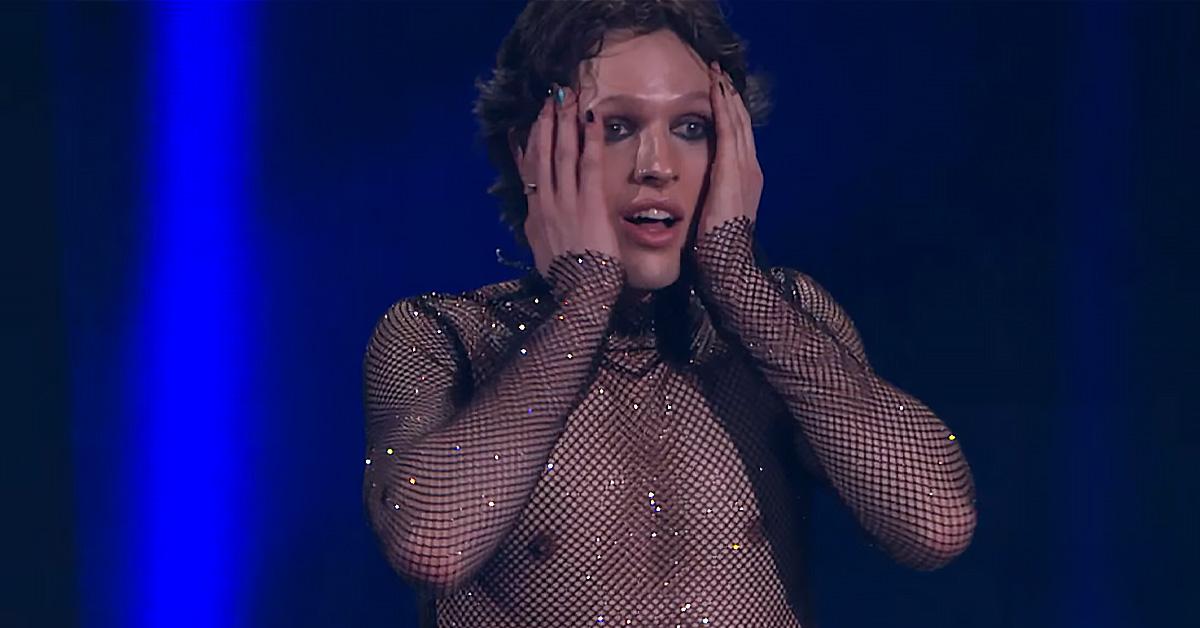
Søren Torpegaard Lund is a Danish singer, songwriter, and stage actor who rose to public prominence through his leading roles in successful musicals and for hosting the Danish version of the musical reality show in which he participated. Throughout his career, Søren has stood out for his exceptional vocal abilities and his talent for delivering lyrics in an emotional and theatrical manner, making him one of the most respected artists in Denmark.
After years of conquering Denmark’s largest stages in various roles, he decided that this year he was ready to step into the spotlight as a solo artist with a song in his mother tongue, expressing his depth and sincerity as an artist. This year, he secured a major victory with the song “Før vi går hjem,” in a powerful evening where he managed to touch the hearts of both the judges and the public alike. With this win, Søren closed an emotional personal circle and secured his place as Denmark’s representative for the Eurovision Song Contest 2026, held in Vienna.
Denmark at Eurovision 2026
“Før vi går hjem” is the title of the song that will be performed by Søren Torpegaard Lund, who will represent Denmark at the Eurovision 2026, set to take place in Vienna, Austria, on May 12, 14 and 16.
At the time of writing, Denmark is currently ranked 6th in the betting odds ahead of Eurovision 2026.
Eurovision 2026: This will be Denmark’s 54th participation in Eurovision. Denmark joined the competition in 1957 and has won it three times over the years. Denmark’s last victory was in Eurovision 2013 with the song “Only Teardrops” performed by singer Emmelie de Forest.