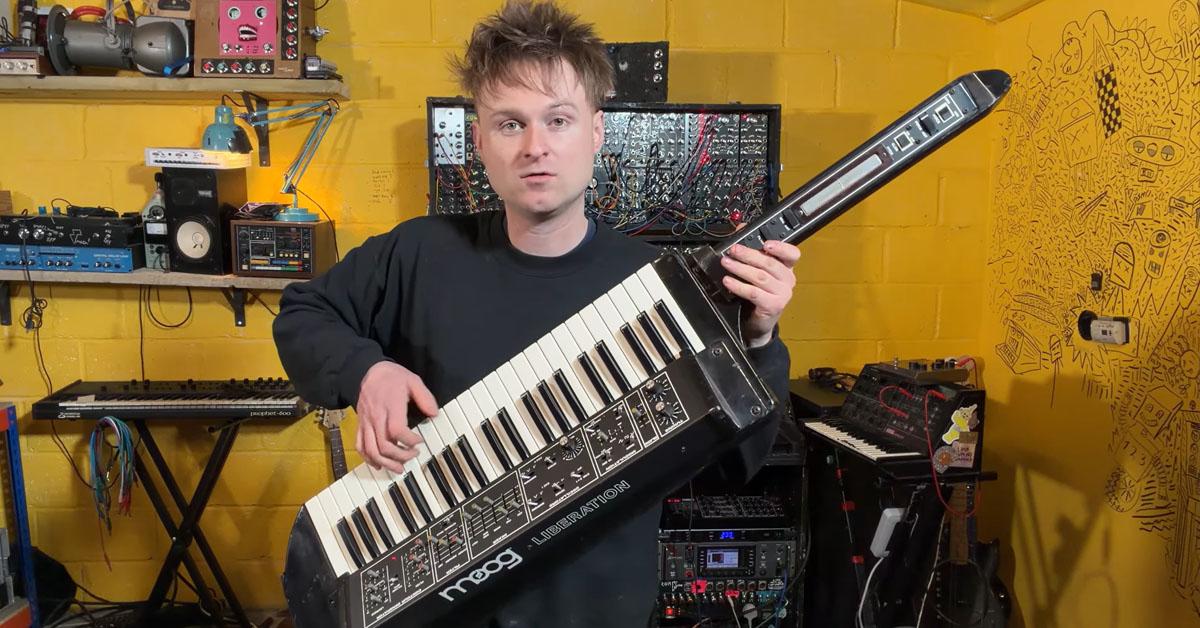
United Kingdom at Eurovision 2026: Various British experts reacted yesterday (Tuesday) to the country’s entry to Vienna, Austria. Among the responses, Katrina Leskanich, winner of Eurovision 1997, praised the entry: “The crowd will love it!”
Key Eurovision figures were interviewed yesterday (Tuesday) by the British website GBNews about the song and upcoming voting for Eurovision 2026 set to take place this May. Among the reactions was Katrina Leskanich, lead singer of Katrina and the Waves and winner of Eurovision 1997, who praised and supported the United Kingdom’s choice to send Look Mum No Computer as its representative.





When asked about the British Eurovision 2026 song, Katrina replied:
“Eins, Zwei, Drei is clever, cheeky and fun. It’s perfect for Eurovision and a refreshing positive choice for the United Kingdom. We should not expect to come last with this one despite political voting”.
She explained that the United Kingdom’s representative is on a mission to repair the country’s shaky reputation in the contest — and with this song, he might just succeed. After finishing 19th last year and receiving zero televote points for two consecutive years, her next comment surprised many, given the United Kingdom’s recent struggles:
“The crowd will love it, I love it, I hope Look Mum No Computer will absolutely smash it”.
According to betting odds, the United Kingdom currently seems poised to land on the left-hand side of the scoreboard, possibly even in the top ten. However, past trends reveal that while bookmakers often give the United Kingdom high odds, the actual results tend to fall short.
Jay Aston, a member of Bucks Fizz, Eurovision 1981 winners, commented:
“It’s definitely different – entirely different from our entry last year of three cute girls who had great close harmonies. I guess because we’ve been coming last, they had to try something a bit more radical”.
She also addressed the issue of politics in Eurovision voting:
“Of course I will be supporting the show. It seems so sad that politics is always involved. Despite the fact that the competition is meant to be totally apolitical, it’s always steeped in it. Let’s hope the show continues”.
Look Mum No Computer: “I’m Just Going To Be Myself”
British Eurovision commentator Paul Jordan believes that the 2026 entry takes the United Kingdom out of its comfort zone:
“I think it’s a risk, but they are right not to play it safe – Eurovision is edgier than people give it credit for. Needs good staging, though, and that is sometimes where we go wrong”.
The United Kingdom’s 2026 representative, Look Mum No Computer, also addressed the country’s status and his approach:
“There’s a lot of stuff going on with the voting, a lot of favouritism and stuff, and maybe the United Kingdom isn’t everybody’s favourite when it comes to the Eurovision. So I’m just going to be myself and hope they see that I’m an all right guy. Because if they don’t like you, then there’s no hope, really”.
The United Kingdom’s last Eurovision victory was 29 years ago, in 1997. Since then, Britain has regularly finished near the bottom of the scoreboard. The unlucky streak began with Gemini’s song “Cry Cry Baby” in 2003, which finished last. Over the years, the country has repeatedly struggled, landing last in 2008, 2010, and 2019, and scoring zero points again in both of its 2021 vote tallies.
Even among fans, opinions vary. Veteran Eurovision attender Kevin Sherwin, who has watched 26 editions of the contest live, commented on Look Mum No Computer’s selection:
“Apparently, Look Mum is very popular in Germany, having done a few gigs there, so perhaps we’ll get 12 points from them. Personally, I think we’ll surprise Europe with this one”.
After two particularly disappointing years, the United Kingdom is aiming to regain public trust and score points again. Will Look Mum No Computer manage to echo even a fraction of Sam Ryder’s 2022 success? Only time will tell…
Look Mum No Computer – Who Are You?
Look Mum No Computeris the stage name of Sam Battle, a 36‑year‑old British YouTuber whose main focus is not music, but working with old electronic devices, running a viral channel with tens of millions of views.
Musically,Battle is an indie and alternative artist who frequently incorporates heavy synthesizers into his tracks — instruments he also uses on his YouTube channel, but from a different angle.
Look Mum No Computer began his music career in 2019 and has since accumulated millions of streams on Spotify as well as tours, mainly in the UK and across Central Europe.
United Kingdom at Eurovision 2026
The song “Eins, Zwei, Drei” (in English: “One, Two, Three”) will be performed by Look Mum No Computer, representing the United Kingdom at Eurovision. He will perform in the second semi-final of Eurovision 2026 on May 14th in Vienna, Austria. Since the United Kingdom is one of the “Big Five” countries, it automatically advances to the Grand Final on May 16th.
The song describes the sharp transition between the gray weariness of the modern working world and the intoxicating feeling of vitality that comes with freedom. It presents the “9 to 5” routine as a prison of office cubicles and spreadsheets of despair, where a person feels like a mouse in a pointless race that only drains their energy. The turning point comes with a spontaneous decision to break everything, board a plane, and find comfort in simple and sensory things — the taste of pizza, the sounds of a foreign language, and the pure moment of singing karaoke. The counting in German becomes a mantra that releases the soul from stagnation and pushes boredom aside in favor of a true return to life.
Currently, the United Kingdom is ranked 12th in the betting tables ahead of Eurovision 2026.

Email: [email protected]
Phone: +972-50-9441919
Ilay Gaist is a leading Israeli content creator and writer specializing in the Eurovision Song Contest. He is a well-known commentator with extensive expertise in the contest’s history, rules, and dynamics. His passion for Eurovision drives him to deliver rich, professional, and innovative content to his audience.
Ilay holds a bachelor’s degree in Arabic and has a multilingual background. He also engages in cultural research, with a particular focus on global culinary traditions and the evolution of local cuisines around the world.