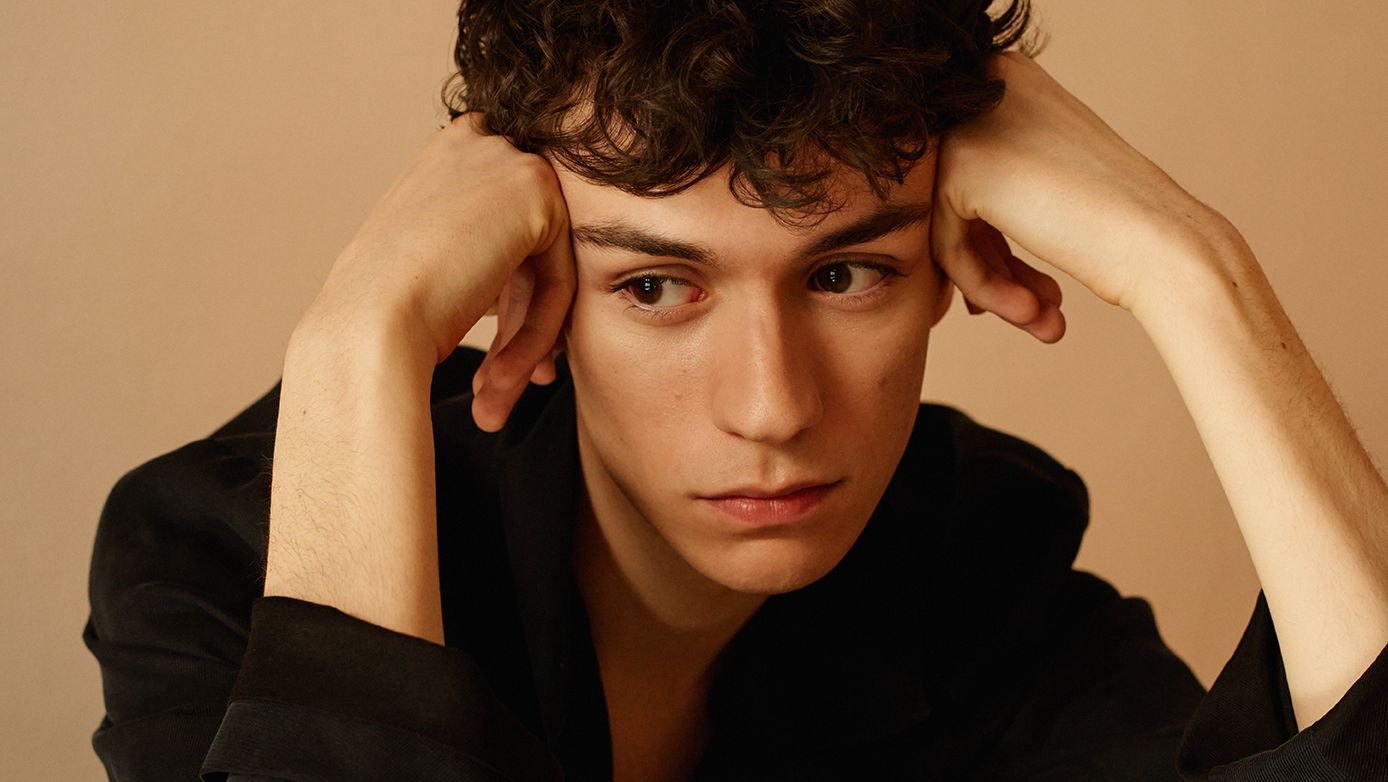
Daniel Žižka discusses his Eurovision 2026 entry “CROSSROADS,” focusing on his Japanese inspiration and his preference for authentic staging over typical contest gimmicks.
The Eurovision 2026 season in Vienna, Austria, is rapidly approaching, and one of the most intriguing names in this year’s lineup is Daniel Žižka. The Czech singer and actor, who until just a few months ago was known to only a few, has become a major talking point after winning the coveted right to represent his country at Eurovision with the song “CROSSROADS.” In an interview granted to a Czech website, he revealed fascinating behind-the-scenes details of his journey to the competition.






The Song Selection: A Blend of Experts and International Audience
Daniel Žižka explained to iDNES.cz the professional process that led to his selection by the national broadcaster (ČT): “I sent an application after the official announcement of the Eurovision selection process. My studio performance was recorded and sent to a committee of international professionals – artists, producers, and composers – who chose their favorite. The other half of the votes came from listeners in three foreign countries.”
Despite the trend of many countries returning to their native languages, Žižka chose to sing in English, a decision he attributes to a personal artistic connection: “Czech is a beautiful language, but English has always been closer to my musical creation. However, I am attracted to writing in Czech in the future, perhaps even for other artists.”
From Inspiration in Japan to the Stage in Vienna
The writing process for “CROSSROADS” was extensive. Žižka worked on the song for about a year and a half, with the turning point occurring during a trip to Japan. “I like to travel alone because it forces me to step out of my comfort zone, and this change of scenery brought me a large dose of inspiration,” he shares. Producers Viliam Béreš and Petr Cemper joined the final production.
Regarding the anticipated performance on the world’s largest stage, Žižka hints that he is not planning grandiose pyrotechnics: “We are going towards a more intimate visual message. My goal is to give the song the greatest space to speak to the viewers.”
Authenticity Over Staging Gimmicks
Responding to a question about Eurovision’s tendency to include “bizarre” artists or characters solely seeking attention, Žižka remains true to himself: “I believe that the most important thing is to perform the song authentically, regardless of what a ‘typical Eurovision staging’ should contain. Of course, it would be amazing to achieve a high ranking, but the ambition is to present a performance that I and the Czech team can stand behind.”
Meanwhile, the reaction in the Czech Republic appears particularly supportive. “Everyone around is reacting very positively,” he concludes, “It gives me great joy that I have so many people around me who support me and wish me success.”
Daniel Žižka – Who are you?
Daniel Žižka is a singer and songwriter, born in 2003 in Czechia. He has been involved in music and acting since his childhood. He studied musical theater at the Jaroslav Ježek Conservatory and is currently studying popular singing and composition.
Žižka has acted in quite a few Czech series and films and draws inspiration for his music from the world of musicals and theater. He is a promising young artist, and although the rumors about him representing Czechia at Eurovision were the strongest, he is not among the most well-known singers in the country, with only about 6,000 followers on Instagram and 1,400 on YouTube.
Czechia at Eurovision 2026
“CROSSROADS” is the title of the song that will be performed by singer Daniel Žižka, who will represent the Czechia in the first half of the second semi-final, scheduled for May 14. The song was co-written by the singer himself together with Viliam Béreš. This marks the first entry for both creators in the competition, and the song is performed in English.
The song explores an inner journey of searching for identity and direction in a complex and confusing world. The singer conveys a sense of loss and wandering through many paths, as if trapped within “cruel spider webs,” where finding the right way becomes difficult. The reference to “Mother” may symbolize a nurturing or primal force—perhaps a parent, nature itself, or even the idea of home—against which the narrator expresses feelings of confusion and disconnection. The imagery of deep seas, fields, and roads evokes a desire to explore, understand, and uncover meaning beyond what is immediately visible.
At these days, Czechia is ranked 12th in the betting odds.

Email: [email protected]
Phone: +972-50-9441919
Tal Dahan – Journalist, radio broadcaster, and Eurovision content creator.
Tal Dahan is an Israeli journalist and editor specializing in the Eurovision Song Contest, working with the EuroMix editorial team for four years. Since 2022, she has provided regular on-site coverage of Eurovision from the host city, and from 2023 has also reported directly from the press room—offering the Israeli audience live updates, exclusive interviews, and in-depth commentary.
Tal is a member of the Eurovision tribute and parody band “EuroFalsh,” a radio broadcaster, and a student of political science and communications.
She is considered one of Israel’s leading young Eurovision experts. In addition to covering the main contest, Tal has reported from Eurovision pre-parties and national selection events across Europe (in Thessaloniki, Stockholm, Madrid, and more), been interviewed by major media outlets in Israel and internationally, and presented Eurovision-themed podcasts and radio shows.