
Here are the statistics: Are your favorite Eurovision countries jury darlings or fan favorites? We analyzed voting data, examined the biggest judge-public disagreements.
Have you ever wondered how a song that Europe still hums today once ended up near the bottom of the Eurovision scoreboard? Or how a winning tune might later receive the cold shoulder globally? In today’s Eurovision landscape, the real battle isn’t fought only on stage — it also takes place in the numbers that split Europe into two camps: the “jury favorites” and the “public beloved”.
In this article, we analyze the voting method that has defined Eurovision for the past decade and continues to spark tension every single year. We’ll dive into the countries that regularly dominate jury ballots and compare them with nations that set the stage alight with audience enthusiasm. We’ll also explore Israel’s standing within this dynamic — and how, through war and controversy, the country turned boos into “douze points”. This story celebrates the figures behind the contest and shows how the most unexpected differences are often the ones that stay etched in memory.







How the New Voting System Works?
Before Eurovision 2016, Sweden introduced the voting format from its “Melodifestivalen”, maintaining the 50:50 balance between jury and public votes. Each country can now award up to 24 points per entry — 12 from the juries and 12 from the televote. The system was designed to preserve suspense until the very last moment, broaden scoring dynamics, and reduce the chance of anyone finishing with zero points.
Although the basic voting principle has remained, the presentation of results evolved over the years:
-
Towards Eurovision 2016 in Stockholm, Sweden: the jury votes continued to be announced as before, while the public vote was revealed starting from the lowest-scoring country up to 11th place, with the top ten presented in ascending order to build suspense.
-
Towards Eurovision 2019 in Tel Aviv, Israel: the public vote presentation changed to follow the jury ranking in ascending order, from the lowest-scoring country to the jury winner.
-
Towards Eurovision 2023 in Liverpool, England: it was decided to cancel the jury vote in the semi-finals – leaving only the public to vote in the semi-finals, while the final retained the full system.
-
Towards Eurovision 2026 in Vienna, Austria: it was decided to restore the semi-final voting system – bringing back jury voting in the semi-finals.
Statistics of Grand Final Qualification
 With the current system, nine contests have taken place so far. Though each final’s composition varies, some countries secure their place almost automatically, while for others, qualifying feels like a victory in itself. Here are the qualification statistics so far:
The Big Five — Germany, the United Kingdom, France, Italy, and Spain, which withdrew from the upcoming contest — automatically qualify each year. Beyond these, Ukraine and Luxembourg are the only two countries to reach every final they participated in. Luxembourg has qualified twice in two appearances, while Ukraine has maintained an impressive streak since its debut in 2003, missing only 2015 and 2019. Sweden boasts fourteen consecutive qualifications, missing the final only once — in 2010.
Israel is considered one of the most statistically successful countries. It has qualified for every final in the past decade except Eurovision 2022, and finished in the top five four times. Israel also placed first in three semi-finals and third in two others. Norway is another country that missed only one final under this system, failing to qualify only in Eurovision 2016.
In contrast, there are countries that consistently struggle to reach the final. The country facing the hardest time today is Montenegro – the only nation that has not participated in any final. Montenegro last qualified for the final in Eurovision 2015, which was held in the same city where the upcoming Eurovision will take place. Bosnia and Herzegovina participated only once in the past decade, in Eurovision 2016, which it finished outside the final for the first time in its history. North Macedonia has qualified for the final only once so far – with its performance in Eurovision 2019. Romania, Georgia, Ireland, and Belarus have each qualified for the final only twice: Romania in 2017 and 2022, Georgia in 2016 and 2024, Ireland in 2018 and 2024, and Belarus in 2017 and 2019.
| Qualifications to the Grand Final Between 2016-2025 | |||||||
| Qualifications | Countries | ||||||
| 9 | Sweden | ||||||
| 8 | Norway | Israel | Ukraine | ||||
| 7 | The Netherlands | Portugal | Cyprus | Lithuania | Serbia | ||
| 6 | Switzerland | Austria | Finland | Greece | Estonia | Armenia | Australia |
| 5 | Belgium | Poland | Albania | Moldova | Czechia | Azerbaijan | |
| 4 | Denmark | Iceland | Croatia | Slovenia | Russia | Bulgaria | |
| 3 | Malta | Hungary | Latvia | San Marino | |||
| 2 | Luxembourg | Ireland | Romania | Belarus | Georgia | ||
| 1 | North Macedonia | ||||||
| 0 | Bosnia & Herzegovina | Montenegro | |||||
The Jury Favorites
A coin has two sides, and so does our voting system. The juries vote first, and then the public. On the jury side of the coin, it appears that most of the founding countries, most of Western Europe, the Southern Balkans, the Caucasus, Belarus, Latvia, and Sweden are the countries that juries tend to support more.
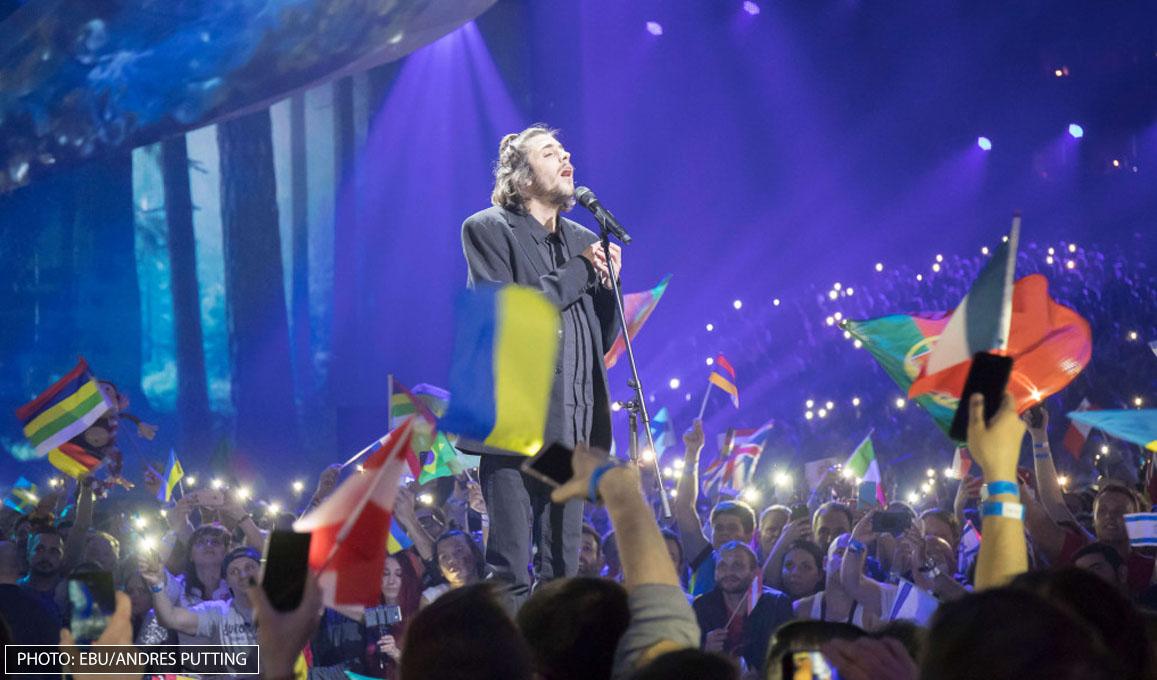 The song holding the record for the highest number of jury points is the song “Amar Pelos Dois“, performed by Salvador Sobral. The song represented Portugal at Eurovision 2017 and finished in first place, winning both voting categories. The juries awarded the song no less than 382 points, of which 18 countries gave it the coveted 12 points. Portugal has topped the jury scoreboard in every year since 2021, yet has repeatedly collapsed with the televoting.
The first country worthy of mention is the United Kingdom. As the country least loved by the public, the United Kingdom has received zero points three times – in 2021, 2024 and 2025. In 2021, James Newman with his song “Embers” – received zero points both from the juries and from the public, an extraordinary achievement, and not in the positive sense of the word…
Another country worthy of mention in this category is Czechia. Except for Eurovision 2018, Czechia clearly appears not to be a major public favorite. In 2016, Czechia reached the final for the first time, and here a painful record was etched: the country received zero points from the public. Apart from Eurovision 2018, the highest score it has achieved in the final stands at only 35 points. North Macedonia, in its single qualification to the final, also holds an enormous gap of 189 points: Tamara Todevska won the jury category with 247 points, while the more hesitant public granted only 58 modest points.
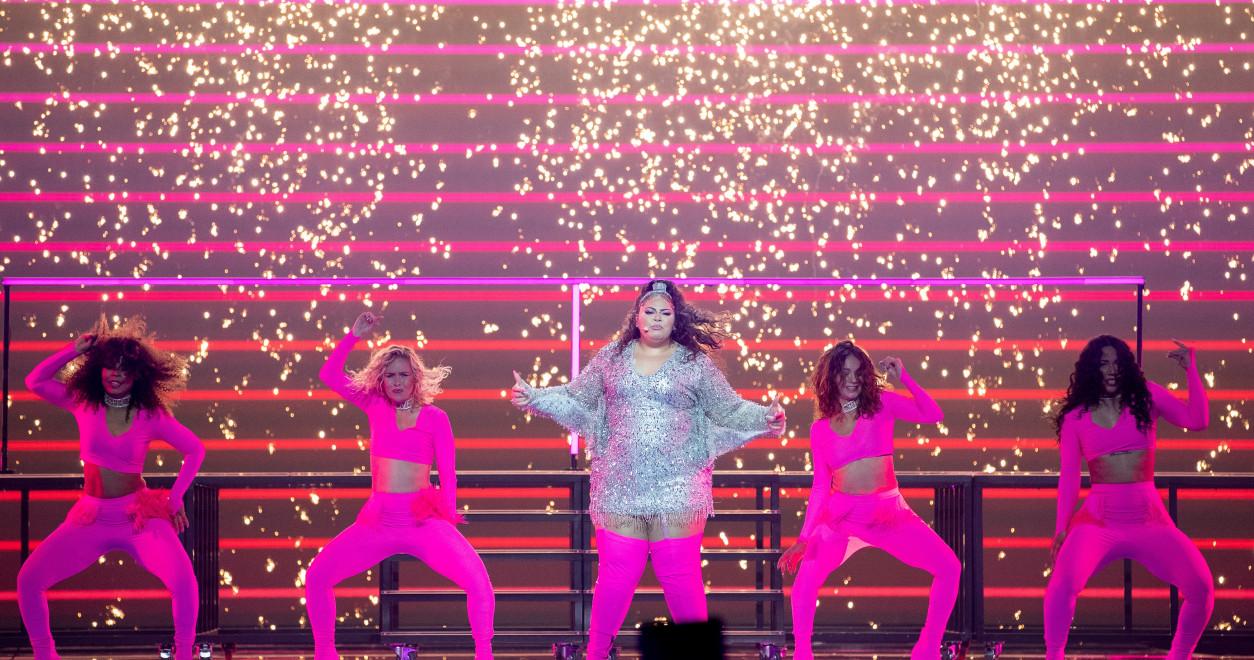 Two countries that regularly participate stand out clearly in the jury‑public gap. In second place comes Australia, with an average point difference of 105 points in favor of the juries. The point difference dropped below 100 points in favor of the juries only in 2018 and 2019, and in no year did Australia receive a higher public score than a jury score. The largest positive difference in favor of the juries was in 2017, when Isaiah Firebrace and his song “Don’t Come Easy” achieved a 169‑point gap in favor of the juries: 171 points from the juries, which placed him fourth, versus only two points from the public, which ranked him 25th.
The country holding first place in this category is Malta. The average point gap in favor of the juries stands at 106 points more than from the public, which repeatedly “wipes” Malta. The largest gap Malta has recorded was in Eurovision 2021, with 161 points in favor of the juries: 208 points from the juries, which placed Destiny Chukunyere third, versus 47 points from the public, which ranked her 14th.
In the semi‑finals as well, Malta struggles to win the public’s heart, yet it seems that the public repeatedly thwarts its advancement. In the years when Malta did not qualify, it was the public that blocked its path. In 2017, the most painful moment for Claudia Faniello was revealed: she finished the semi‑final not only in low 16th place, but also with a round zero from the public. Below are Malta’s results in the years it qualified to the final:
| Malta’s Results the Grand Final Between 2016-2025 | ||||||
| Year | Representative | Position | Points | Jury | Public | The Difference |
| 2016 | Ira Losco | 12th | 153 | 137 | 16 | 121 Points in favor of the Jury |
| 2019 | Michela Pace | 14th | 107 | 87 | 20 | 67 Points in favor of the Jury |
| 2021 | Destiny Chukunyere | 7th | 255 | 208 | 47 | 161 Points in favor of the Jury |
| 2025 | Miriana Conte | 17th | 91 | 83 | 8 | 75 Points in favor of the Jury |
The Biggest Gaps in Favor of the Juries
The five songs with the largest point gaps in favor of the juries have brought us many moments of tension and laughter. Australia and North Macedonia, whom we mentioned earlier, only close the list. Also appearing on the list is last year’s host country, Switzerland, which finished second in the jury vote – only to discover that the public awarded it not a single point. And two notable performances in the table belong to Eurovision 2018, when Austria and Sweden, who topped the jury vote, then crashed hard in the public vote. Sweden even provided the present writer with a particularly noticeable and iconic laughter moment. Here are the five songs with the largest point gaps in favor of the juries:
| The Songs With the Largest Gaps in Favor of the Jury | |||||||
| Country | Year | Representative | Position | Points | Jury | Public | The Difference |
| Sweden | 2018 | Benjamin Ingrosso | 7th | 274 | 253 | 21 | 232 points |
| Switzerland | 2025 | Zoe Me | 10th | 214 | 214 | 0 | 214 points |
| Austria | 2018 | Cesar Sampson | 3rd | 342 | 271 | 71 | 200 points |
| North Macedonia | 2019 | Tamara Todevska | 7th | 305 | 247 | 58 | 189 points |
| Australia | 2017 | Isaiah Firebrace | 9th | 173 | 171 | 2 | 169 points |
The Televote Favorites
We now move to the other side of the coin – a side no less fierce, opinionated, critical, and uncompromising: the public. It appears that on the public side, the countries that capture more attention are most of the Nordic and Baltic states, Eastern Europe, the former Yugoslavia, Poland, Italy, and Albania.
 The song holding the record for the highest number of points from the public is the song “Stefania“, performed by Kalush Orchestra. The song represented Ukraine at Eurovision 2022 and finished first. The public awarded the song no less than 439 points, of which 28 countries gave it the coveted 12 points. The only country that did not place Ukraine in one of the top three in the public vote is Serbia, which awarded it 7 points.
The region that dominates the public vote versus the juries is Eastern Europe. Despite Romania’s low number of qualifications to the final over the past decade, it recorded a striking gap in Eurovision 2017, when Ilinca & Alex Florea, with their song “Yodel It“, created a significant gap of 166 points. The gap was formed by 224 points in the televoting, which placed them fifth, versus 58 points from the juries, which ranked them 14th.
 Moldova, its neighbor, also records particularly striking public‑vote gaps in Eurovision 2017 and Eurovision 2022, in which Zdob si Zdub & Fratii Adugov set the sixth‑largest gap in favor of the public – 225 points. The gap was created by 239 points from the public, which placed them second, versus only 14 points from the juries, which ranked them 20th. We now move slightly toward Central Europe, to Poland, which has also recorded two notable gaps in favor of the public, in 2016 and 2025. In Eurovision 2016, Michal Szpak set the seventh‑largest gap in favor of the public – 215 points, created by 222 points from the public, which placed him third, versus only 7 points from the juries, which ranked him 25th.
Heading North to Norway, a country that in recent years has established itself as one with a strong affinity to the public relative to the juries. In 2022 and 2023, Norway received more than four times as many points from the public as from the juries. In 2019, KEiiNO reached first place in the public vote with 291 points, versus only 40 points from the juries, which placed them 18th – a staggering gap of 251 points.
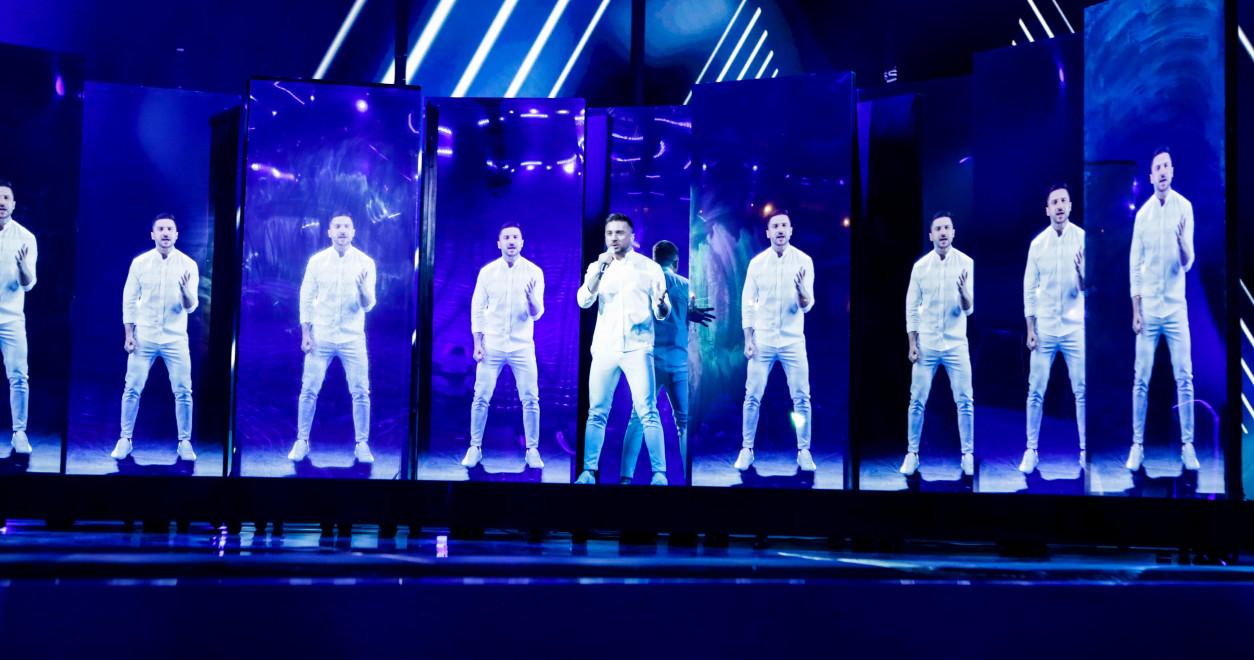 The top two spots belong to two political rivals. In second place on average is Russia, standing at an average gap of 115 points. This gap is recorded in favor of Sergey Lazarev, who in Eurovision 2016 was the public’s favorite and finished with 361 points, versus 130 points from the juries, which placed him fifth – a gap of 231 points. In Eurovision 2019, Lazarev recorded another gap in favor of the public of 118 points – 244 points from the public versus 126 from the juries. It appears that had Eurovision 2020 not been cancelled, Russia might even have climbed to first place in our table, with the song “Uno“, performed by Little Big, poised to dominate the public vote.
The country claiming first place in this category is its rival, Ukraine. The average point gap in favor of the public stands at 130 points more than from the juries, with only 2017 and 2025 recording gaps of less than 100 points. Ukraine has never received a higher jury score than public score. Its absence from Eurovision 2019, despite choosing MARUV, does not affect the average. Below are Ukraine’s results in the years it qualified to the final:
| Ukraine’s Results the Grand Final Between 2016-2025 | ||||||
| Year | Representative | Position | Points | Jury | Public | The Difference |
| 2016 | Jamala | 1st | 534 | 211 | 323 | 112 Points in favor of the Televoting |
| 2017 | O. Torvald | 24th | 36 | 12 | 24 | 12 Points in favor of the Televoting |
| 2018 | Melovin | 17th | 130 | 11 | 119 | 118 Points in favor of the Televoting |
| 2021 | GO_A | 5th | 364 | 97 | 267 | 170 Points in favor of the Televoting |
| 2022 | Kalush Orchestra | 1st | 631 | 192 | 439 | 247 Points in favor of the Televoting |
| 2023 | Tvorchi | 6th | 243 | 54 | 189 | 135 Points in favor of the Televoting |
| 2024 | Alyona Alyona & Jerry Heil | 3rd | 453 | 146 | 307 | 161 Points in favor of the Televoting |
| 2025 | Ziferblat | 9th | 218 | 60 | 158 | 98 Points in favor of the Televoting |
Where Does Israel Stand? Turning the Boos into a “Douze”
 Israel is considered a tricky country, as in certain years it was stronger with the juries, in others more closely aligned with the public, and at times even achieved a relatively balanced score. Until the war following October 7th, when the juries decided to introduce politics into the contest and abandon Israel, sending songs that, had they represented another country, would probably have finished much higher in the category. That decision by the juries, tainted by considerations that have no place in our beloved competition, has turned Israel in the past two years into a major public favorite and enabled it to occupy two honorable positions in the list of the five songs with the largest gaps in favor of the public.
Yuval Raphael and the song “New Day Will Rise” recorded an enormous point gap, as Yuval finishes as the public’s favorite with 297 points, versus only 60 points from the juries, which placed her 14th. And a year earlier, Eden Golan and the song “Hurricane” recorded the record gap in favor of the public – 271 points – separating 323 points from the public, which gave Eden the second place, from 52 points from the juries, which gave her a particularly cold shoulder and 12th place. Below is a table of Israel’s results in the years it qualified to the final:
| Israel’s Results the Grand Final Between 2016-2025 | ||||||
| Year | Representative | Position | Points | Jury | Public | The Difference |
| 2016 | Hovi Star | 14th | 135 | 124 | 11 | 113 Points in favor of the Jury |
| 2017 | Imri Ziv | 23rd | 39 | 34 | 5 | 29 Points in favor of the Jury |
| 2018 | Netta Barzilai | 1st | 529 | 212 | 317 | 105 Points in favor of the Televoting |
| 2019 | Kobi Marimi | 23rd | 35 | 0 | 35 | 35 Points in favor of the Televoting |
| 2021 | Eden Alene | 17th | 93 | 73 | 20 | 53 Points in favor of the Jury |
| 2023 | Noa Kirel | 3rd | 362 | 177 | 185 | 8 Points in favor of the Televoting |
| 2024 | Eden Golan | 5th | 375 | 52 | 323 | 271 Points in favor of the Televoting |
| 2025 | Yuval Raphael | 2nd | 357 | 60 | 297 | 237 Points in favor of the Televoting |
The Largest Gaps in Favor of the Televote
The five songs with the largest point gaps in favor of the public appear to be an absolute protest against the way juries introduce geopolitics into the voting. It seems that the public does not care about elaborate staging, ethnic musical gimmicks, or in the alternative, simply a good voice that comes from the heart. Here are the five songs standing on the highest point gaps in favor of the televoting:
| The Songs With the Largest Gaps in Favor of the Jury | |||||||
| Country | Year | Representative | Position | Points | Jury | Public | The Difference |
| Israel | 2024 | Eden Golan | 5th | 375 | 52 | 323 | 271 points |
| Norway | 2019 | KEiiNO | 6th | 331 | 40 | 291 | 251 points |
| Ukraine | 2022 | Kalush Orchestra | 1st | 631 | 192 | 439 | 247 points |
| Israel | 2025 | Yuval Raphael | 2nd | 357 | 60 | 297 | 237 points |
| Russia | 2016 | Sergey Lazarev | 3rd | 491 | 130 | 361 | 231 points |
Eurovision 2026: the 70th edition of the contest will take place in Vienna, Austria, on May 12th, 14th, and 16th, 2026. The Wiener Stadthalle arena, which will host the event, is expected to accommodate around 16,000 spectators per show. The contest returns to Austria following the nation’s third historic win with the song “Wasted Love”, performed by JJ. It will be Austria’s third time hosting Eurovision, after previous editions held in the country in 1967 and 2015.

Email: [email protected]
Phone: +972-50-9441919
Ilay Gaist is a leading Israeli content creator and writer specializing in the Eurovision Song Contest. He is a well-known commentator with extensive expertise in the contest’s history, rules, and dynamics. His passion for Eurovision drives him to deliver rich, professional, and innovative content to his audience.
Ilay holds a bachelor’s degree in Arabic and has a multilingual background. He also engages in cultural research, with a particular focus on global culinary traditions and the evolution of local cuisines around the world.