
RTVE confirms it will not broadcast Eurovision 2026 in Vienna, citing the participation of the Israeli national broadcaster KAN
The Spanish national broadcaster, RTVE, does not intend to settle for its withdrawal from the Eurovision Song Contest 2026 and has announced that it will not even broadcast the event.
RTVE will not air the upcoming contest held in Vienna due to the presence of the Israeli national broadcaster KAN. This decision follows Spain’s unprecedented withdrawal from the competition last December for the same reason.


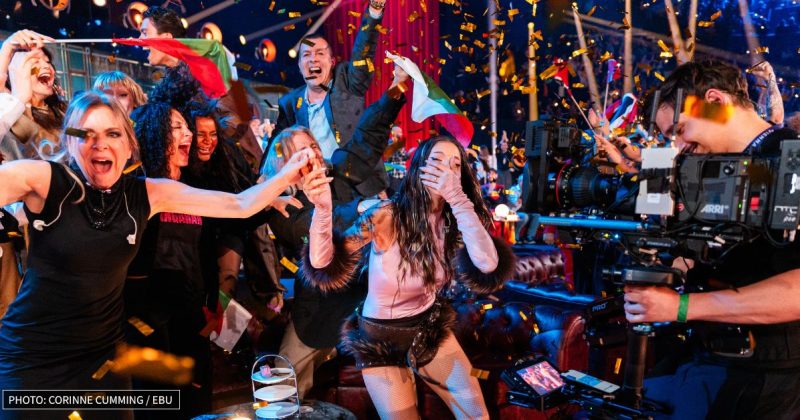




Despite the absence of a broadcast in the country, Spanish Eurovision fans who watch the show through other platforms will still be able to vote under the “Rest of the World” category. This voting block aggregates the points of viewers from non-participating countries, counting them as a single country’s public vote. The “Rest of the World” vote was introduced in 2023, and the Israeli entry has consistently performed well in this category. Notably, the Spanish public awarded the maximum 12 points to the Israeli entry in both of the last two years.
Spain’s Boycott Continues
Last December, following the decision by the European Broadcasting Union (EBU) and its member states not to disqualify the Israeli broadcaster from the contest, five nations withdrew in protest: Iceland, Ireland, the Netherlands, Slovenia, and Spain. Spain had never missed the contest since its debut in 1961, making this decision both unprecedented and significant. RTVE remains one of the most vocal national broadcasters in Europe against Israel’s participation and continues to lobby the EBU to reconsider its stance. José Pablo López, the president of RTVE, clarified that Spain is seeking to open a formal discussion with the EBU regarding the possibility of countries involved in active conflicts participating in the event. While no specific country was named in his statement, the context clearly targets the Israeli entry.
According to López, “There must finally be a serious and meaningful discussion” on whether EBU regulations should be updated so that nations cannot use Eurovision as a stage for international legitimacy during times of war. This move is seen by many as an attempt to challenge EBU policy, which maintains that Eurovision is a non-political event managed by national broadcasters rather than governments. From the perspective of the Israeli broadcaster, this move raises significant questions. Israel has participated in Eurovision for 53 years as a full EBU member, and the contest itself has long been built on the principle of being an international musical platform that should not reflect geopolitical conflicts.
Efforts to Change the Rules of the Contest
The Spanish festival Benidorm Fest, which served as the selection process for the Spanish representative and song in recent years, did not function as a national selection this year – and the same is expected for next year. While Spain has opened registration for the 2027 edition of the festival, RTVE clarified: “Our position toward Israel has not changed”. This statement suggests that Spain is likely to remain absent from the Eurovision stage in the coming years as well.
Spain in Eurovision 2025
“Esa Diva” (in English: “That Diva”) is the title of the song performed by singer Melody, who represented Spain at Eurovision 2025 in Basel, Switzerland.
Spain finished 24th with 37 points – 27 points from the juries, placing 21st, and only 10 points from the televotes, placing 22nd. In the last 20 years, Spain managed to finish only 3 times in the top 10.
Eurovision 2025: This was Spain’s 65th participation in Eurovision. Spain joined the competition in 1961 and won it twice consecutively in 1968 and 1969. Spain has hosted the contest on its territory only once in 1969 and since then holds the longest waiting time since its last victory – 56 years.

Email: [email protected]
Phone: +972-50-9441919
Maor Heumann has been writing about the Eurovision Song Contest and following it for over three decades. He has attended five contests and has found something to appreciate in almost every possible musical genre — from the sugary pop entries that finish last in the semi-finals to the quirky avant-garde pieces that even the competition’s juries struggled to connect with. He usually prefers original languages and songs with depth over Swedish-produced English clones — though he doesn’t promise to stick to that rule.
He grew up on the kibbutz of Sara’le Sharon, who instilled in him a love for music and created his first connection to the contest back in 1993 — before most of the current editorial team was even born.