
Eurovision winner Dara proves she’s an unconventional artist. In surprising Instagram posts, she revealed she records sounds using a kitchen spatula, sharing the pain and redness from hitting herself.
Ever since her Eurovision 2026 victory and global chart success, the singer continues to surprise her fans. Only two weeks after taking home the trophy with her winning track “Bangaranga“, she is back in the studio to prove why she is known as one of the industry’s most original artists. Anyone who watched her winning performance will likely recall her live sampling on stage, handling the sound chops herself instead of using backing tracks, all during an intense dance routine. Today, this unorthodox style clearly carries over into her latest recording sessions with a spatula, a choice that is not just a fascinating musical decision, but also a bold feminist statement transforming a traditional domestic object into an instrument of creation.”




A Surprise Announcement
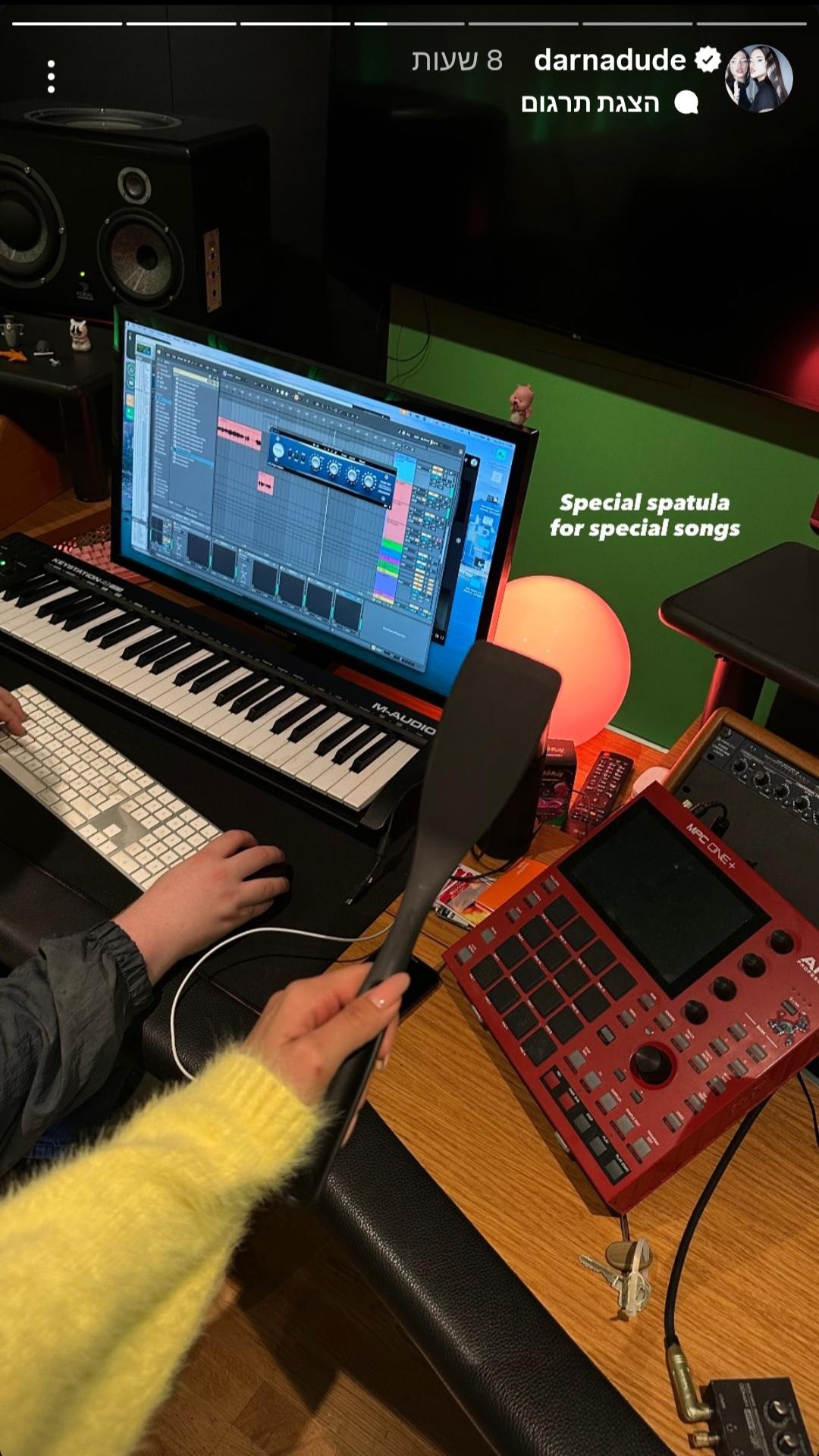
It all started when Dara shared a cryptic photo out of nowhere on her broadcast channel and Instagram. The singer was seen holding a basic spatula in a professional recording studio, alongside the caption, “A special spatula for special songs.” Baffled fans didn’t have to wait long for answers, because she soon released a video explaining the mystery behind the kitchen gadget.
Music That Hurts
In a video shared online, Dara is seen recording sounds by slapping her palm hard with the spatula, right by the studio microphone. Even with the intriguing musical result, the process wasn’t completely painless, and by the end of the clip, the singer is laughing and complaining about the redness and stinging the spatula left on her hand. This funny moment shows once more that she prefers to carve her own path in the music world, even if it means picking up unconventional tools, or enduring a bit of physical pain for the next hit. Beyond the musical innovation, this decision holds a striking feminist message. The spatula is a kitchen tool heavily linked to traditional housework, yet Dara breaks those norms completely. She takes an everyday object, strips away its usual meaning, and turns it into a fierce and powerful musical instrument inside a professional studio setting.
@darbiethings
Welcome to the riot
♬ original sound – Darina Yotova
No Time to Rest
It seems the spatula incident is just the tip of the iceberg of a highly creative period, as Dara has been working vigorously on a wealth of new music since her victory. Beyond writing additional songs in Sweden with some of the creators behind her Eurovision-winning hit, she hasn’t stopped teasing fans about her upcoming material, especially an intriguing new song titled “Ich liebe dich” which she has been promoting almost from the moment she stepped off the Eurovision stage as the winner. The song’s title raises questions about whether she drew inspiration during the Eurovision contest, as it is in German, the language spoken in the host country, Austria. In a recently released video where she is seen listening to a few short seconds of the track, she can be heard singing the title over a particularly fast, rave-style electronic beat. From this brief sneak peek, it sounds like another potential hit, exactly what we are used to getting from Dara.