
Sanremo artistic director Stefano De Martino confirmed a major format change creating a standalone Eurovision selection night for Sanremo 2027.
The musical earthquake that we reported on here first is officially taking shape. After months of rumors, Stefano De Martino, the newly appointed host and artistic director of the Sanremo Music Festival for the next two years, has broken his silence. He has confirmed the most dramatic rule change in the history of the event: a complete separation between the grand winner of Sanremo and the representative sent to Eurovision 2027 in Bulgaria.
Revolution: Separate Winners For Eurovision and Sanremo

In an interview with the Italian press, the new artistic director revealed for the first time the revolutionary new structure of the festival’s five nights, and exactly how the Eurovision act will be selected.
“My Sanremo will take a more international direction,” Stefano De Martino declared confidently, outlining the weekly schedule:
-
Tuesday and Wednesday: All competing artists will perform their songs for the first time.
-
Thursday: The beloved “Covers Night” moves specifically to the middle of the week.
-
Friday (Eurovision Night): The most dramatic evening. “This will be the night where the performance representing us at Eurovision is decided,” he revealed. “The artists will have the opportunity to stage a special performance according to their creative vision. I think this is a significant step that brings the festival closer to international standards.”
-
Saturday (Grand Final): The evening that determines the overall winner of the festival.
This means there will be a “contest within a contest” – one winner of the Sanremo Music Festival, and an additional winner who will be sent directly to Eurovision, unless the same artist is chosen by both votes. Although De Martino admitted that the exact voting mechanism for the Eurovision Night has yet to be finalized, this move is designed to allow massive superstars and major record labels to enter the competition and target the European market directly, without the pressure of winning the traditional festival.
The Eurovision Twist: Staging Upgrades for Friday Night

Under the proposed format, the competing artists will not settle for the standard, intimate performances that usually characterize the traditional festival. They will perform their Sanremo entries once more, but this time they will be required to give them a distinct “Eurovision” twist.
The goal is to showcase a stage vision tailored in advance to the competitive standards of the international stage. This includes dynamic camera directing and completely different choreography, incorporating backing dancers, pyrotechnics, and visual effects that are usually difficult to implement on the Sanremo stage, which is significantly smaller than a Eurovision arena. The artist who manages to present the most complete “package” that evening will win the coveted right to represent Italy at Eurovision.
This tactical change could serve as a career lifeline for beloved artists like Annalisa, who has tried her luck at Sanremo no fewer than six times. Now, she could secure her ticket to Eurovision through the dedicated Friday night without being dependent on winning the festival’s Grand Final on Saturday.
Cutting down the Song List
Another piece of good news for followers of the competition is the decision to significantly cut the number of competing songs. “We have decided to reduce the number of participants,” the artistic director confirmed. “The goal is to give the performances breathing room, to allow a more continuous narrative for the festival, and above all, to focus more on the artists themselves.” Audiences will no longer see 30 songs in the lineup as they did last year.
When asked about the number of songs already submitted to the preliminary committee, De Martino laughed: “They say 500 songs have already reached me, but honestly, I have no idea. It seems there is a higher response this year, which is an excellent sign.”
Regarding his selection process, he explained: “I listen to each song in three different scenarios: once on headphones for a clean listen, a second time in the car while driving, and a third time when I go out for a run. If a song survives these three tests, it is a sign that there is something good in it.” Ultimately, despite being accompanied by musical director Fabrizio Ferraguzzo and a team of experts, De Martino clarified that the final decision will rest solely with him.
For the 52nd Time: Italy Confirms Eurovision Participation
The news regarding the new format went beyond a mere statement of intent by the artistic director; thanks to the proposed plans and the unprecedented alignment with European standards, Italy has officially confirmed its participation in Eurovision 2027. Italy is the 13th country to confirm its participation in the 2027 contest, joining the UK, Germany, Greece, Luxembourg, North Macedonia, Norway, San Marino, Cyprus, Switzerland, Denmark, Canada (participating for the first time), and the host – Bulgaria.
The decision to adopt De Martino’s vision, which dedicates an entire evening to the European contest signals that Italy is more determined than ever this year, employing a format designed to maximize its chances of bringing the trophy home.
Big Dreams and Guest Star Rumors
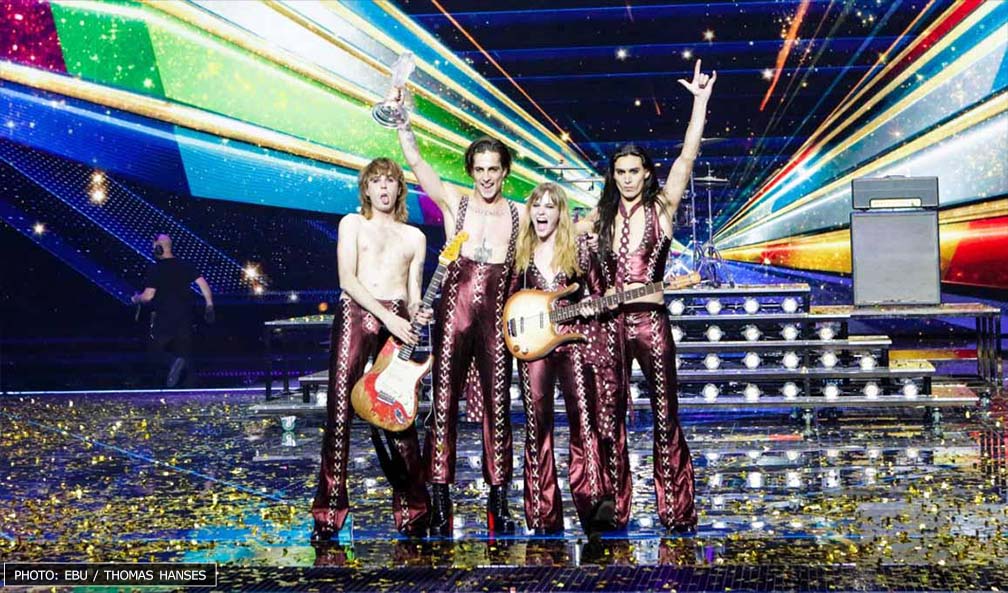 Finally, when asked about rumors regarding a guest appearance by rock legend Vasco Rossi or a reunion of the band Måneskin, the host maintained an amusing ambiguity: “Regarding Måneskin, maybe they will have a staff meeting at Sanremo, but I don’t know about a reunion performance. And regarding Vasco? Who wouldn’t want him? It’s the big dream of anyone who has ever hosted the festival, and it’s my dream too.”
Now, international fans must wait for the publication of the official regulations by the national broadcaster RAI to understand exactly how the split voting will work and which artists will dare to enter the turbulent new waters of Sanremo 2027.