
SBS officially confirms that Australia will participate in Eurovision 2027 in Burgas, Bulgaria, joining 22 other confirmed participating countries.
The Australian national broadcaster SBS confirmed today that Australia will participate in Eurovision 2027, which will be held in Burgas, Bulgaria. Australia becomes the 23rd country to officially confirm its participation in the contest. Among the countries that have already confirmed their participation are Bulgaria (host country), Canada (making its contest debut), Finland, Germany, Israel, Italy, Sweden, and the United Kingdom.
How Will Australia Select Its Entry?

As mentioned, Australia confirmed its participation today for Eurovision 2027, which will take place for the first time in Burgas, Bulgaria. Since 2023, Australia has selected its entries via internal selection, and it appears Australia will adopt this method again this year, though SBS has yet to make an official announcement regarding the selection process.
From 2019 to 2022, Australia selected its entries and songs for the contest through the popular national final “Australia Decides” – except in 2021, when Montaigne was automatically selected to represent the country following the cancellation of the 2020 contest due to the COVID-19 pandemic.
Numerous artists competed in the Australian national final, such as Voyager with the song “Dreamer” in 2022 and Electric Fields with “2000 And Whatever” in 2020. As many fans recall, Voyager eventually represented Australia in Eurovision 2023 with “Promise“, while Electric Fields represented the country in 2025 with “One Milkali (One Blood)“.
Why Does Australia Compete in Eurovision?

The story began in 1983, when SBS had the idea to broadcast the contest to the Australian audience. Since then, the show has become a cultural staple, with dedicated fans waking up at 5:00 AM just to watch the live broadcast and feel part of the European community. This connection is no coincidence – Australia is a nation of immigrants, with many citizens hailing from Europe, for whom the songs and glitter serve as a cultural bridge to the old continent. This bond led Australia to become an associate member of the European Broadcasting Union (EBU), a status it has held for decades.
Australia’s big leap from the stands to center stage occurred in 2015, when the European Broadcasting Union decided to extend a one-off invitation to celebrate Eurovision’s 60th anniversary. Organizers thought it would be a nice gesture to hardcore fans on the other side of the world, but they did not anticipate the level of professionalism and enthusiasm the Australians brought. The performance was such a resounding success, and ratings skyrocketed to the point where the “one-off” invitation became a permanent fixture.
Australia’s Track Record on the Eurovision Stage
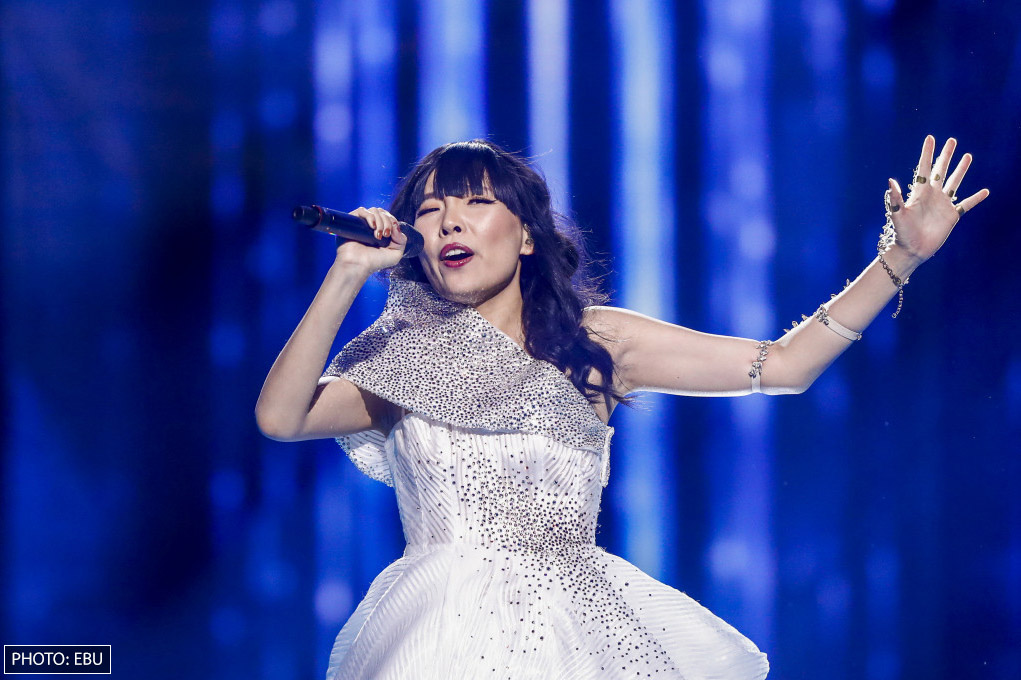
Since then, Australia has proven it is not just there to participate, but to win. In 2016, Dami Im nearly took first place with her powerful performance of “Sound Of Silence“, securing an exceptionally honorable second place. From its debut, Australia maintained a remarkable streak of qualifying for the Grand Final, but that streak was broken in 2021 when Montaigne and her song “Technicolour” failed to reach the Grand Final.
Following its first non-qualification, Australia experienced this disappointment twice more: in 2024, Australia finished 11th, just 6 points behind Serbia, which finished 10th and qualified for the final. The following year, Australia once again finished 11th and missed the Grand Final, this time by a margin of 10 points behind Armenia.
Following that setback, Australia selected the beloved and successful artist Delta Goodrem, who represented her country with the song “Eclipse” and delivered Australia’s second-best result in the competition – an exceptionally honorable fourth place with a breathtaking performance.