Banned by some, embraced by others: How far should Eurovision go in embracing artificial intelligence?
Eurovision has always reflected the evolution of the music industry. Musical trends have come and gone, production techniques have changed, and technology has transformed what artists can achieve on stage. Artificial intelligence (AI), however, introduces a different kind of discussion – one that concerns not only how music is produced, but who, or what, creates it.
Ukrainian singer Skylerr has recently found herself at the centre of such a discussion. Her case joins a series of developments across the Eurovision world, from Azerbaijan denying speculation about its 2026 entry to San Marino experimenting with AI-assisted songwriting and national broadcasters adopting contrasting regulations. Together, these developments bring questions of artistic authenticity, originality and fairness into the Eurovision conversation.
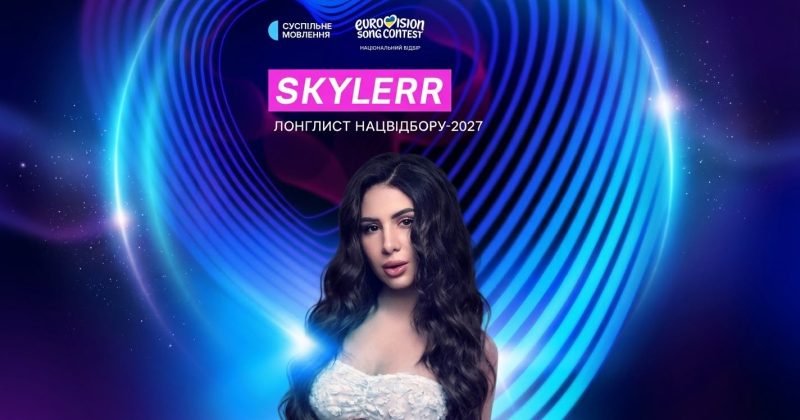





The latest discussion emerged in Ukraine following the announcement of the longlist for Vidbir 2027, the country’s national selection for Eurovision. Among the candidates is Skylerr, whose involvement in a new version of “Chervonyi Mak” (Red Poppy) attracted criticism from some social media users. The original recording featured AI-generated female vocals, which Skylerr subsequently replaced with her own voice.
Responding to the criticism, Skylerr stated that her submission for Vidbir 2027 was written without the involvement of artificial intelligence. She also explained that the original song had been written by human songwriters, with AI used for its vocal performance.
The case presents an unusual reversal of a familiar concern surrounding artificial intelligence in music: rather than technology replacing a human performer, human performers replaced artificially generated vocals. While Skylerr’s case concerns a musical collaboration outside the competition, discussions surrounding artificial intelligence have previously extended to songs selected for Eurovision itself.
A Question of Artistic Authenticity
In March 2026, following the release of Azerbaijan’s Eurovision entry, “Just Go“, performed by JIVA, speculation emerged on social media regarding the possible involvement of artificial intelligence in the song’s creation.
Azerbaijani broadcaster İctimai publicly rejected the allegations, describing the entry as an original musical work developed through a professional creative process. The broadcaster also emphasised JIVA’s live vocal abilities and stage experience as important factors in her selection. No evidence establishing that AI was used to create the entry was presented in the reports.
Although the circumstances in Azerbaijan and Ukraine differ, both cases illustrate how discussions surrounding artificial intelligence can extend beyond the music itself, affecting public perceptions of artists and songwriters.
As AI-generated music becomes increasingly sophisticated, distinguishing between human-created and AI-generated material may become more challenging. The sound of a recording alone cannot conclusively establish how it was created, making the distinction between verified information and speculation particularly important.
How National Selections Are Regulating AI
While audiences continue to debate the technology, several national broadcasters have already introduced restrictions governing its use in Eurovision selections.
Ahead of Eurovision 2027, Norway’s national broadcaster NRK introduced a prohibition on songs created entirely using artificial intelligence. Despite the restriction, the broadcaster estimated that between 30 and 50 of approximately 1,500 submissions for Melodi Grand Prix 2027 may have been entirely AI-generated. These figures represent the broadcaster’s assessment rather than independently verified cases.
Similar concerns have emerged in neighbouring Sweden, where a record 4,077 songs were submitted for Melodifestivalen 2027. Swedish broadcaster SVT suspects that some of the submissions may have been created using artificial intelligence. However, unlike Norway, Sweden has not introduced an equivalent prohibition on entirely AI-generated submissions.
In Poland, the regulations for the upcoming national selection prohibit the use of artificial intelligence in creating artistic elements of submitted songs. Meanwhile, Malta has also introduced AI-related restrictions. The official announcement from broadcaster PBS confirms that entirely AI-generated songs, lyrics and performances are ineligible for its 2027 national selection.
However, these restrictions do not necessarily share the same scope. Prohibiting an entirely AI-generated composition is different from prohibiting AI-assisted songwriting, production or vocal enhancement.
The differences between these regulations highlight a key challenge: determining which uses of artificial intelligence are acceptable in music creation and which should be prohibited.
National Broadcasters Embrace AI
While several national broadcasters have introduced restrictions on artificial intelligence, others have chosen to explore its potential, embracing the technology for both creative and practical purposes. In 2024, San Marino collaborated with music technology company Casperaki on a project exploring the relationship between human creativity and artificial intelligence. British singer Dana Gillespie earned a place in the national final of Una Voce per San Marino with “The Last Polar Bear”, a song initially developed using Casperaki’s AI platform and subsequently adapted by the singer.
Although the entry did not ultimately represent San Marino at Eurovision, the initiative demonstrated that AI-assisted music could form part of a national selection through an openly acknowledged creative process.
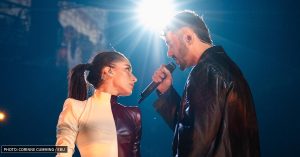 A different application of the technology emerged in Israel ahead of Eurovision 2026. Israeli broadcaster KAN permitted songwriters to use AI-generated vocals in recordings submitted for consideration, helping preserve their anonymity during the selection process. In this case, artificial intelligence serves a procedural purpose rather than replacing the artist selected to perform at Eurovision.
The Role of Live Performance at Eurovision
One of Eurovision’s longstanding rules is particularly relevant to the debate surrounding artificial intelligence: lead vocals must be performed live. Regardless of how a song is written, produced or recorded, the artist must deliver the lead vocal performance on stage. An AI-generated voice used in a studio recording cannot replace the singer’s live lead vocals at Eurovision.
However, Eurovision is not simply a singing competition, it is a song contest that also celebrates songwriting, composition and musical creativity. While the live performance requirement preserves the role of the human singer on stage, the use of artificial intelligence in the creation of the song itself remains a separate issue.
Should the EBU Establish a Universal AI Policy?
The contrasting approaches adopted by national broadcasters raise another important question: whether Eurovision should establish a more detailed, common framework governing artificial intelligence. National broadcasters have traditionally maintained considerable freedom in determining how they select their Eurovision entries. Differences in eligibility requirements, voting systems and selection formats are already part of the competition.
However, AI-related restrictions introduce a new dimension to those differences. A songwriter in one country may be permitted to use a technological tool that is prohibited by another broadcaster, even though both ultimately compete in the same international contest.
Whether this creates a meaningful competitive advantage remains unclear. Nevertheless, a common regulatory framework could help establish which uses of artificial intelligence are acceptable. After all, generating an entire composition is fundamentally different from using synthetic vocals in an anonymous demo, experimenting with musical arrangements or assisting with technical aspects of production.
Another possible approach would be to require transparency regarding significant AI involvement, allowing broadcasters and audiences to better understand how a competing entry was developed. The challenge would be establishing rules that protect creative integrity without unnecessarily restricting artistic experimentation.
Where Do We Draw the Line?
As early as August 2023, the EBU was already considering restrictions on AI-generated music at Eurovision, emphasising the importance of preserving human creativity. More than three years later, however, the publicly available contest rules still contain no explicit restrictions on the use of AI in songwriting or composition.
Throughout its history, Eurovision has evolved alongside developments in music production and performance technology. The challenge now is determining how artificial intelligence fits into that evolution while preserving the qualities that make the competition distinctive.
Perhaps the most important question is not whether artificial intelligence belongs at Eurovision, but what role it should be allowed to play.

Email: [email protected]
Phone: +972-50-9441919
Writer and content creator specializing in the Eurovision field. Her writing emphasizes professional analysis and a wide range of opinions.