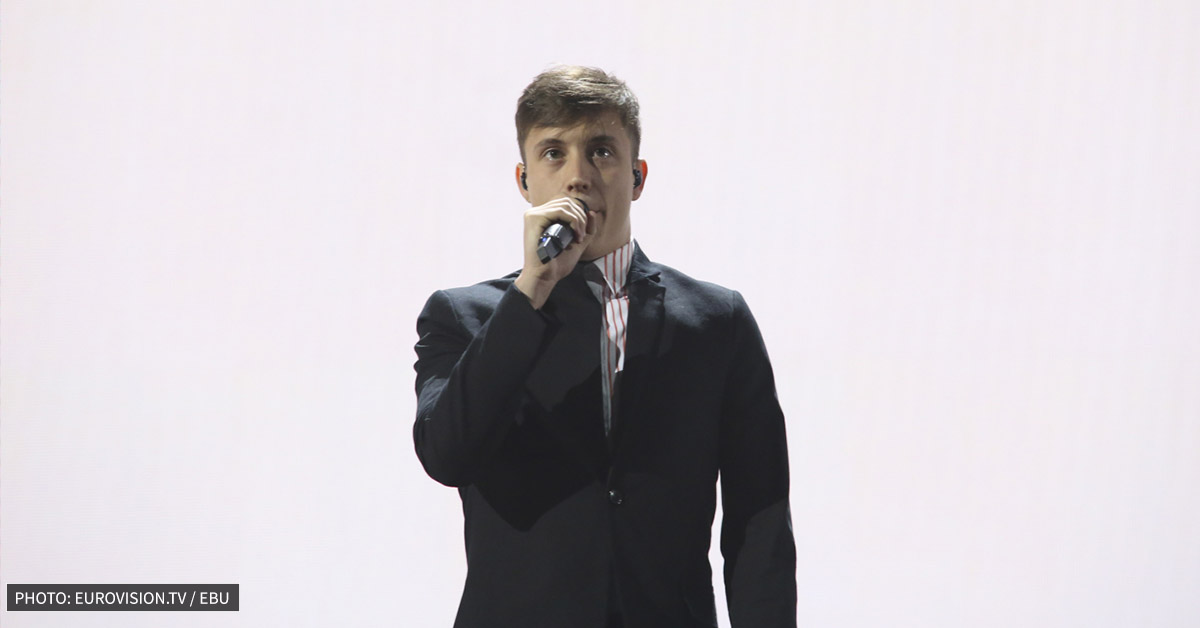
Despite reports of Loïc Nottet returning for Eurovision 2026, the national broadcaster says Belgium’s participation remains undecided amid ongoing debate.
In recent days, European media reported that singer Loïc Nottet, Belgium’s representative in Eurovision 2015, held in Vienna, Austria, has been chosen to once again represent Belgium at the Eurovision 2026, which will also take place in Austria.
Nevertheless, sources at Belgian national broadcaster RTBF stated that no final decision has been made, and Belgium’s participation for the upcoming contest remains uncertain. “Our production teams are in contact with artists to select our representative for 2026,” a broadcaster source explained. “We must make it to the summer in case we choose to participate. The official announcement will be made at the appropriate time.”






Belgium’s Dilemma: Will They Withdraw Over the Israel Dispute?
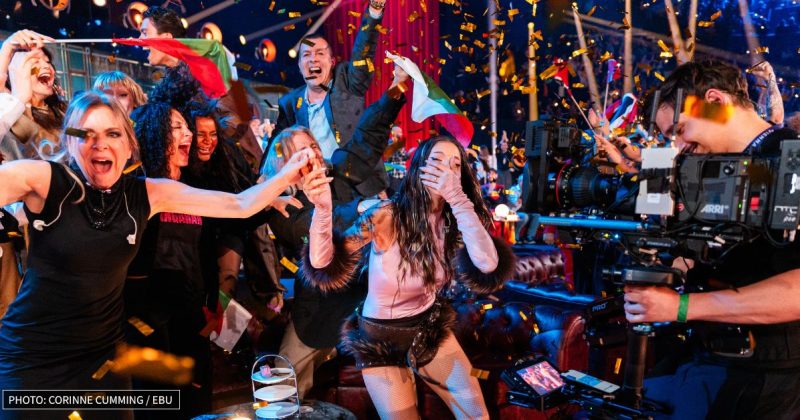
The source—who denied the reports to nieuwsblad.be—was open about the broadcaster’s hesitation: “There have been several discussions since Eurovision this year.” The comment refers to the ongoing controversy surrounding Israel’s participation, with Israeli representative Yuval Raphael winning the public vote and finishing second in the Eurovision 2025 Grand Final. both RTBF and fellow Belgian broadcaster VRT, who alternate annually in sending the national act, had their questions about this outcome.
“The discussions are still ongoing, alongside efforts to find a candidate to represent Belgium. At this moment there is no official confirmation to participate,” the source said. Both Belgian broadcasters have sent a letter to the European Broadcasting Union demanding a review of the voting system: “Discussions are now taking place, and it takes time to reach agreement among all the countries.”
A Quarter of Belgian Viewers Backed Israel – What Happened?
Nearly 25% of the Belgian public’s votes in the Eurovision 2025 Grand Final went to Israel’s representative,Yuval Raphael, according to data from the EBU. This exceptional figure, revealed following a parliamentary inquiry, has sparked heated debate in Belgium and across Europe over the legitimacy and impact of public voting at Eurovision.
Israel’s capture of nearly a quarter of Belgian public votes – 220,554 out of 698,000 households watching – drew widespread reactions in the media, parliament, and fan communities. This voting share is ten times higher than in the first semi-final. As a result, several European broadcasters, including Belgium’s VRT, have called on the EBU to investigate the integrity of the voting system. Meanwhile, countries like Slovenia and Iceland are demanding Israel’s expulsion, a move Israel has so far managed to block from reaching a vote.
Despite the uproar, VRT is not permitted to disclose the exact number of votes Israel received or the ranking of other countries, in accordance with contest rules. However, in Italy, full results were published: Israel ranked third with 11.44% of the votes, while San Marino led by a wide margin. This year, the gap between the public and jury votes has become especially pronounced, raising questions about the objectivity of both systems.
Loïc Nottet – Who Are You?
Loïc Nottet, 29, first gained fame with his participation in the third season of “The Voice Belgique”, where he was part of singer BJ Scott‘s team. He finished in second place. He was then chosen internally to represent Belgium at the 2015 Eurovision in Vienna, Austria, with his song “Rhythm Inside”, finishing fourth.
After the contest, Loïc Nottet competed in season six of “Danse avec les stars” (“Dancing with the Stars”) in Belgium and took first place. He is considered one of Belgium’s most celebrated artists, with a discography including three albums: the album “Million Eyes”, released in 2016, his debut album “Selfocracy”, released in 2017, and “Sillygomania”, which came out in 2020. His debut album reached platinum status in both Belgium and France. In 2020, he returned for the ninth season of “The Voice Belgique”, this time as a mentor.
According to journalist Clément Garin, Loïc Nottet was chosen from a shortlist of about forty candidates who submitted a song to represent Belgium at Eurovision. Among the candidates who submitted songs for consideration were the singer Mentissa, the singer Henri PFR, and the singer Essyla. Essyla was nominated for the prestigious NRJ Music Awards as Belgium’s Breakthrough of the Year and finished second in the committee selection for Belgium’s Eurovision 2026 representative. Despite the reports, the national broadcaster denies that Nottet has been selected to represent Belgium in Eurovision 2026.
Belgium at Eurovision 2025:
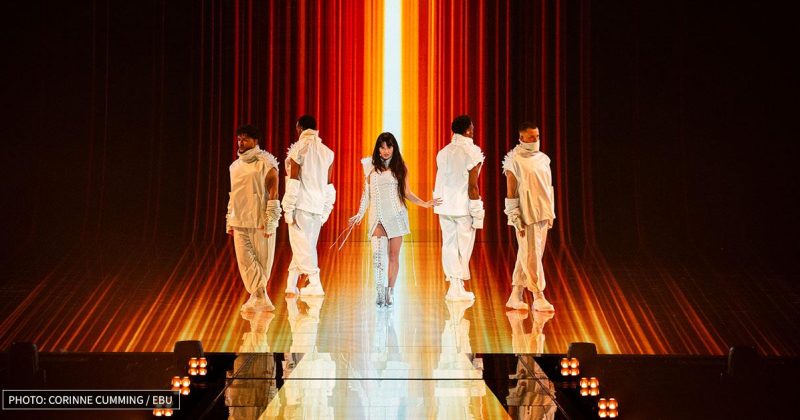
“Strobe Lights” is the name of the song performed by Red Sebastian, who represented Belgium in the first semi-final of Eurovision 2025 in Basel, Switzerland. Belgium did not qualify for the grand final, finishing 14th out of 15 with only 23 points.
This marks the second consecutive year that Belgium has failed to reach the final. In the past ten years, Belgium has qualified for the final only five times.
Eurovision 2026: This will be Belgium’s 67th participation in the contest. Belgium joined Eurovision in 1956 as one of its seven founding nations. The country’s best result came in 1986, when Sandra Kim won first place with “J’aime la vie”.

Email: [email protected]
Phone: +972-50-9441919
Aviad Berger – Israeli editor, reporter, and content creator specializing in the Eurovision Song Contest. He has been working with the EuroMix editorial team for about a year and a half. Since 2024, he has provided continuous Eurovision coverage from the host city, delivering live updates, exclusive interviews, and in-depth commentary.
Aviad is also a video editor and filmmaker active in the Israeli media industry.