Following the EBU’s approval of Israel’s participation, four countries withdrew from Eurovision 2026. Yet Sweden’s national broadcaster SVT urges calm and chooses a different path. What led Sweden to stand apart?
At the General Assembly of the EBU, held yesterday in Geneva, Israel’s participation in Eurovision 2026 – set to take place this May in Vienna – was officially approved, alongside rule adjustments enabling this decision. Following the announcement, the national broadcasters of Spain, The Netherlands, Ireland, and Slovenia declared their withdrawal from the contest.
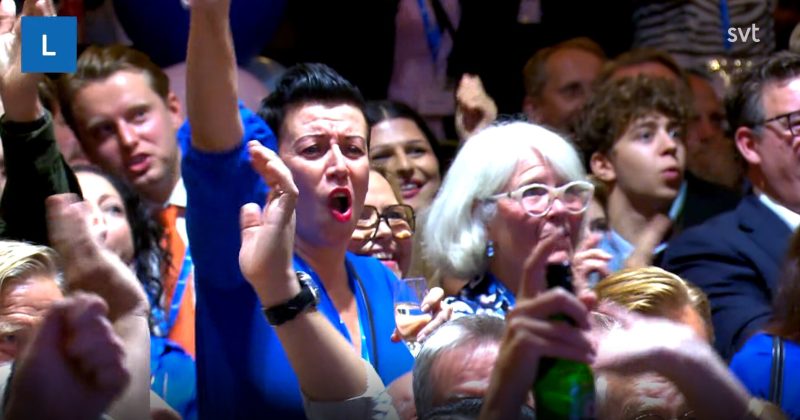
In contrast, Sweden’s national broadcaster SVT announced that it does not intend to withdraw from the upcoming competition. SVT’s Head of Programming, Michael Österlund, stated:
“In order for us to participate, we have said that there should be a sufficiently broad European consensus around the competition. We have also said that it should be as apolitical and as independent as possible. Furthermore, it must take place in a safe environment”.
Representatives of the national broadcaster expressed a similar message at the assembly, calling on all countries to keep politics out of the competition – while maintaining a neutral stance regarding Israel.



Sweden Maintains Its Line as Others Withdraw
Sweden is not the only country refusing to boycott Eurovision. According to reports, the national broadcasters of Norway and Finland also confirmed they will remain in the competition and do not intend to join the withdrawal. According to Österlund, SVT does not see any reason to withdraw Eurovision 2026:
“If there are a few countries choosing to withdraw, we can see that they are making a different assessment than the one we have made”.
This position reflects the direction Sweden’s national broadcaster has taken in recent years – supporting European unity within Eurovision and striving to distance the contest from political discourse.
Internal Debate in Sweden: Is This the Right Decision?

Despite SVT’s clear stance, not everyone in Sweden agrees with the decision not to boycott Eurovision. The question of Israel’s participation was discussed on the Swedish news program Aktuellt. Participants included the Left Party’s foreign policy spokesperson Håkan Svenneling, and Member of the European Parliament representing the Christian Democrats, Alice Teodorescu Måwe.
Teodorescu Måwe welcomed SVT’s announcement not to withdraw:
“This is the only reasonable option. I would be ashamed if a public service broadcaster in Sweden were part of a campaign boycotting a country defending itself”.
Conversely, Svenneling disagreed:
“I regret this. These are serious countries that have long debated Israel’s participation. I also believe that SVT’s representatives are still leaving room to see how Europe reacts, and they do not entirely rule out that changes may occur”.
What Does This Mean for Israel?
Sweden’s position carries significant weight due to its central role in Eurovision and its influence over other Scandinavian countries. SVT’s vote in favor of Israel’s continued participation and its public commitment to remain in the contest, strengthens Israel’s standing and provides momentum against the political pressure exerted by countries calling for its exclusion.
The final list of participating countries in Eurovision 2026 is expected to be released in the coming days.
Melodifestivalen 2026 Schedule
-
Saturday, January 31st, 2026 – Semi-final 1.
-
Saturday, February 7th, 2026 – Semi-final 2.
-
Saturday, February 14th, 2026 – Semi-final 3.
-
Saturday, February 21st, 2026 – Semi-final 4.
-
Saturday, February 28th, 2026 – Semi-final 5.
-
Saturday, March 7th, 2026 – Grand Final.
Sweden at Eurovision 2025:
“Bara bada bastu” (in English: “Just take a sauna”) is the title of the song which was performed by the band KAJ, who represented Sweden in Eurovision 2025, in Basel, Switzerland – placing 4th with 321 points. The song was written by the band members – Kevin Holmström, Axel Åhman, and Jakob Norrgård – along with Anderz Wrethov, Kristoffer Strandberg, and Robert Skowronski.
The song led the betting predictions throughout the competition, reaching a peak of 49% winning probability, but ultimately finished in fourth place with 321 points – 126 points from the juries, ranked sixth, and 195 more points from the public, ranked third.
Eurovision 2026: This will be Sweden’s 65th appearance in the competition. Sweden joined Eurovision in 1958 and has won the contest seven times over the years. The country’s most recent victory came in 2023, when Loreen won with the song “Tattoo”.

Email: [email protected]
Phone: +972-50-9441919
Neta Geffen is a respected journalist at Euromix, Israel’s leading news site for Eurovision coverage. Since 2010, Neta has been closely following the Eurovision Song Contest, bringing with him extensive experience, profound knowledge, and a broad understanding of the history, politics, and cultural influences that shape the event every year.
Neta publishes articles, analyses, and up-to-date reviews on all Eurovision developments, including musical trends, format changes, political influences, and audience reactions across Europe and Israel. Thanks to a deep connection to the contest’s history, Neta provides readers with wide-ranging context—from the impact of political events on results, to in-depth analyses of songs and languages within the competition. Neta specializes particularly in the Eurovision rock genre, Balkan ballads, and native language entries, with a special focus on Italian and Greek songs.