It was recently revealed that Eurovision star Monokate is returning to Ukraine’s national selection. In a new interview, she explains why she chose to compete solo, without her band Go_A.
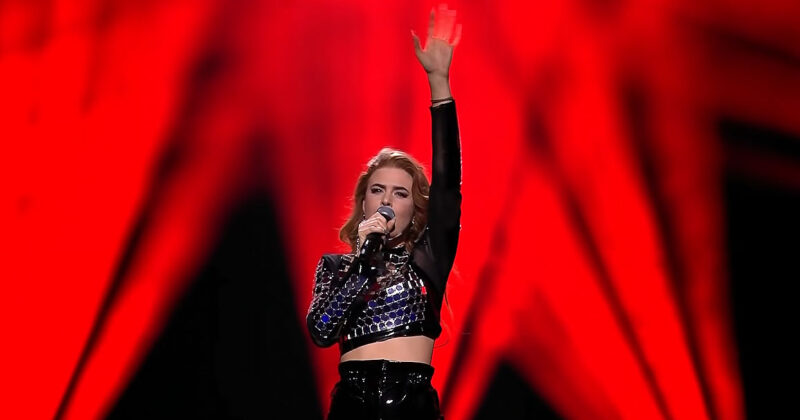
One of the most exciting and talked-about surprises this year came with the release of the participant list for Ukraine’s Eurovision national selection, “Vidbir 2026.” In a complete surprise, beloved singer Monokate (Kateryna Pavlenko) was revealed as one of the contestants for the 2026 selection. The announcement sparked major excitement and anticipation among Eurovision fans across Europe and beyond. Now, Monokate opens up in a candid interview about why she decided to return this year on her own, without her band.



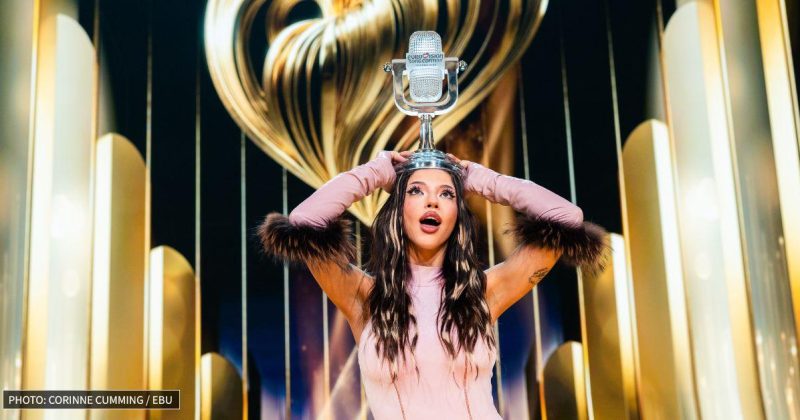
“This Is the Place Where I Can Be Myself”
According to Pavlenko, the decision to compete as Monokate rather than as part of Go_A stems from an artistic desire to explore new creative territories that were not possible within the band framework.
“Go_A is a project with a very specific, folkloric and intense energy, but Monokate is the place where I can truly be myself, without filters and without having to consider a collective concept.”
She stresses that her wish to return to Eurovision is not driven by a desire to “fix” the past especially considering the group’s outstanding achievement in 2021 but rather by a strong inner need to express herself as an individual creator. “There are sides of me the audience hasn’t seen yet, and different music I wanted to release into the world. Ukraine’s Eurovision national selection is the best stage to do that.”
A Darker and More Intimate Sound
Eurovision fans remember “Shum” (in English: “Noise”) as a fast-paced, aggressive, and dance-driven electro-folk track. Pavlenko clarifies that Monokate’s style is entirely different.
“It’s a more personal project, more electronic, perhaps a bit darker and more intimate.”
She notes that this new framework allows her to experiment with a more contemporary sound that still incorporates her Ukrainian roots, but through a completely different artistic lens.
Expectations Are Sky-High
For fans, Monokate is not just another contestant, but a true Eurovision icon. Beyond her success in Rotterdam at Eurovision 2021, she has become a symbol of Ukraine’s modern cultural identity on the European stage. Her decision to once again put herself before both the public and the jury in Ukraine’s highly competitive national selection reflects a strong confidence in her new material.
Her song for the upcoming competition has not yet been revealed, leaving one major question unanswered: will she be able to recreate the same magic and audience connection while standing on stage alone, without the band? The answer will unfold in the months ahead.
Ukraine at Eurovision: A Record of Remarkable Success
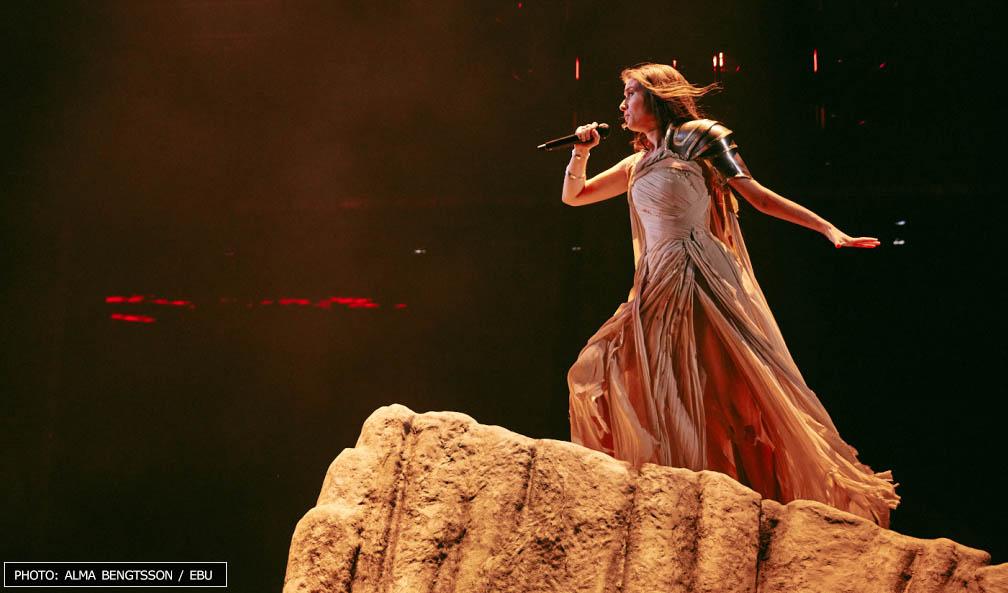
Ukraine, alongside Sweden, is the most successful country at the Eurovision Song Contest in the 21st century. They won the competition three times: in 2004 with Ruslana and her song “Wild Dances”, in 2016 with Jamala and her song “1944”, and in 2022 with Kalush Orchestra and their song “Stefania”. In addition, Ukraine has finished in second place twice and third place twice, and has never failed to qualify for the Grand Final making it the only country to hold this record, alongside Luxembourg, which returned to the competition in 2024.
Ukraine at Eurovision 2025
“Bird of Pray” is the name of the song that was performed by Ziferblat, representing Ukraine in Eurovision 2025. Ukraine qualified for the final from the first semi-final of the contest and finished 9th overall with 218 points. Ukraine finished 6th in tele-votes and 14th in jury votes.
The Ukrainian result is their worst one since 2018.
Eurovision 2026: This will be Ukraine’s 21st participation in the Eurovision Song Contest. Ukraine joined the competition in 2003 and has won it three times. Ukraine’s last victory was in Eurovision 2022 with the song “Stefania” performed by Kalush Orchestra.
Email: [email protected]
Phone: +972-53-9514754
A writer and content creator with a strong specialization in the Eurovision scene, particularly across Eastern Europe and post-Soviet countries. His work highlights the artistry, storytelling, and cultural variety that define the contest, offering readers a deeper look into both established performers and emerging voices.
As a skilled translator and polyglot, he brings a unique linguistic and cultural understanding to his analysis and coverage..