Conchita Wurst announces her departure from the Eurovision world, ending a decade-long association after her landmark 2014 victory and cultural impact.
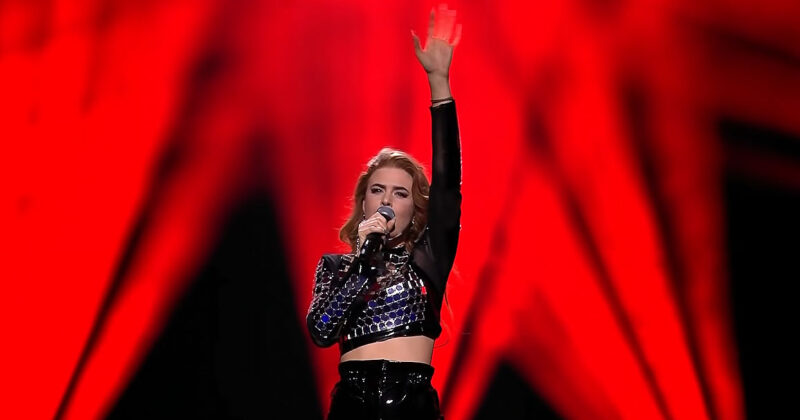
Many Eurovision fans had hoped for the return of Eurovision 2014 winner Conchita Wurst as a host of Eurovision 2026 in her home country, Austria. However, in a recent post shared on social media, the singer made it clear that she does not intend to return to the Eurovision arena in any capacity, effectively dismissing ongoing rumors. Conchita won the contest with the iconic song “Rise Like A Phoenix” and is portrayed as a drag persona by Austrian singer Thomas Neuwirth.
The announcement contradicts remarks she made just a week earlier in an interview with the German magazine BUNTE, where she had officially confirmed a return to the Eurovision world, although without specifying in which role.





“The Person I Became – Thanks to Eurovision”
In the statement published by Neuwirth on social media, Conchita wrote that Eurovision shaped his life and served as “a stage, a home, a springboard, and a chapter I am deeply grateful for”. He emphasized that the victory in Copenhagen in 2014 opened doors, enabled him to build an international career, and turned him into a symbol for an entire community.
At the same time, he explained that as an artist, “change is the only constant”, and that he now feels the time has come to begin a new chapter, away from the Eurovision sphere to which he had been closely connected for many years.
“From Now On – Outside the Eurovision Context”
Later in the statement, Conchita declares unequivocally that she is “now disengaging from the Eurovision context” and plans to focus on other professional projects, allowing new creative paths to emerge. According to her, her relationship with the contest will remain “part of my personal history, not the place for my next steps”. Conchita stresses that the decision is entirely personal and asks fans and the media to respect her choice, noting that she does not intend to elaborate beyond what was shared in the statement.
What Does This Mean for Fans?
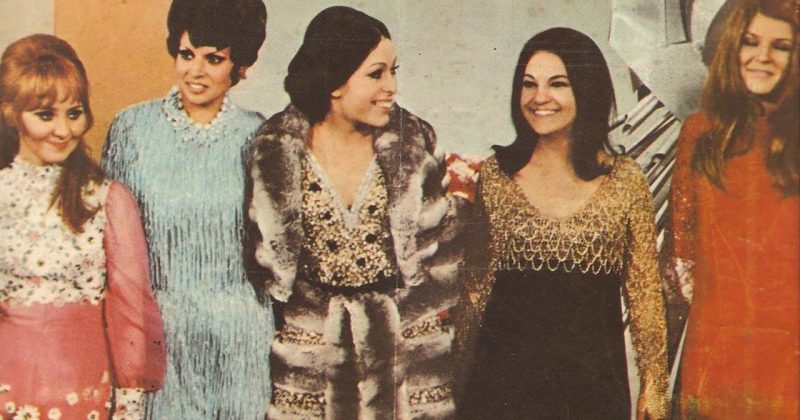
For Eurovision audiences across Europe, this marks the end of an era. Since her dramatic victory in 2014, which turned Conchita into a symbol of acceptance and influenced LGBTQ+ discourse throughout Europe, she continued to appear at official Eurovision events as a host, guest performer, and fashion icon. Now, at least according to her declaration, she is choosing to channel her energy into other directions – new music, artistic projects, and possibly endeavors beyond the music industry.
It remains unclear whether broader public debates surrounding certain countries’ participation in the contest had any influence on her decision to distance herself from Eurovision. However, for many long-time viewers who remember her defining moment on the Copenhagen stage and her continued presence in Eurovision-related events over the years, this represents a symbolic farewell to one of the most influential figures of the past decade in the competition.
View this post on Instagram
Austria at Eurovision 2025
JJ, a 23-year-old opera singer, represented Austria at Eurovision 2025 with the song “Wasted Love“, after being internally selected by the national broadcaster ORF. JJ won Eurovision, finishing in first place with 436 points: 258 from the juries, ranking first, and 178 from the public, ranking fourth. Among these were 8 points from the Israeli public and 6 points from the Israeli jury.
JJ’s victory marks Austria’s third win in Eurovision history, following Udo Jürgens in 1966 with “Merci, Cherie” and Conchita Wurst in 2014 with “Rise Like a Phoenix”.
Eurovision 2026: This will be Austria’s 58th participation in Eurovision. Austria joined the competition in 1957 and has won three times over the years. Austria’s last victory was in Eurovision 2025 with the song “Wasted Love” performed by singer JJ.
Email: [email protected]
Phone: +972-53-9514754
A writer and content creator with a strong specialization in the Eurovision scene, particularly across Eastern Europe and post-Soviet countries. His work highlights the artistry, storytelling, and cultural variety that define the contest, offering readers a deeper look into both established performers and emerging voices.
As a skilled translator and polyglot, he brings a unique linguistic and cultural understanding to his analysis and coverage..