
Official: The EBU has approved the Israeli entry for Eurovision 2026, to be performed by Noam Bettan this May in Vienna, Austria, but asked for some clarification.
Moments ago, Ran Boker, Ynet’s culture correspondent, reported that the EBU officially approved Israel’s entry for Eurovision 2026 but asked for some clarification.
Earlier this month, the song was chosen following an extensive selection process involving approximately 200 submissions, overseen by a professional committee. The song, to be performed by Noam Bettan in May in Vienna, was written by Yuval Raphael, Tslil Klifi, and Nadav Aharoni. It marks a shift away from ballads for the first time in two years and will feature lyrics in Hebrew, French, and English. The song is set to be unveiled during a special broadcast on “KAN 11”, the Israeli national broadcaster’s channel, on March 5th.
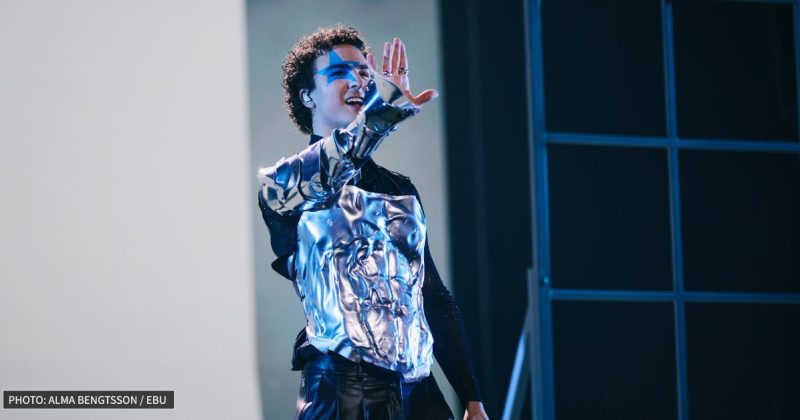





In recent moments, Ran Boker has reported that Israel’s song for the Eurovision 2026 contest has now been officially approved. According to his report, the EBU emphasized that the song was approved, but that there are several clarifications which were defined as “not significant.” It is currently unclear exactly what those clarifications are – whether they concern the song’s lyrics or perhaps something else – and we may never know. Alongside the announcement of the song’s approval, it was revealed that Noam Batan’s entry for the coveted contest will be unveiled in about a month and a half, on March 5.
Who is behind Noam Bettan’s Eurovision song?
Israel’s Eurovision 2026 entry was written by Yuval Raphael, Tslil Klifi and Nadav Aharoni – three prominent figures in the Israeli music scene, with Yuval Raphael herself having represented Israel at last year’s contest as a vocalist. Because one of the songwriters is Yuval Raphael, the committee adopted an exceptional measure: the representative of Teddy Productions recused himself from the discussion and vote on this specific song, in order to maintain transparency and avoid any conflict of interest.
Yuval Raphael co‑wrote the song’s lyrics. Last year, she represented Israel at Eurovision with the song “New Day Will Rise” (written by Keren Peles and Tomer Biran), without being involved in its writing. However, her songwriting skills are well known in the industry: in October, she released her EP featuring tracks she helped write, including the songs “Uma Itkha” and “Yidalek HaOr”.
Tslil Klifi co‑wrote both lyrics and composition. Klifi is regarded as one of the most successful and influential songwriters in Israeli pop, with a long list of hits including “Masa” by Eliad Nahum, “Holekhet Itkha” by Narkis, “Bridezilla” by Noa Kirel and more. Klifi also has direct Eurovision experience: in 2020, she wrote “Rakata” for Eden Alene, which placed third in the “HaShir HaBa for Eurovision” selection. In 2022, she contributed to “Marionette”, chosen for Inbal Bibi in the fourth season finale of “X Factor for Eurovision”, where it finished third.
Nadav Aharoni is responsible for the lyrics, composition and musical production of the song. Aharoni has penned numerous major hits, including “Khatzi Meshuga’at” by Nasreen Kadri, “HaBallada LaMekhakot” by Narkis, “Lo Tireh Oti Bokhe” by Eden Hasson and “Bridezilla” by Noa Kirel. He is also the musical producer behind Noam Bettan’s hit “Madame”, a collaboration that will now continue onto the Eurovision Song Contest stage.
A loop? When a Representative Writes for Their Successer
Does history repeat itself? This isn’t the first time that Israel’s Eurovision representative has written the song for the artist following them. Before Yuval Raphael and the song she wrote for Noam Bettan, there was Avi Toledano, who represented Israel at Eurovision 1982 and later wrote the song “Chai” for Ofra Haza at Eurovision 1983. It’s worth noting that both Yuval Raphael and Avi Toledano finished in second place in the contest with the songs they performed – could this fact hint at the placement Noam Bettan will achieve?
How Israel’s Eurovision selection committee worked

Around two weeks ago, the final of “HaKokhav HaBa for Eurovision” took place, where Noam Bettan won and was chosen to represent Israel at Eurovision 2026, to be held this May in Vienna, Austria.
In parallel to the TV season, the national broadcaster opened a submissions window for songs from December 21st to January 26th. The broadcaster stressed that songs could be submitted in any language, but must include at least a few lines in Hebrew – a requirement that remains in place this year.
The selection committee was chaired by Barak Itzkovich, head of KAN’s music stations. It included senior music editors from the broadcaster, leading professionals from Israel’s music and television industries, and a public representative. Committee members listened to all submitted songs without knowing the identities of their writers, a procedure designed to prevent bias and ensure a strictly professional choice.
The song will be unveiled in a special presentation show on KAN 11 on March 5th.
Israel in Eurovision 2026
Noam Bettan was chosen to represent Israel after winning the 12th season of “HaKokhav HaBa”. The song he will perform at Eurovision 2026 will be decided by a joint internal committee of the national broadcaster and Keshet 12. It will be unveiled in early March. Currently, Israel ranks first in the Eurovision betting charts.
Eurovision 2026: This will be Israel’s 48th participation in Eurovision. Israel joined the contest in 1973 and has won four times. Its most recent victory was at Eurovision 2018 with the song “Toy”, performed by singer Netta Barzilai.

Email: [email protected]
Phone: +972 50-9441919
Ido Na’aman is a journalist, content creator, and commentator specializing in the Eurovision Song Contest. His extensive knowledge and in-depth familiarity with the Eurovision world are reflected in every article, ensuring reliable, professional, and up-to-date content.