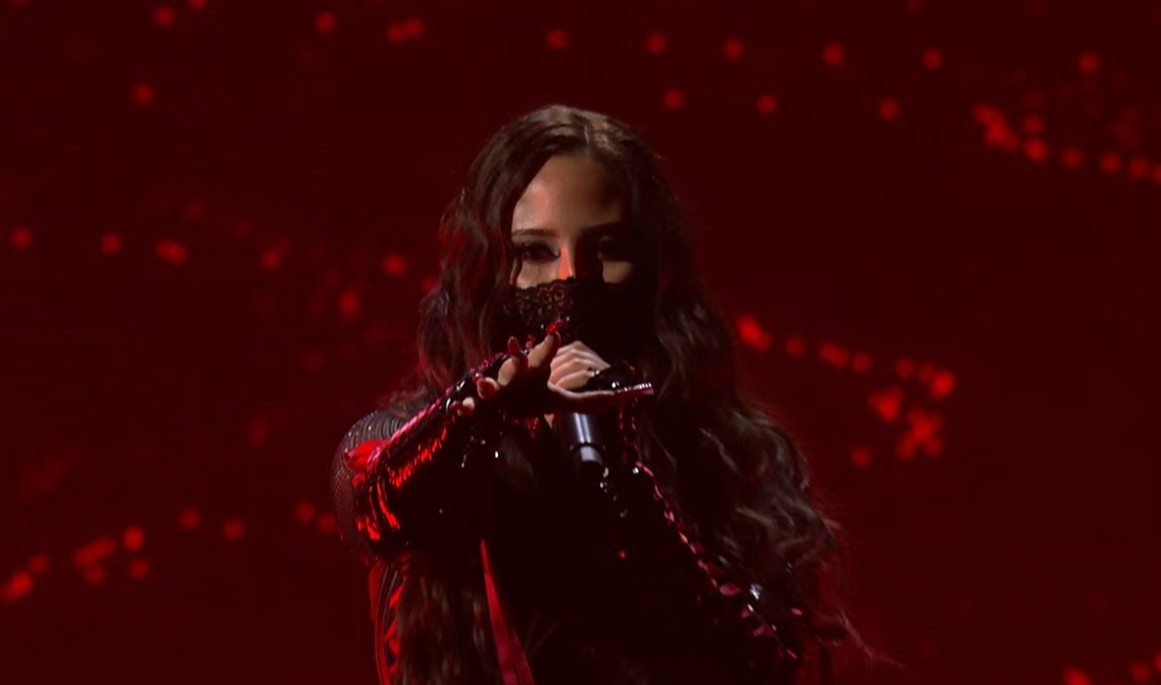
Screenshot: SVT
EBU responds to Sweden’s Eurovision 2026 representative Felicia after her controversial statements about Israel, emphasizing neutrality and the official code of conduct.
Moments ago, the European Broadcasting Union (EBU) addressed the statements made by the Swedish representative, Felicia, against Israel’s participation in the Eurovision Song Contest 2026. This statement follows the singer’s interview with the Swedish daily Dagens Nyheter, where she remarked, “Actually, I do not think Israel should participate. There are a lot of murders happening. It is hard to concentrate on music when there is so much suffering”.
The union’s response clarifies that such statements may violate the Eurovision Song Contest’s code of conduct, which aims to ensure a safe, respectful, and apolitical environment for all participants.






“The EBU supports freedom of expression, but…”
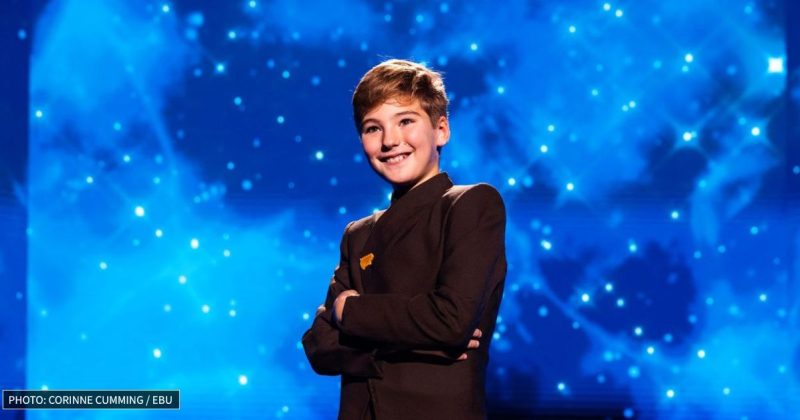
Martin Green, the director of the Eurovision Song Contest, stated:
“We are aware of comments made by Felicia following her selection as the Swedish representative for the Eurovision Song Contest in Vienna, as well as the subsequent statement issued by SVT.
The EBU fully supports the principle of freedom of expression. However, the Eurovision Song Contest operates under rules designed to safeguard the neutrality of the event and ensure a safe and respectful environment for all artists“.
In doing so, the organization emphasizes the importance of maintaining the apolitical nature of Eurovision 2026 and clarifies that every artist, delegation crew member, or employee of the national broadcaster in a participating country is bound by these rules.
They further added in the statement:
“The Code of Conduct and Duty of Care Protocol, developed by our Members, clearly state that participants ‘must not instrumentalize the Eurovision Song Contest‘ or use the event ‘as leverage by making political statements or causing controversies thereby shifting focus away from the event’s purpose, which is celebrating music and promoting unity‘. The Code of Conduct also emphasises that mutual respect between artists is essential. All artists, their broadcasters and associated teams agree to abide by the rules of the event when choosing to participate“.
Additionally, they addressed the breach by the Swedish representative to the competition and said:
“We have been in contact with SVT to ensure their artist has been clearly reminded of the rules and responsibilities that apply following their selection for the Contest. We will continue discussions with all concerned to ensure that the rules are respected and to protect the integrity and neutrality of the event”.
The EBU’s Code of Conduct and the Risk of Violation
On December 10th, 2024, the EBU announced a new set of guidelines (Code Of Conduct), following behind-the-scenes frictions among various delegations, including the Israeli delegation, at the Eurovision Song Contest.
Among the key clauses:
- Prohibition of using the stage, interviews, or Eurovision events to promote a political agenda.
- Prohibition of attacking a participating country or expressing a political stance not directly related to music.
Preserving the Apolitical Nature of the Eurovision Song Contest
The current statement was not made on the competition stage itself, but was published immediately after the representative’s victory in the national selection. Furthermore, it was articulated by a serious contender for the Eurovision 2026 victory, which places a clear question mark over compliance with the established rules.
A source familiar with the regulations explains that “the code applies to all official activities related to the competition. If a violation is determined to have occurred, sanctions can be applied”. As of now, Sweden is ranked seventh in the odds of winning the contest – a strong candidate for victory, and Felicia’s controversial statement regarding Israel could turn Sweden into an additional focal point of conflict even before the competition’s rehearsals begin.
Eurovision commentators assess that Felicia’s remarks about Israel could turn Sweden into a center of controversy at an early stage of Eurovision 2026, which raises tensions surrounding the competition and underscores the importance of maintaining the code.
International Scrutiny: Keeping a Watchful Eye on the Rules
Although Eurovision is an international music festival, this recent incident illustrates that any non-musical statement can escalate into an international storm. Broadcasters and international observers are monitoring the developments, while the EBU and the production team closely track all countries’ compliance with the Eurovision 2026 rules.
Sweden at Eurovision 2026:
“My System” is the song that will be performed by the singer Felicia, which will represent Sweden at Eurovision 2026 to be held in Vienna, Austria, on May 12th, 14th and 16th. The song was written by the artist herself Felicia Eriksson, together with Audun Agnar, Emily Harbakk, Julie Bergan and Theresa Rex. This is the first Eurovision entry by all songwriters.
Sweden is currently ranked 6th in the betting odds table.
Eurovision 2026: This will be Sweden’s 65th appearance in the competition. Sweden joined Eurovision in 1958 and has won the contest seven times over the years. The country’s most recent victory came in 2023, when Loreen won with the song “Tattoo”.

Email: [email protected]
Phone: +972-50-9441919
Maor Heumann has been writing about the Eurovision Song Contest and following it for over three decades. He has attended five contests and has found something to appreciate in almost every possible musical genre — from the sugary pop entries that finish last in the semi-finals to the quirky avant-garde pieces that even the competition’s juries struggled to connect with. He usually prefers original languages and songs with depth over Swedish-produced English clones — though he doesn’t promise to stick to that rule.
He grew up on the kibbutz of Sara’le Sharon, who instilled in him a love for music and created his first connection to the contest back in 1993 — before most of the current editorial team was even born.