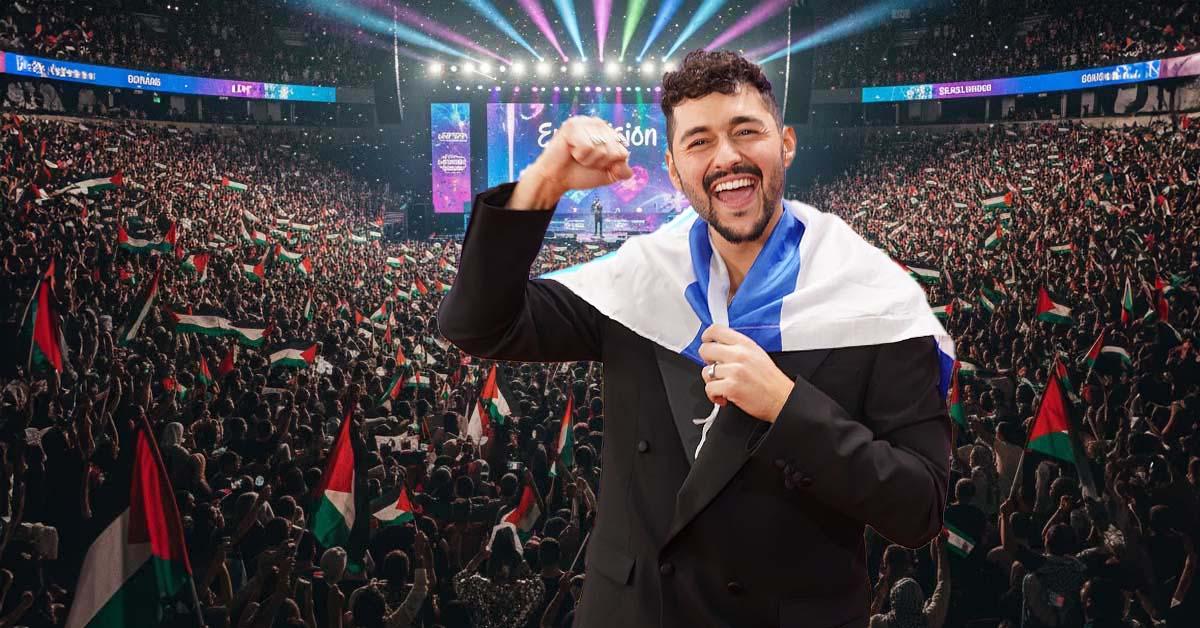
Many Eurovision artists are speaking out against Israel’s participation, despite contest rules – but is this genuine concern, or driven by personal or professional interests? Opinion
The preparations for Eurovision 2026 in Vienna, Austria are at their peak, with just a month and a half remaining until the celebrations, performances, and drama begin. However, anyone who believed this season would pass quietly without controversy surrounding Israel’s participation, which was already approved by the European Broadcasting Union last December—is likely to be sorely disappointed. Not only have five countries withdrawn from the competition, but artists who intend to compete alongside Israel – or who previously did so during the war without objection are now openly voicing criticism. This raises the central question: Why?





The Artists vs. Eurovision: “I will not participate in an event that allows Israel’s participation”
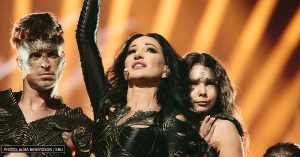 Just this week, Polish singer Justyna Steczkowska, who represented Poland at Eurovision 2025, announced in an interview that she refuses to take part in any activity related to the Eurovision Song Contest. In a firm statement, she declared that the primary reason for her decision is Israel’s participation, and revealed that she had declined an official offer to serve as a judge in Germany’s national selection – an unexpected move given her past involvement in projects inspired by Jewish culture. In an interview with the Polish magazine Viva, Steczkowska emphasized that this was a principled decision. According to her, she is unwilling to participate in any Eurovision-related events as long as Israel remains in the competition.
The singer explained that this was also the reason she chose not to take part in Poland’s national selection, despite receiving an official invitation to serve as a judge in Germany’s selection panel—an offer she ultimately declined.
“What Benjamin Netanyahu is doing is simply terrible. I feel so bad about it that I refused the Germans’ invitation to travel there and sit on the judging panel,” she said. However, she stressed that she does not judge other artists who choose to participate: “I’m keeping my fingers crossed for everyone. I don’t judge anyone.”
Justyna is not the only representative from that year to speak out against Israel’s participation. Kyle Alessandro, who represented Norway at Eurovision 2025, announced that he is boycotting the contest and will not return as long as Israel participates. In an interview, Alessandro stated that he can no longer “stand behind the competition.” When asked whether he might compete again in the future, he responded unequivocally: “No, absolutely not.” When asked what would need to change for him to reconsider, he gave a brief and controversial reply: “I think we all know the answer to that.”
 And it doesn’t stop there. As previously reported, Sweden’s representative, singer Felicia, gave an interview moments after her victory and chose to use the platform to criticize Israel: “I don’t think Israel should participate. That’s all. There are many killings happening, and therefore I don’t think Israel’s participation is justified. It’s hard to focus on music when there is so much suffering.” So why participate?
Finland’s representatives, Linda Lampenius and Pete Parkkonen, considered among the leading contenders to win this year, also criticized Israel’s participation even before officially being selected. The duo posted a joint statement on social media: “Tonight we are competing for the victory in the national selection. If we are given the honor to represent Finland at Eurovision, we will do so for music and humanity. We believe the decision to allow Israel to participate in Eurovision is wrong. The events in Palestine are inhumane and deserve condemnation. With love, Linda and Pete.”
And it goes even further. The Norwegian national broadcaster NRK announced this week that it refuses to comply with Eurovision rules and will allow its representative, Jonas Lovv, to freely express political opinions – including on Israel.
One Thing the Artists Don’t Understand – And It’s a Shame
This series of events, many of which occurred just this week, raises serious questions. Eurovision 2026 marks the third contest since the outbreak of the “Iron Swords” war in October 2023. For three consecutive years, Israel has faced criticism from participating artists regarding its very inclusion. While in Eurovision 2024 it could be argued that the war caught artists already deep in preparation stages, the past two contests have taken place with full awareness of the situation – a war that, notably, ended about six months ago.
Justyna and Kyle – what changed since last year? Felicia, Jonas, Linda, and Pete – if Israel’s presence is so troubling, why participate?
Here’s the issue: Eurovision artists are missing one crucial point – Israel is merely an excuse. Artists in 2025 showed no objection to performing alongside Israel as long as it served their interests. It is highly likely that both Justyna and Kyle sought ways to remain relevant and chose to criticize a country they had no issue with just ten months ago. Felicia, Linda, and Pete voiced criticism even before the official competition, but here too, it is hard to ignore the influence of trends and the withdrawal of five countries last December. If you truly identify with these positions – withdraw. Otherwise, it appears to be little more than an attempt to gain votes and visibility ahead of the competition.
 There is nothing wrong with participating in Eurovision to advance one’s career. The contest is an excellent platform for exposure – many artists join not primarily to win, but to promote themselves. But the hypocrisy using a war to advance a career is deeply uncomfortable. The clearest example is Bambie Thug. While it is reasonable to believe she genuinely supports “Palestine,” one interview revealed underlying contradictions. When asked about boycotting the contest, she said: “I understand all those who boycott Eurovision because of Israel. If I hadn’t participated this year, I would have boycotted the contest too.” Thank you very much.
Eurovision has long ceased to be just about music. It is a mirror – of public opinion, social media dynamics, public pressure, and a world in which artists cannot – or perhaps do not want to – remain neutral. Some act of genuine moral conviction. Others are swept along by prevailing trends. And some, undeniably, understand very well how to generate headlines just before stepping onto Europe’s biggest stage.
Amid all this noise, one simple fact remains: Eurovision will take place. The songs will be performed, the points will be awarded, and millions of viewers will tune in—some for the music, some for the drama, and most likely for both.
Israel, like other countries before it, finds itself at the center of a political storm spilling onto a stage meant to be apolitical. The question is not why artists criticize Israel—but why participants can no longer separate art from reality. And perhaps that is the real point: regardless of who is right, who is hypocritical, or who is riding a wave—Eurovision 2026 will no longer be just a song contest. It will be another chapter in a much larger story.
Israel at Eurovision 2026:
“Michelle” is the title of the song to be performed by singer Noam Bettan, who will represent Israel in the second half of the first semifinal of the Eurovision Song Contest 2026, to be held on May 12 in Vienna, Austria. The song was written by the singer Yuval Raphael, Tzlil Klifi, and Nadav Aharoni – three prominent figures in the Israeli music scene, with Yuval Raphael, who represented Israel in the previous Eurovision as a singer. The song Michelle is about choosing to break free from a toxic emotional cycle. It’s a story of growth and emotional maturity — a moment when the protagonist realizes they must let go and choose their new path on their own. Israel is rankes 7th in the betting odds.
Eurovision 2026: This will be Israel’s 48th participation in Eurovision. Israel joined the contest in 1973 and has won four times. Its most recent victory was at Eurovision 2018 with the song “Toy”, performed by singer Netta Barzilai.

Email: [email protected]
Phone: +972-50-9441919
Aviad Berger – Israeli editor, reporter, and content creator specializing in the Eurovision Song Contest. He has been working with the EuroMix editorial team for about a year and a half. Since 2024, he has provided continuous Eurovision coverage from the host city, delivering live updates, exclusive interviews, and in-depth commentary.
Aviad is also a video editor and filmmaker active in the Israeli media industry.