
TRM invests €250,000 in Satoshi’s “Viva Moldova” staging as the national broadcaster prepares to open the first semi-final in Vienna on May 12th.
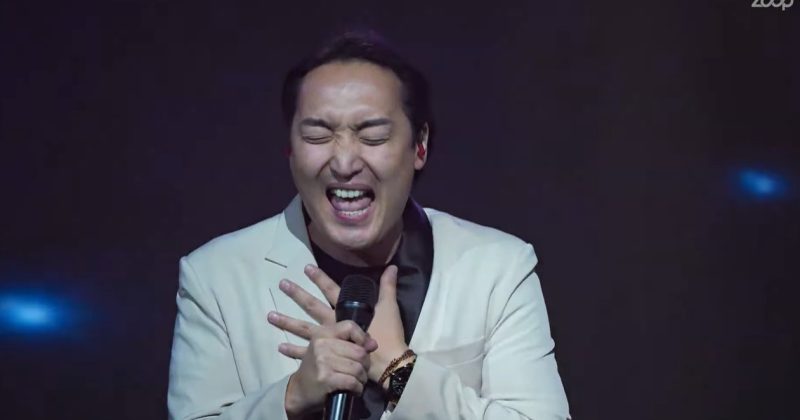
Moldova, which has been granted the honor of opening the first semi-final of Eurovision 2026 in Vienna on May 12th, is planning an ambitious production. Following a decisive victory in the national selection, the singer Satoshi and his team have revealed intense preparations to upgrade the stage performance of the entry “Viva Moldova“.



Enhanced Visuals and Special Effects
The producer Roman Burlaca, who is leading the project, promises that the version seen on the main stage will be significantly more impressive than the national final performance:
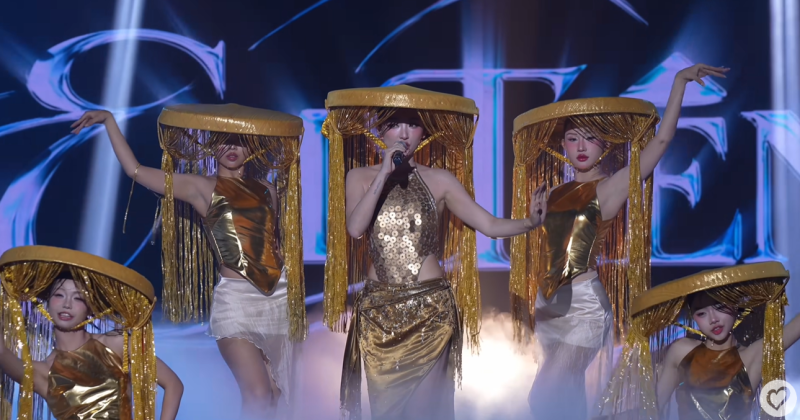
“We have completely changed the costumes. The visuals on the LED screens have also undergone improvements to enhance the energy. We have added special effects and a specific moment of ‘show’ that we call a ‘repeatable element’ – you will see it soon and understand”.
A Rigorous 16-Day Schedule in Vienna
 The Moldovan delegation will spend 16 days in Vienna, during which they will conduct three official rehearsals on the stage. Despite the pressure, the singer expresses full confidence:
“We record every rehearsal, analyze the movements, and fine-tune the positions on stage, […] We do not have a rigid dance choreography, but rather movement that emphasizes my energy. The European audience has received us wonderfully so far, and we just need to maintain our focus”.
Record-Breaking Financial Investment
This year, the Moldovan national broadcaster TRM appears to be taking the competition very seriously. Upon winning the national selection, Satoshi was awarded a prize of one million Moldovan Leu (approximately €50,000), which will be dedicated to the costs of staging and promoting the song throughout Europe. This amount is in addition to the national broadcaster’s commitments to Eurovision, which include the budget for participation and coordination, as well as flight and accommodation expenses. These additional costs amount to approximately €200,000, according to Andrei Zapşa, the Deputy Director General of TRM. Together, this total of €250,000 represents approximately 2.5% of the annual budget for the Moldovan national broadcaster. Zapşa commented:
“I am convinced that Moldova will give a worthy and impressive performance. All partners and organizers have done their maximum to ensure we meet the highest international standards”.
Satoshi’s Political Statements Regarding the Contest
It is worth noting that in a widely circulated post prior to his victory in the Moldovan national selection, Satoshi published an explicit political statement, linking his personal views directly to his song and the Eurovision stage. He wrote:
“I do not support genocide… I cannot think of a wider or more suitable stage to say this out loud and clearly. I do not consider participating in the competition alongside a certain country as support for that country… If someone has something to say, to protest – I do not see a wider and more suitable platform than this to say out loud what they have to say. I believe that the expression of opinion is meant to be said, not to be silenced”.
Speculation remains regarding the target of the statement, though the singer was not disqualified from the competition. This is likely due to the post being published before his victory in the national final and its subsequent deletion.
Satoshi – Who Are You?
Satoshi (real name: Vlad Sabajuc) is a Moldovan musician and singer-rapper who, in recent years, has established himself both locally and internationally through the release of several successful singles, collaborations with various artists, and music videos that have amassed millions of views across social media and digital platforms.
In 2026, he decided to try his hand at Eurovision for the first time, competing in Moldova’s national selection “Selecția Națională 2026” with the song “Viva, Moldova” a patriotic work combining a message of national unity with aspirations for European integration through music, aiming to represent Moldova at the Eurovision Song Contest in Vienna.
Within the public discourse surrounding the national selection, Satoshi was regarded as one of the standout contenders. He received significant attention not only for the song’s energy and compelling performance, but also due to statements made on social media that sparked discussion about the boundary between political expression and participation in an international music competition.
This marks the first time Satoshi has officially participated in Moldova’s Eurovision national selection, as well as his debut involvement in the Eurovision selection process overall.
Moldova at Eurovision 2026
“Viva, Moldova” is the song that will be performed by the singer Satoshi, who will represent Moldova as song number 1 in the first semi-final on May 12th in Vienna, Austria. The song was written by Satoshi himself, marking the first time he has ever competed in a national final for Eurovision.
The track is a patriotic and energetic song that celebrates Moldovan identity, local culture, and the emotional connection to homeland and roots. It combines modern rhythms with musical elements traditionally associated with the region. The song conveys national pride, a sense of unity, and a call for renewal and hope. Its lyrics emphasize resilience in the face of challenges, belief in a better future, and the aspiration to see Moldova as a strong, confident country integrated within the European community. Music serves as a unifying force that transcends political and social boundaries.
Currently, Moldova is ranked 15th on the betting odds ahead of Eurovision 2026.

Email: [email protected]
Phone: +972-50-9441919
Ilay Gaist is a leading Israeli content creator and writer specializing in the Eurovision Song Contest. He is a well-known commentator with extensive expertise in the contest’s history, rules, and dynamics. His passion for Eurovision drives him to deliver rich, professional, and innovative content to his audience.
Ilay holds a bachelor’s degree in Arabic and has a multilingual background. He also engages in cultural research, with a particular focus on global culinary traditions and the evolution of local cuisines around the world.