
Essyla defends the Israeli entry Noam Bettan and Eurovision 2026 participation, criticizing VRT’s stance and comparing the contest to international football tournaments.
Reports emerged yesterday (Monday) regarding political tension in Belgium after VRT announced it would broadcast programs critical of Israel prior to the Eurovision broadcasts. The national broadcaster also faced backlash over antisemitic remarks made by a local member of parliament. Now, the internal divide within the country has reached Essyla herself.
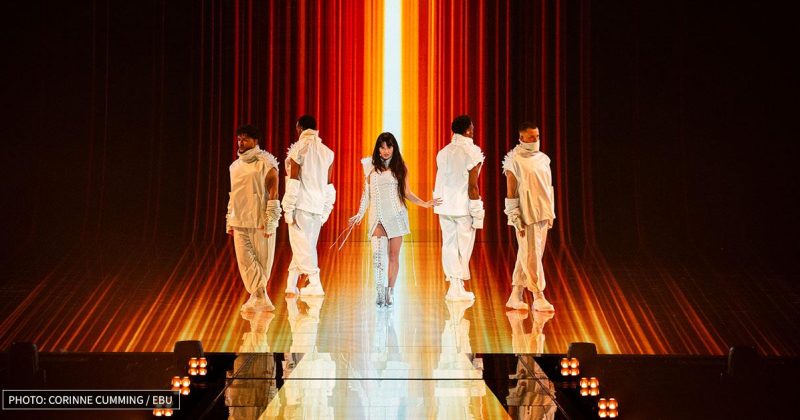
The singer Essyla, who will represent Belgium in the first semi-final of Eurovision 2026 with the song “Dancing on the Ice“, was interviewed by the Flemish national broadcaster and addressed the criticism surrounding Belgian participation in a contest that includes Israel. Essyla will share the first semi-final stage with the Israeli entry, Noam Bettan. She is set to perform as song number 11 – immediately following Bettan (song number 10) and the live performance of the German representative, Sarah Engels, who performs between them as part of the Big 4 nations.
It is important to note that Essyla was selected to represent the country by the Walloon national broadcaster, RTBF – which is responsible for the selection this year under the annual rotation – and chose not to boycott the event. Additionally, international fans may recall that Essyla served as a Belgian juror during Eurovision 2024, where she awarded points to Eden Golan.





“Music is a Universal Language”
During the interview, Essyla did not hesitate to push back against calls for a boycott.
“I understand the opinions surrounding Eurovision and the participation of Israel, […] But for me, it is still one big musical family united by the universal language of music”.
She continued by emphasizing the apolitical nature that should define the event, while noting the perceived double standard facing the contest:
“I think everyone hesitated a bit this year regarding participation because of the situation. No one wants war or for the death toll to continue to rise; we all know that. But ultimately, the competition is a meeting point for countries and artists who do not always have the opportunity to experience something like this. It is a musical family based on music. After all, football players are not asked if they are involved in war or if they lose sleep over it”.
The response from Essyla highlights the fact that Israeli sports teams continue to participate in international European tournaments, often without the same level of obsessive media controversy that surrounds the Eurovision Song Contest.
The singer’s remarks cast an embarrassing light on the radical editorial line currently led by the Flemish national broadcaster, VRT, which has sought various ways to generate provocation regarding the participation of Israel and Noam Bettan in the upcoming contest in Vienna.
Essyla – Who Are You?
Essyla, born Alice Van Aesbeck and hailing from Bruges, Belgium, is a singer-songwriter who first gained national recognition after reaching the final of the ninth season of “The Voice Belgique” in 2021. From an early age, she formed her first musical ensemble and later continued her formal training at IMEP, a higher academic institution for music comparable to a conservatory. Her musical style draws influence from French chanson while blending pop with elements of jazz, folk, rock, and funk. In her artistic work, she emphasizes themes of empowerment and contemporary issues from a female perspective. Among her notable songs are “Let You Go” and “Not My Kind of Dude“.
Belgium at Eurovision 2026
“Dancing on the Ice” is the title of the song to be performed by singer Essyla, who will represent Belgium at Eurovision 2026, set to take place in Vienna, Austria. Belgium will compete as song number 11 in the First Semi-Final on May 12th. The song was written by Essyla herself, alongside songwriter Barbara Petitjean.
Currently, Belgium is ranked 28th in the betting tables ahead of Eurovision 2026.
Eurovision 2026: This will be Belgium’s 67th participation in the contest. Belgium joined Eurovision in 1956 as one of its seven founding nations. The country’s best result came in 1986, when Sandra Kim won first place with “J’aime la vie”.