Eurovision 2026 Stage Director Kaleen reveals in an exclusive interview to EuroMix why Czechia was denied a re-run following their camera incident during the Grand Final.
The Eurovision Song Contest is known as a meticulous and heavily invested television production, but even there, in the moment of truth in front of tens of millions of viewers, technical glitches can happen. One of the memorable incidents from the recent competition belongs to the delegation of Czechia, which experienced an unfortunate camera glitch during its performance in the Grand Final. Now, in an exclusive interview with EuroMix, the contest’s stage director and Austrian star Kaleen (who also represented Austria in Eurovision 2024 with the song “We Will Rave“) explains why the delegation did not receive approval for a re-run, and what this emergency drama looks like through the lenses of the production.
הצגת פוסט זה באינסטגרם







What Happened in the Czech Performance?
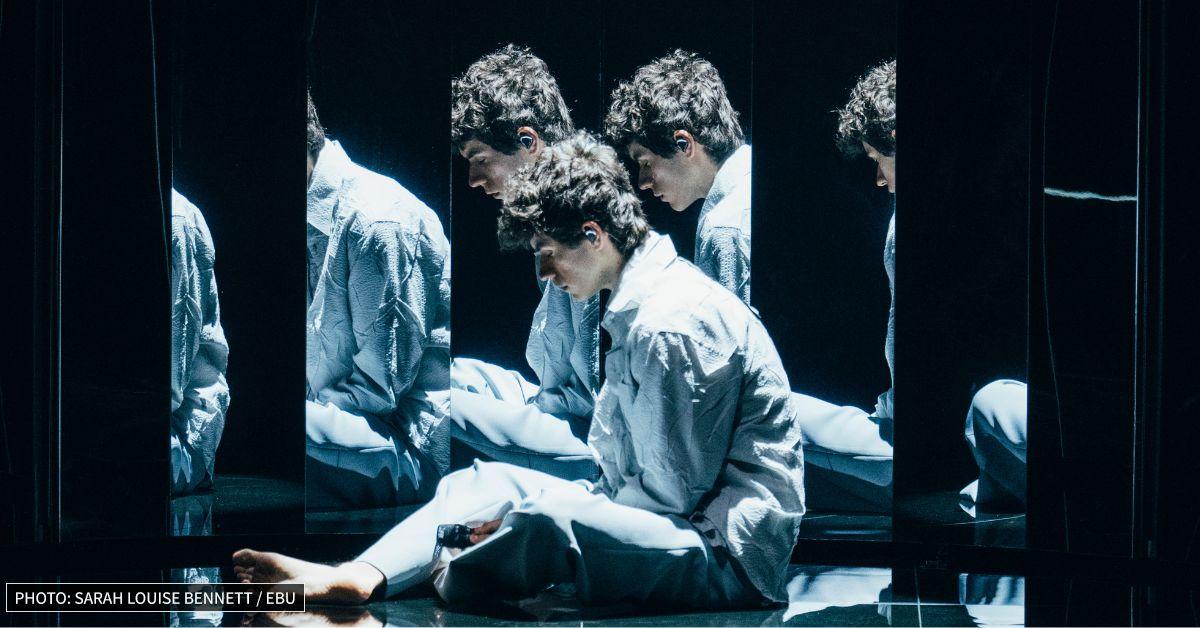
The Czech singer Daniel Žižka experienced a severe camera glitch during the performance of his song, “CROSSROADS“, in the Grand Final of Eurovision 2026. The technical malfunction caused a disruption in the broadcast, which blurred, froze, and hid the singer for about 45 seconds, leading the Czech delegation to file an official complaint with the European Broadcasting Union (EBU). The EBU determined that it was a “minor” glitch and refused to approve a re-run, and Žižka finished in 16th place with a total of 113 points.
Czechia’s Magic and the Strict Eurovision Rules
As someone who was in charge of stage management, Kaleen admits that the Czech performance was one of the most impressive and technically complex this year. “I think what impressed everyone on the production a lot was Czechia… with the right camera angles, with the actual guys knowing what to do with the mirrors and when to do it, when to connect, when to disconnect, and when to let a steady cam in,” she shares enthusiastically. “I think it worked out perfectly and I feel so sorry for them that they had the camera incident that happened in the final. It really broke my heart.”
But why did the European Broadcasting Union (EBU) refuse to allow Czechia to go up and perform again? Kaleen reveals the rules: “The rerun specifications are based on, does the performer feel that something is not right? Is there something audio connected?” Because Czechia’s sound functioned properly and the glitch was purely visual, the juries could still judge the vocal performance and viewers at home might have thought it was a malfunction with their own television. “Audio never passed out, that’s why in the end they didn’t get a rerun,” she clarifies.
System Frenzy: What Happens During a Re-Run?
To illustrate just how dramatic a re-run is, Kaleen provided a rare glimpse into what happens backstage in the event of a technical emergency. “That sounds very easy if you’re sitting on the couch and you watch Eurovision, you’re like, ‘Oh yes, I get to see the performance again,’” she explains, “but for us backstage and on stage is quite of a hustle.”
According to her, the production needs to get the delegation back on stage in zero time, ensure they receive the right in-ear monitors with the exact channels and receivers, and return all the props that were already dismantled and stored backstage. To be prepared for such a scenario, the production conducts surprise drills. During the press rehearsal of the first semi-final, the Head of Contest (and Kaleen’s fiancé), Marvin Dietmann, chose to practice an emergency procedure on a particularly complicated performance – the entry from Germany.
In order not to confuse the German delegation, which made no mistakes, Marvin called up Kaleen – who knew the choreography from her role teaching all the stand-ins the dance moves and the flow of the show – to immediately go on stage so that the camera and stage crew could practice a re-run under pressure. “Marvin, head of contest, just chose a very complicated act for us backstage to just throw us into the cold water and rehearse that again,” she recalls.
Kaleen’s Personal Glitch in 2024
Kaleen is intimately familiar with the heartbreak surrounding camera glitches. At Eurovision 2024, when representing Austria with the hit “We Will Rave”, she experienced a similar routing glitch during her final performance, but was completely unaware of it in real time.
“I didn’t know that anything happened until I was in the green room and Marvin told me,” she recalls. “Theoretically, my performance wouldn’t have changed. So on the EBU side, why a rerun?” Kaleen admits that despite the massive frustration of the artists, it is ultimately a live production with a human element: “There are still human beings behind those cameras… which you can rehearse and rehearse and rehearse and it never happened in rehearsals, but for some reason in the final… it just happened.”
Re-Runs: When Were Eurovision Contestants Approved to Perform Again?
In Eurovision history, only two contestants were approved to perform a full re-run. One of them is none other than Domenico Modugno with the famous song “Nel blu, dipinto di blu (Volare)” (in English: “In the blue, painted blue”), which crossed far beyond the boundaries of the competition and is today a household name. In the 1958 Eurovision where he competed, there was a technical glitch that necessitated a re-run, and he was required to perform a second time. The host explained that it was a malfunction that caused the performance not to be seen and heard in some countries.
The second time a contestant was approved to perform a full re-run happened in 2010, when Daniel Diges represented Spain with the song “Algo pequeñito” (in English: “Something tiny”). During the performance, the serial stage invader (even beyond Eurovision), Jimmy Jump, stormed the stage and blended in with the dancers for about twenty seconds until he was removed by security. The production approved Spain to perform the song once again at the end of the rotation.
Spain was also unlucky in 1990, when the duo Azúcar Moreno represented the country with the song “Bandido” (in English: “Bandit”). When they started performing, the backing playback and the orchestra began playing out of sync, and the girls did not hear the correct rhythm. They left the stage after a few seconds, and after a short break and fixing the glitch – they restarted the number and performed as usual.
A memorable stage incident also occurred in 2018, when during the British performance by the singer SuRie, a man stormed the stage, snatched her microphone, and sounded as if he said: “N*zis of the UK media, we demand freedom“. The production was approved to produce a repeat performance at the end of the evening, but the British delegation refused because the singer was proud of her performance despite the interruption.
Tell us in the comments: In light of the explanation about the logistical frenzy backstage, do you think the European Broadcasting Union’s rules for approving a re-run are fair, or should they be more lenient?