RTÉ will boycott Eurovision 2027 over Israel’s participation, while Ireland’s football commitments highlight a different approach to sporting events.
RTÉ, Ireland’s national broadcaster, which already boycotted Eurovision 2026 following controversy surrounding Israel’s participation, will continue its policy and boycott Eurovision 2027. While other countries including Spain, Iceland, Slovenia and the Netherlands appear to be taking steps toward returning to the contest and ending their boycotts, Ireland – traditionally one of Europe’s most critical countries toward Israel – will continue its boycott, at least for now, standing alone.
Boycotting Israel – Only When It Is Convenient?
Ireland is currently the only country to have announced a boycott of Eurovision 2027. It will not only refuse to compete in the contest, but will also refuse to broadcast it. In a statement, RTÉ explained the decision by saying that “participation cannot be justified while the killing and terrible humanitarian crisis in Gaza continues, which continues to put many human lives at risk.” The national broadcaster added that it “expresses concern about the inability of international journalists to independently enter the territory [Gaza].”
RTÉ’s statement does not directly address Eurovision on its artistic or competitive terms, and the article argues that the national broadcaster’s approach to the contest in recent years has not been purely focused on Eurovision either. At Eurovision 2024, Irish singer Bambie Thug used the stage to strongly criticize Israel, while the article also argues that the quality of Ireland’s songs and productions has been poor in recent years.
At the same time, the article describes the situation as an example of what it considers hypocrisy. In just ten days, Ireland’s national football team is scheduled to face Israel’s national team. Although there have been signs of discomfort in Ireland surrounding the fixture, the country could not afford to refuse to play Israel or decline to broadcast the match, as doing so would expose RTÉ to significantly greater sanctions, including the potential loss of broadcasting rights to tournaments such as the UEFA European Championship and FIFA World Cup – rights that are worth substantial sums of money.
In a letter sent by RTÉ to a workers’ organization that had threatened a boycott over Israel, the national broadcaster stated: “Not broadcasting these games would constitute a breach of contract, jeopardise RTÉ’s existing broadcast rights, and negatively affect RTÉ’s ability to acquire sports broadcasting rights in the future.” They further explained: “Unlike the recent situation with the Eurovision Song Contest – where, as a participating member, RTÉ had complete freedom of action in deciding whether not to participate or not to broadcast – broadcasting these games is mandatory under RTÉ’s rights contract.”

Ireland and Israel at Eurovision
Ireland is known for having particularly tense relations with Israel in the Eurovision context. One of the clearest examples is singer Bambie Thug, who represented Ireland at Eurovision 2024 with the song “Doomsday Blue” and finished in 6th place with 278 points, one position behind Israel, which finished 5th.
Bambie continued to provoke controversy involving Israel throughout the contest and afterward. During Eurovision 2024, the singer openly expressed support for Palestinians, including by displaying writing in the Irish language on their face calling for a “ceasefire”, wearing a Palestinian keffiyeh, and displaying watermelon-shaped cushions in the Green Room during the voting. These actions contributed to the controversy surrounding Israel’s participation in Eurovision.
Since Ireland withdrew from the contest, numerous voices from the country have expressed support for the decision and criticized Israel. Johnny Logan, the legendary Eurovision winner and one of the most prominent figures in the contest’s history, revealed that he had refused no fewer than four invitations to appear as a guest at this year’s contest because of his opposition to Israel’s participation. Eurovision 1994 winner Charlie McGettigan said he agreed with Logan, strongly criticizing the European Broadcasting Union and even deciding to return his Eurovision trophy as a protest against Israel’s participation.
On the other hand, Dana Rosemary Scallon, Ireland’s first Eurovision winner, who won Eurovision 1970 with the song “All Kinds of Everything”, shared that she believes Eurovision should remain free of politics and that “she hopes music can be a space where people can come together.” She also implicitly criticized the countries that chose to withdraw from Eurovision 2026 because of Israel’s participation.
Ireland in Eurovision 2025
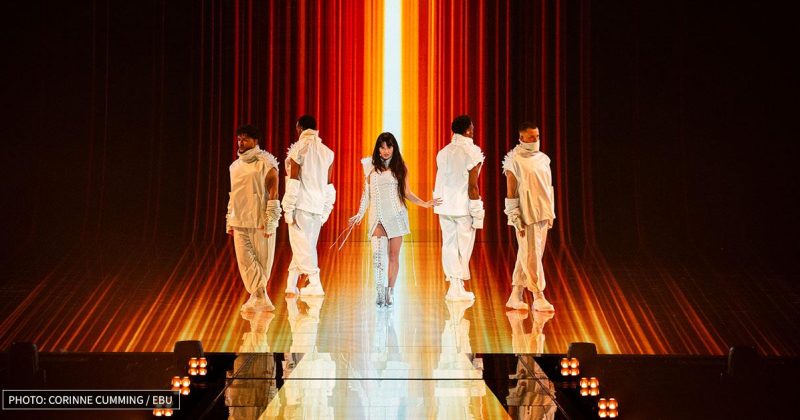
“Laika Party” is the name of the song performed by singer EMMY, who represented Ireland in the second semi-final of Eurovision 2025 held in Basel, Switzerland. Ireland failed to qualify for the Grand Final, finishing 13th out of 16 with just 28 points.
Over the past five years, Ireland has reached the Grand Final only once.
Eurovision 2025: This was Ireland’s 58th participation in the contest. The country joined Eurovision in 1965 and is tied with Sweden for the most wins, with seven victories. Ireland’s most recent win came in 1996 with the song “The Voice”, performed by singer Eimear Quinn.



Email: [email protected]
Phone: +972-50-9441919
Ofek Jerassi is an Israeli reporter, editor, content creator, and commentator, specializing in the Eurovision Song Contest. He has developed his extensive expertise since childhood, becoming a close follower of the contest. For the past three years, he has served as a writer and editor for EuroMix—Israel’s largest Eurovision website and one of the world’s leading platforms in the field, with over 1.5 million users annually.
Ofek covered Eurovision 2025 on-site in Basel from the press center in the host city, providing EuroMix readers with firsthand experiences, professional analysis, and exclusive reactions from the audience, artists, and experts. His in-depth knowledge and broad familiarity with the Eurovision world are evident in every article, ensuring reliable, professional, and up-to-date content.
In his personal life, Ofek is a medic and avid traveler. He writes out of a genuine love for Eurovision, placing strong emphasis on credibility, professional commentary, and presenting a diverse range of opinions.