
Canadian national broadcaster CBC faces criticism over the lack of Indigenous and Black representation among its five Eurovision 2027 finalists.
The historic announcement revealing the five artists who will compete for the opportunity to represent Canada in its debut appearance at Eurovision 2027 in Burgas, Bulgaria, was accompanied this week by distinctly sour notes: Canadian national broadcaster CBC is facing mounting public and artistic criticism following the artist reveal. The central argument raised by critics contends that the final selection fails to mirror Canada’s cultural, ethnic, and historical diversity, completely excluding artists from Indigenous communities and the Black community.
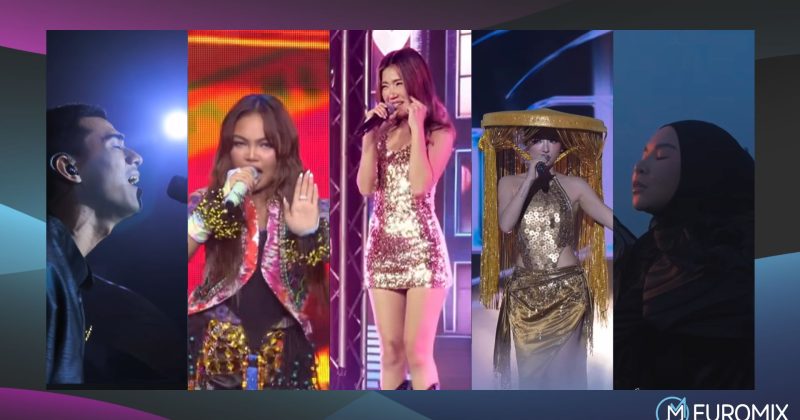
The finalists, selected from over 300 submissions evaluated by the committee, are singers William Cloutier, Josiane, Rêve, TALK, and Tyler Shaw – who is of half-Chinese descent.
“Indigenous Talent Is Deeply Woven into the Fabric of This Country”
The most prominent public critique was voiced by Canadian Indigenous singer-songwriter Shawnee Kish. In a post shared on her Instagram account, she initially congratulated the five selected acts, but expressed deep sorrow over the broadcaster’s choices:
“II’d be lying if I said I wasn’t saddened to see no Indigenous representation among the artists selected to showcase this country’s roots, spirit and colours. Canada’s Indigenous talent is rich, bold, unique and deeply woven into the fabric of this country. My hope is that one day, truth and reconciliation will be more than words and promises and our Indigenous people will be reflected, honoured, lifted up and celebrated in a more meaningful way.”
הצגת פוסט זה באינסטגרם
Prominent figures across the domestic music industry rallied behind Kish’s remarks. Producer and songwriter Andrew Jackson noted that the same thought crossed his mind the moment the lineup was made public. Singer and producer Deniz Renio went further in his reaction:
“They did not think it appropriate to give at least one spot to someone representing at least one of these groups. To have this happen in Canada of all places is very disappointing.”
CBC Responds: Timeline Constraints and Long-Term Outreach
The issue was raised directly during the official unveiling event hosted at CBC headquarters in Toronto, where journalists confronted organizers regarding the absence of diversity.
Canada’s Eurovision Head of Delegation and Executive Director of Unscripted Content at CBC, Jennifer Dettman, explained that strict timeline constraints impacted the selection process, but emphasized that the broadcaster is already actively engaging for upcoming seasons:
“We are making sure with Indigenous music organizations, with Indigenous artists, with Black artists, that we are talking with them, that we’re listening to them, for future opportunities. For many artists, Eurovision represents a new opportunity to be showcased on a global stage, CBC/Radio-Canada will continue to do more outreach to all artistic communities. We are building a show for all of Canada. This is a long-term commitment.”
Format Concerns: “Where Is the Space for Artistry?”
Ethnic representation was not the sole focus of critique: Canadian pop singer Dani Doucette raised questions concerning the broadcaster’s decision to present the acts without live stage performances at the press event:
“This is about artistry and the song, and I just felt like they really missed an opportunity to allow these artists to shine, Because right now, it’s looking like a social media popularity contest…It’s missing the artistry part of the whole process.”
הצגת פוסט זה באינסטגרם
In response to concerns regarding live musical showcase, CBC announced that the five contenders will take center stage in a dedicated live broadcast concert titled “Horizon Eurovision” on November 1st, where each act will be allotted a full ten minutes to present their vocal capabilities and staging presence to the Canadian public.
Selection Format and Public Voting Details
Following the announcement of the five finalists, the public in Canada will participate in choosing the representative through an online vote. Video performances of the artists are hosted on the official Canadian Eurovision website. The public vote will be combined with scores from a jury panel composed of music industry professionals to determine the winner. Once selected, the winning artist will collaborate with local songwriters to produce the song for the contest.
Online voting for Canadian residents opened on October 27th and will be closed on November 5th. The voting system resets daily, allowing Canadian voters to cast one vote per day, for a maximum of 10 total votes per citizen.








Email: [email protected]
Phone: +972-50-9441919
Neta Geffen is a respected journalist at Euromix, Israel’s leading news site for Eurovision coverage. Since 2010, Neta has been closely following the Eurovision Song Contest, bringing with him extensive experience, profound knowledge, and a broad understanding of the history, politics, and cultural influences that shape the event every year.
Neta publishes articles, analyses, and up-to-date reviews on all Eurovision developments, including musical trends, format changes, political influences, and audience reactions across Europe and Israel. Thanks to a deep connection to the contest’s history, Neta provides readers with wide-ranging context—from the impact of political events on results, to in-depth analyses of songs and languages within the competition. Neta specializes particularly in the Eurovision rock genre, Balkan ballads, and native language entries, with a special focus on Italian and Greek songs.