From disastrous vocals to live stage walk-offs, we review 10 outrageous Eurovision moments that pushed boundaries and shocked fans worldwide.
Yom Kippur is the time for reflection, forgiveness, and atonement. But looking back at nearly seven decades of Eurovision history, there are moments where it feels like the EBU and participating nations owe viewers a massive apology. From screeching off-key vocals to baffling choreography and cheap provocations that pushed the format to its limits, here are 10 moments when the world’s biggest music contest completely lost its composure.








1. Spain 2008: Toy Guitars and European Circus
When the Spanish public was given total control through an open online vote, they selected Rodolfo Chikilicuatre, a comedic character wearing a puffed wig and wielding a yellow plastic toy guitar. The song “Baila el Chiki Chiki” turned the stage in Belgrade into an awkward circus. It served as a prime example of populist voting exploitation that left hardcore fans feeling like Eurovision had devolved into an internal joke.
2. Finland 2015: 85 Seconds of Total Indifference
Punk rock band Pertti Kurikan Nimipäivät brought an 85-second track to the stage, marking the shortest entry in the history of the contest. Despite the noble social message behind the group, “Aina mun pitää” sounded live like raw shouting, leaving millions of viewers wondering if it was a total disrespect to the musical format. The outcome? Last place in the semi-final.
3. Australia 2024: Live Meltdown and Vocal Collapse
Pop duo Electric Fields arrived in Malmö with sky-high expectations and the traditional Aboriginal instrument, the didgeridoo. However, during the live broadcast, the vocal performance cracked from every angle, the traditional instrumentation sounded like a harsh technical glitch, and the overall stage energy completely collapsed. It proved to be a live tragedy that led to a dramatic drop in the voting and a painful semi-final elimination.
4. Greece 2006 Hosts: Elementary School Level Hosting
Hosting Eurovision is an art form, but Sakis Rouvas and Maria Menounos turned their duties in Athens into an embarrassing display. Severe English blunders, forced cheesy jokes, and a complete lack of chemistry made the live broadcast feel like a middle school end-of-year ceremony, leaving viewers at home wishing they could fast-forward through the green room segments.
5. San Marino 2022: Mechanical Bulls and Lingerie
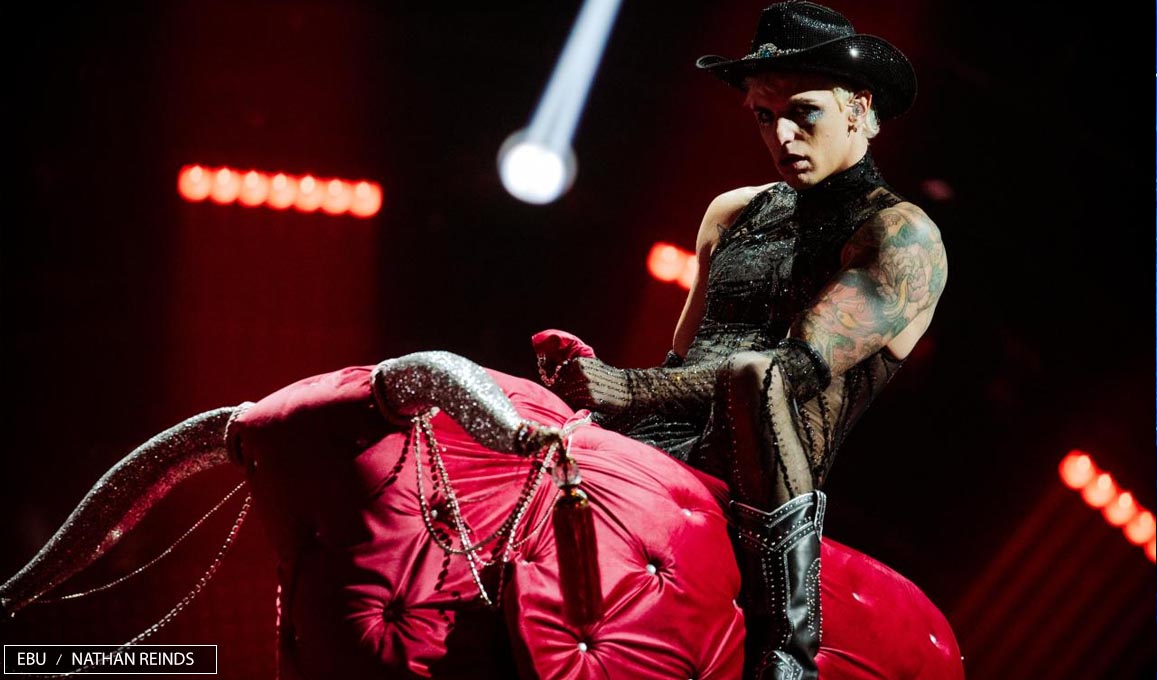
When Achille Lauro took the stage in Turin, it was clear he wasn’t there just to sing. Riding a giant mechanical bull while wearing sheer lace attire, exchanging dramatic kisses with bandmates, and relying on over-the-top staging failed to compensate for a weak song. It stood out as a classic example of camp losing all restraint and good taste.
6. Israel 2000: Waving Flags and Off-Key Vocals
It is impossible to discuss lost composure without mentioning the Israeli delegation from 2000. Members of the band PingPong stood on stage in Stockholm waving Syrian flags, eating watermelon, and delivering a terrifying sequence of off-key notes in their song “Sameach” (in English: “Be Happy”). The performance sparked unprecedented political and public backlash back home, becoming a moment the national broadcaster preferred to forget.
7. Switzerland 2004: Bizarre Moves and Zero Points
The Swiss entry was titled “Celebrate!”, but there was nothing to celebrate on stage in Istanbul. Piero Esteriore and his backing singers delivered forced, awkward choreography—including strange hip-slapping routines—coupled with severely off-key vocals. The outcome was entirely deserved: last place in the semi-final with a grand total of zero points.
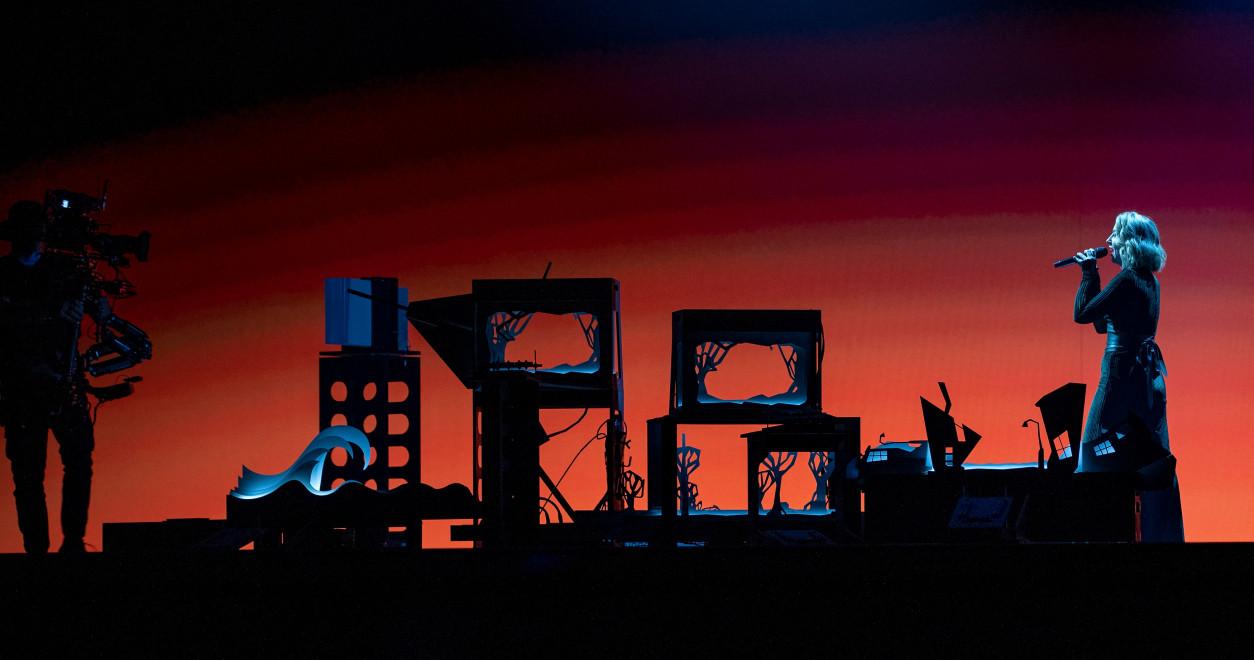
8. Ireland 2021: Paper Prop Disasters
The visual concept for Ireland in Rotterdam sounded promising on paper: creating a live 3D pop-up book effect surrounding the singer. In reality, artist Lesley Roy spent the performance sprinting between cardboard cutouts while breathing heavily, making the effect look like a failed primary school craft project. The vocal collapse in the opening sequence sealed a last-place finish in the semi-final.
9. Spain 1990: Walking Off Stage Live
Technical glitches happen, but the reaction of Spanish duo Azúcar Moreno in Zagreb remains unforgettable. The backing track for “Bandido” started at the wrong cue, leaving the musicians unable to hear the rhythm. After a few seconds of confusion, the sisters turned around and walked off the stage live in front of millions of stunned viewers. They returned a minute later to restart, but the incident went down in contest history.
10. Russia 2003: Calculated Chaos Ends in Screams
Duo t.A.T.u. arrived in Riga at the peak of their global fame, but also at the peak of their disdain for the event. Threatening explicit live acts, skipping rehearsals, and behaving outrageously toward organizers culminated in a catastrophic vocal performance consisting mostly of off-beat screaming. It remains a display of unprofessionalism that is still difficult to listen to today.
Which of these moments do you find hardest to forgive, and which unforgettable disaster did we leave out? Let us know in the comments below!
Eurovision 2027: The 71st Eurovision Song Contest will take place in Burgas, Bulgaria on May 11, 13, 15 , following the country’s victory with the song “Bangaranga” performed by the singer DARA. This will be the first time the contest is hosted in Bulgaria.