
The Estonian national broadcaster ERR has revealed today the artists that will compete in “Eesti Laul 2027”. The Estonian entry for Eurovision 2027 will be chosen on January 30th.
The Estonian national broadcaster ERR revealed today (Thursday) the twelve artists competing in “Eesti Laul 2027”, which will take place on Saturday, January 30th, 2027. The winner of the local competition will represent the country at Eurovision 2027, which will be held in Burgas, Bulgaria.
The submitted songs were evaluated by a large jury panel comprising professionals from the music industry. The songs were judged in a blind listening process, with the songwriters and performers remaining anonymous, the 12 songs selected to compete in Estonia’s national selection for Eurovision will battle it out in the grand final on January 30 at Unibet Arena in the capital, Tallinn. The venue previously hosted the Eurovision Song Contest 2002.








View this post on Instagram
“Eesti Laul 2027” Entries:
- Daniel Levi – Dust
- Jaagup Tuisk & WANDA – kesk öö musta merd (in English: the black sea at midnight)
- Johanna Elise – Getaway Car
- Kerli Kivilaan – When the World Is Over
- Laura – Metsapiiga (in English: Forest Maiden)
- m els x J-Run – HUSH HUSH
- OLLIE – Sad Every Day
- Pale Alison x Minimal Wind – Superhuman
- PANØRAMA, Vemka, Hans Markus – Reflection
- Rita Ray – Don’t You Agree
- Zetod feat. hellika – Kipõ-Kipõ
- Traffic – Laava
Among The Contestants – Many Familiar Names:
- Kerli Kivilaan – Previously participated as part of the veteran Estonian rock band Vanilla Ninja, with whom she represented Estonia at Eurovision 2026.
-
Laura – Represented Estonia at Eurovision 2005 as part of the girl group Suntribe, and later returned to represent the country at Eurovision 2017 alongside Koit Toome with the song “Verona”.
-
OLLIE – Competed in the Estonian national selection in previous prominent years, including 2023 and 2024, with the songs “Venom” and “My Friend”.
-
Daniel Levi – Previously participated in Eesti Laul in 2015 with the song “Burning Lights” (finishing in second place), and returned to the competition in 2024 with “Over the Moon”.
-
Jaagup Tuisk – Participated in the Estonian national selection previously, finishing in second place in 2020 with the song “Beautiful Lie”.
-
Traffic – A veteran Estonian band that has participated in the local national selection multiple times in the past, including in 2020 with the song “Üks kord veel”.
How Will Estonia Continue Choosing Its Entry for Eurovision 2027?
After the songs have been revealed, all that’s left is to wait for the grand final of “Eesti Laul 2027”. Unlike last year’s national final, this year’s competition will include only twelve songs – four fewer than last year. The grand final will take place on January 30th, maintaining the no-semi-final format introduced in 2024, which was the first time this format returned since 2010.
Voting in the final will consist of two rounds. In the first round, the top three songs will be chosen based on a combination of public votes and scores from an international jury comprised of seven members. In the second round, public voting alone will determine which of the three finalists will represent Estonia in Eurovision 2027.
Estonia in Eurovision: Tough Start, But a Successful Resume
Estonia has participated in the Eurovision Song Contest 31 times, with one victory, one absence, and one additional occasion when their participation was canceled – in Eurovision 2020, when the entry by Uku Suviste and his song “What Love Is” was canceled due to the COVID-19 pandemic.
Estonia is considered a persistent and strong country in the competition, having been absent only once, and achieving several notable successes. In its debut participation in 1994, Estonia struggled and finished in 24th place out of 25 countries, a result that caused its only absence from Eurovision in 1995. But with its return in 1996, Estonia recorded several impressive and high achievements, including the victory by Tanel Padar, Dave Benton, and the duo 2XL at Eurovision 2001, and Sahlene’s third place on home ground the following year. With the introduction of semi-finals, Estonia experienced five difficult years in the competition, failing to qualify for the final in every contest between 2004 and 2008.
 Ahead of Eurovision 2009, Estonia changed the name of its national selection contest. Change of venue, change of luck? Eurovision 2009 seemed to confirm this, as the band Urban Symphony reached sixth place in Moscow, Russia, with their song “Randajad”.
In Eurovision 2010, Estonia again failed to reach the final, but quickly recovered and began qualifying more frequently. The years were not easy, as in 2016 Estonia recorded its worst result – last place, and in 2017 its path was fraught with issues, mostly technical. However, since Eurovision 2018 Estonia has succeeded in returning and cementing its status as a successful country.
Today, Estonia manages to secure more spots in the final than to lose them, and even when forecasts are against it, Estonia keeps its head high and manages to bring its representatives to the final stage. Since 2018, Estonia has qualified for the final in six out of seven competitions held. Will Estonia make a comeback to Eurovision final this year?
 Estonia has won Eurovision once, at Eurovision 2001, and reached the top five four more times: twice in third place, at Eurovision 2002 and Eurovision 2025, once in fourth place at Eurovision 2000, and once in fifth place at Eurovision 1996. Estonia has also placed seven more times in the Top 10.
Estonia at Eurovision 2026
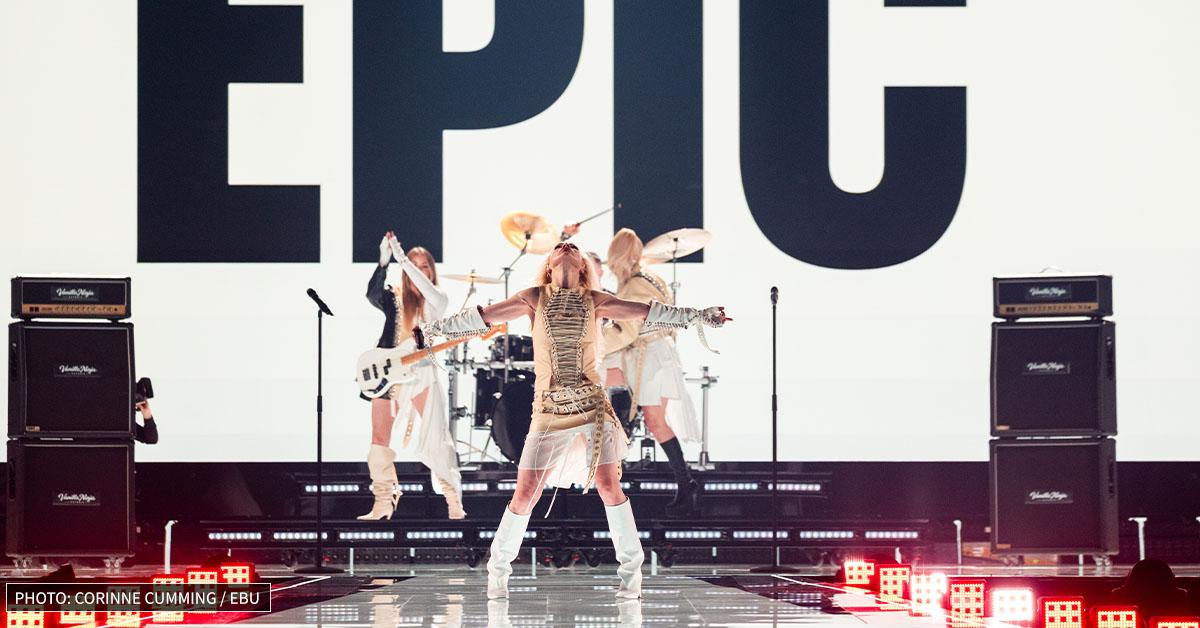
“Too Epic To Be True” is the song that was performed by the girl group Vanilla Ninja, which represented Estonia as song number 9 in the first semi final on May 12th, in Vienna, Austria. The song reached 11th place in the semi final with 79 points.
The song was written by Estonian composer Sven Lõhmus, who wrote many songs that represented Estonia at Eurovision in 2005, 2009, 2011, 2017, and also the song that represented Estonia at the Junior Eurovision Song Contest in 2024. The song is performed entirely in English.
Eurovision 2027: This will be Estonia’s 32st participation in Eurovision. Estonia joined the contest in 1994 and achieved its best result in Eurovision 2001 when singers Tanel Padar, Dave Benton and 2XL, won first place with the song “Everybody”.
Email: [email protected]
Phone: +972-53-9514754
A writer and content creator with a strong specialization in the Eurovision scene, particularly across Eastern Europe and post-Soviet countries. His work highlights the artistry, storytelling, and cultural variety that define the contest, offering readers a deeper look into both established performers and emerging voices.
As a skilled translator and polyglot, he brings a unique linguistic and cultural understanding to his analysis and coverage..