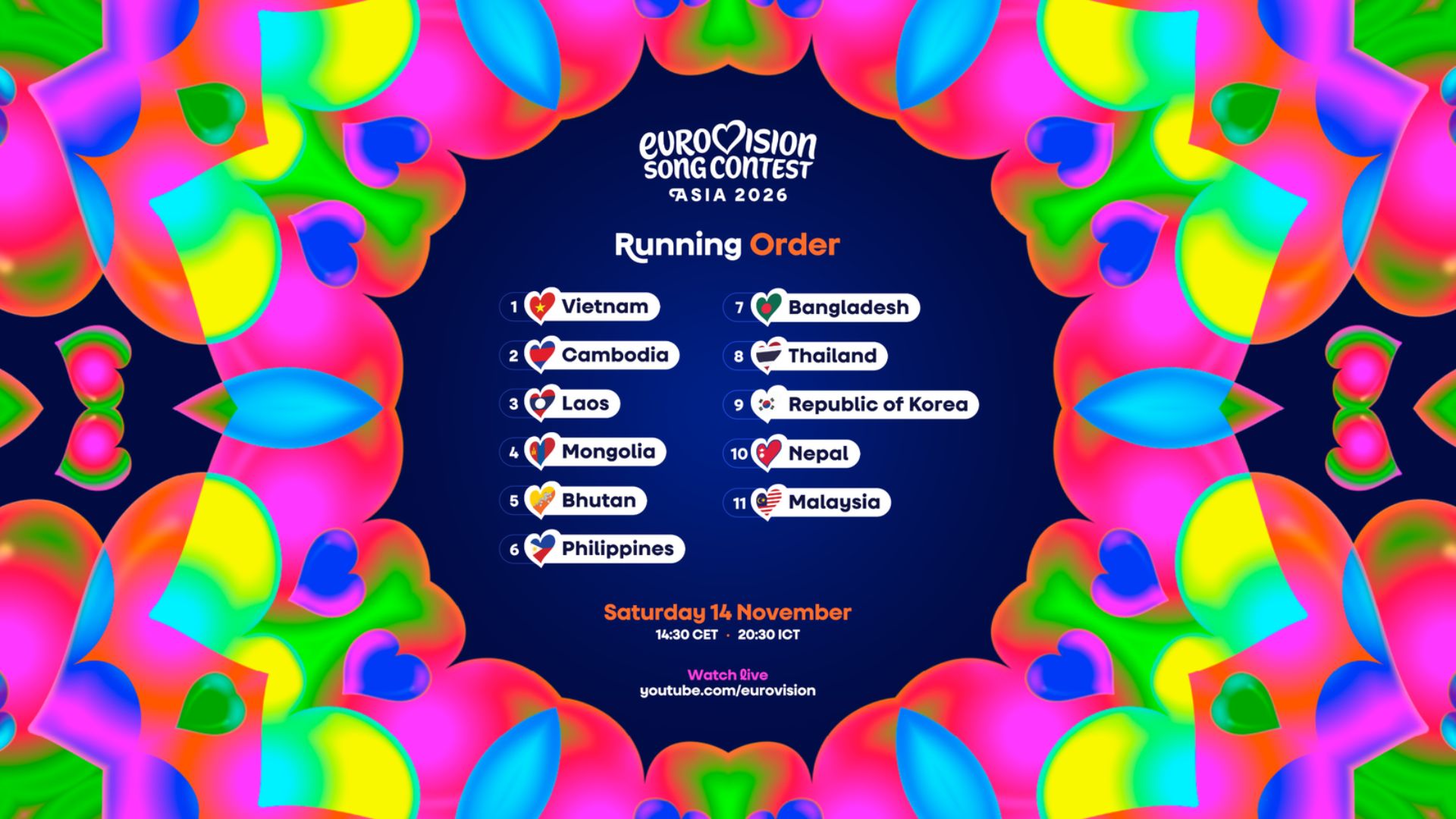
Vote Now! On Saturday, November 14th, the first-ever and historic edition of Eurovision Asia 2026 will kick off in Bangkok.
The Eurovision Asia 2026 will take place on Saturday, November 14th, hosted in Bangkok, Thailand. Taking place for the first time this year and designed for countries across the Asian continent, this will mark the inaugural edition of the brand-new spin-off contest created by the Eurovision family.
A total of 11 countries will compete in the upcoming contest: Vietnam, Cambodia, Laos, Mongolia, Bhutan, Philippines, Bangladesh, South Korea, Nepal, Malaysia, and the host country Thailand.
Listen to the songs, get into the vibe, and cast your vote. Who should be the first grand winner of Eurovision Asia?






Help us discover who should triumph at Eurovision Asia 2026!
The 11 Competing Entries (by running order):Click on the song title to listen!
-
Vietnam: Tóc Tiên with “Em Tiên“
-
Cambodia: Monetrey with “I Let You Go“
-
Laos: Thinla with “BAE“
-
Mongolia: Beck with “Without You“
-
Bhutan: Nyendra with “Lhayi Semo“
-
Philippines: Carmelle with “Sobra-Sobra“
-
Bangladesh: Beatmosphere with “Tumi Ele“
-
Thailand: Mang x Daou with “Aroma“
-
South Korea: Junhee with “Deep Dive“
-
Nepal: Pratik Himal Rai with “Ananta Maya“
-
Malaysia: Aina Abdul with “Bluest Sky“
All You Need to Know About Eurovision Asia
Eurovision Asia is an official expansion project of the Eurovision brand outside the borders of Europe, launched in collaboration with the European Broadcasting Union to mark the 70th anniversary of the original contest. The first-ever competition will take place on November 14, 2026, at the One Bangkok Forum arena in Thailand, hosted by media figures Woody Milintachinda and Cindy Bishop. This historic edition will feature 11 countries: Thailand, South Korea, Vietnam, Philippines, Bangladesh, Mongolia, Nepal, Laos, Bhutan, Malaysia, and Cambodia.
Unlike the European format, the contest in Asia operates under a centralized production model in collaboration with Voxovation, which subsidizes the selection process in various countries to allow participation for nations with limited budgets. Additionally, the winning country will not automatically host the contest the following year but will instead be invited to perform as a guest artist at the traditional Eurovision. The voting system has also been adapted for the continent and is based entirely on a unified, free digital platform that combines televoting with professional juries, giving unprecedented decisive power to the international audience through the “Rest of the World” voting.

Email: [email protected]
Phone: +972-50-9441919
Writer and content creator at EuroMix, providing cultural insights into the world of Eurovision. Talor is a second-generation Eurovision enthusiast who grew up attending family viewing parties. The 1999 Eurovision, at just five years old, was the event that shaped his love for the contest. He holds a BA degree in Culture – Creation and Production, and his articles combine academic knowledge with a passion for pop and trash, appreciating humor and clever references in the competition’s songs. He specializes in cultural and social analysis, offering in-depth commentary.
Outside the Eurovision world, Talor works as an independent content and media manager.