Montenegrin national broadcaster RTCG confirms Montesong 2027, publishing competition regulations, jury thresholds, and submission rules for Burgas.
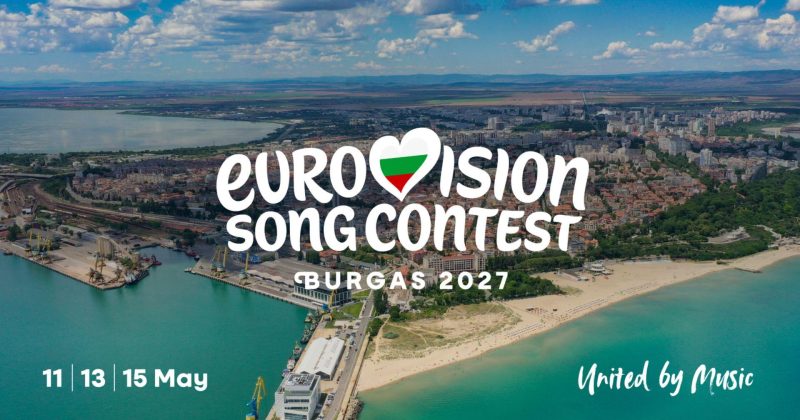
Montenegro has officially initiated preparations for its participation in Eurovision 2027: Montenegrin national broadcaster RTCG has confirmed that it will once again select its entry via the national selection “Montesong 2027”, formally publishing the updated competition regulations. The detailed document establishes the eligibility conditions, song screening procedures, and the professional evaluation scoring mechanism. Under the official regulations, up to 16 songs will compete on stage in the grand final of “Montesong 2027”, with the winning artist and song securing the ticket to represent Montenegro at Eurovision 2027, scheduled to take place this coming May in Burgas, Bulgaria.




Open to Global Songwriters – Traditional Physical Submission Required
One of the standout provisions in the regulations concerns international participation: every songwriter and composer is permitted to submit up to two entries to the selection committee, with no restrictions regarding the nationality or citizenship of the creators – a move that encourages artistic collaborations between Montenegrin and international talent. In accordance with European Broadcasting Union (EBU) rules, all submitted entries must be entirely original compositions that have never been commercially released or publicly performed prior to the contest.
Alongside the open international policy regarding songwriting, the submission procedure maintains a strict and traditional operational standard: applicants must deliver their entries physically to RTCG headquarters in the capital, Podgorica. Materials must be submitted on a USB flash drive, accompanied by the required documentation and five printed copies of the lyrics.
Scoring Breakdown: 75-Point Minimum and Internal Selection Clause
The initial screening of submitted songs will be conducted by a dedicated expert committee appointed by RTCG, consisting of at least five leading professionals from across the music industry. The committee members will evaluate each entry based on three distinct criteria, adding up to a maximum total of 100 points:
-
Composition and harmony: Up to 50 points.
-
Lyrics: Up to 30 points.
-
Production potential: Up to 20 points.
For an entry to qualify for the final competition lineup, it must surpass a strict professional benchmark, earning an average score of at least 75 points from the committee members.
Furthermore, the regulations include an important safety provision: in the event that none of the submitted entries reaches the mandatory 75-point threshold, national broadcaster RTCG reserves the full right to cancel the live broadcast of “Montesong 2027” and proceed with an internal selection of the artist and song for Eurovision in Burgas.
Submission deadlines and the precise date of the national final broadcast are expected to be announced by the national broadcaster in due course. EuroMix will continue to closely follow and report on all dates, artists, and developments on Montenegro’s path toward Eurovision 2027!
Montenegro in Eurovision: The Black Mountain and the Black Sheep
The upcoming performance in Burgas will mark Montenegro’s 15th participation in Eurovision as an independent nation. The Eurovision Song Contest remains one of the most-watched television broadcasts in the world, with the latest edition held in Austria drawing no fewer than 131 million viewers worldwide. The EuroMix editorial team will continue to follow and provide updates as soon as the national broadcaster opens the song submission window.
Montenegro is considered one of the most struggling nations in the contest, having qualified for the grand final only twice across its 14 appearances – making it the country with the fewest final appearances aside from Andorra. In its debut participation in 2007, Montenegro sent singer Stevan Faddy to Helsinki with the song “Ajde, Kroči” (in English: “Come On, Step In”). In its very first attempt, the country experienced the harsh reality of the semi-final stage, finishing in 22nd place with just 33 points. The country also failed to qualify in 2008 and 2009, and was absent from the contest in 2010 and 2011.
In 2012, Montenegro returned to the contest but failed to reach the final for a fourth time. The following year, the group Who See alongside Nina Žižić also ended their journey in the semi-final stage. However, renewed hope arrived in 2014 when Sergej Ćetković and his song “Moj Svijet” (in English: “My World”) advanced to the grand final, securing 19th place. One year later, singer Knez brought Montenegro to the final for a second consecutive year, reaching 13th place with “Adio” (in English: “Goodbye”) – marking Montenegro’s best result in the contest to date.
A decline began in 2016, with Montenegro ending its run in the semi-finals in Stockholm, Kyiv, Lisbon, and Tel Aviv. Montenegro was absent from Eurovision 2020 and Eurovision 2021 due to financial reasons. A comeback attempt at Eurovision 2022 also ended without a final spot, as Vladana Vučinić finished 17th in her semi-final with 33 points. Financial difficulties caused further absences in 2023 and 2024 before Montenegro returned in 2025, where it failed to qualify once again. At the recent Eurovision 2026 in Vienna, Montenegro was represented by Tamara Živković with “Nova Zora” (in English: “New Dawn”), where the singer finished 13th in the first semi-final with 71 points and missed out on the grand final.
Montenegro in Eurovision 2026
“Nova Zora” (in English: “A New Dawn”) is the song that was performed by Tamara Zivkovic in the first semi-final of Eurovision 2026 in Vienna. Tamara failed to qualify and finished 13th with 71 points.

Email: [email protected]
Phone: +972-50-9441919
Neta Geffen is a respected journalist at Euromix, Israel’s leading news site for Eurovision coverage. Since 2010, Neta has been closely following the Eurovision Song Contest, bringing with him extensive experience, profound knowledge, and a broad understanding of the history, politics, and cultural influences that shape the event every year.
Neta publishes articles, analyses, and up-to-date reviews on all Eurovision developments, including musical trends, format changes, political influences, and audience reactions across Europe and Israel. Thanks to a deep connection to the contest’s history, Neta provides readers with wide-ranging context—from the impact of political events on results, to in-depth analyses of songs and languages within the competition. Neta specializes particularly in the Eurovision rock genre, Balkan ballads, and native language entries, with a special focus on Italian and Greek songs.