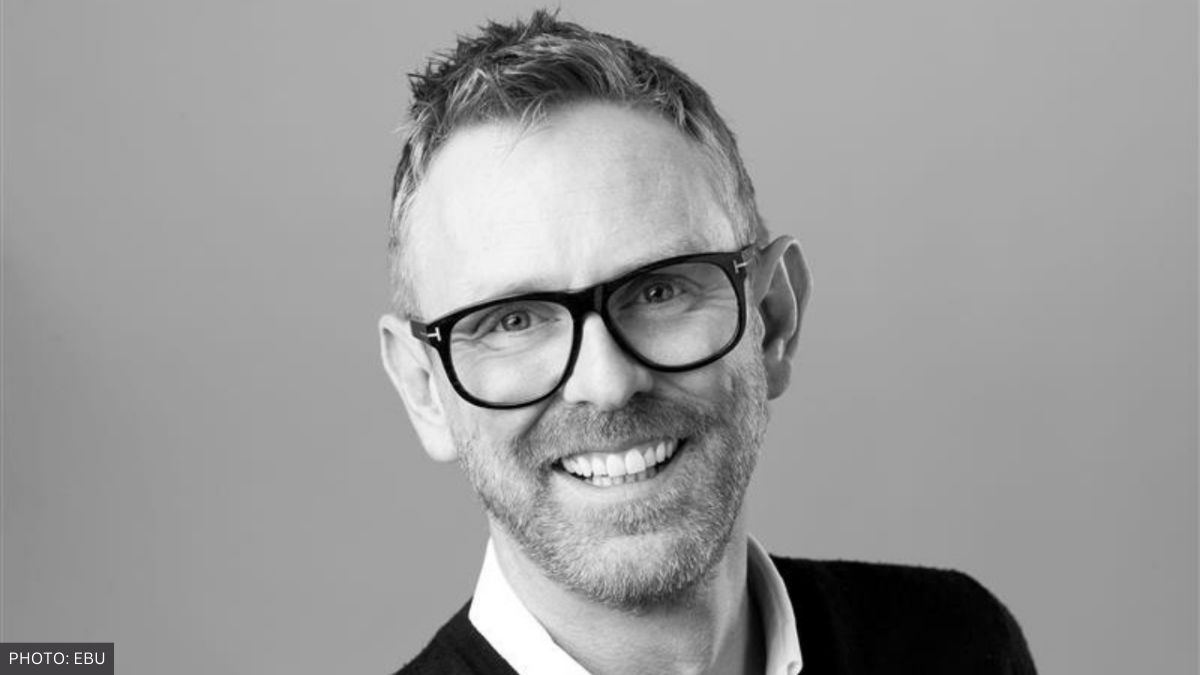
Eurovision 2025’s director reveals his stance on Israel’s participation, which countries are working on local versions, and whether the Middle East is part of the plan.
As final preparations wrap up for the 69th edition of the Eurovision Song Contest in Basel—with a breathtaking 350m² stage featuring Switzerland’s iconic peaks—the contest’s new director, Martin Green, is already mapping out the next big revolution: international versions of Eurovision around the globe. In an exclusive interview, Green unveils details about global stages, new formats, and the future of the contest: are we entering a new era of Eurovision?
A Global Vision: From India to Canada?
As final preparations wrap up for the 69th edition of the Eurovision Song Contest in Basel—with a breathtaking 350m² stage featuring Switzerland’s iconic peaks—the contest’s new director, Martin Green, is already mapping out the next big revolution: international versions of Eurovision around the globe. In an exclusive interview, Green unveils details about global stages, new formats, and the future of the contest: are we entering a new era of Eurovision?
The idea of expanding Eurovision beyond Europe has been circulating for years, and as revealed exclusively by Deadline, regions like the Middle East and North Africa (MENA) as well as India are now considered serious candidates.
These are markets with very young populations, and the potential for a family-friendly music competition appears promising. Recently, Canadian company Insight also told Deadline that it continues to work on a local Eurovision version, which has been discussed for years. Such new editions would be categorized as format deals within the television industry.
I find it fascinating that this format was created 69 years ago and is perfect for the modern age,” says Green. “We remain one of the few live linear TV events in the world, and at the same time—we’re a fantastic gift to digital platforms.” He adds: “It’s easy to see how this format can be replicated globally.”
Not Just Music – A Political Statement?
Eurovision’s motto—“United by Music”—has always emphasized connecting people, but it’s clear that the event is never fully detached from political realities. This year, the Irish national broadcaster called for a discussion on Israel’s participation, and dozens of former contestants signed an open letter urging the organizers to ban Israel.
Green responds carefully yet firmly: “We’re not immune to what’s going on in the world, nor should we be,” he says. “But I do think there’s a place, particularly in sports and entertainment, for major events that aim—even if just for a moment—to step aside. This is a space where we can unite and enjoy ourselves, but also send a message about what the world could be, rather than what it is right now.”
Innovations in Basel: Switzerland’s Peaks Take Center Stage
This year, Eurovision returns to where it all began—Switzerland. The last two cities to host were Liverpool and Malmö, but now Basel steps into the spotlight with an especially festive atmosphere. “They’ve closed streets. They’ve got a fantastic Eurovision village. I think there’s going to be a real party atmosphere—they’ve put a lot of effort into celebrating the fact that the first Eurovision was held here. It really feels like it’s come home,” Green says.
This year’s stage features Switzerland’s famous mountain ranges, including tributes to the Jura Mountains, the Alps, and of course the iconic Edelweiss flower. “It’s a really interesting set design. I hope that in the future, when people look back, they’ll say: oh yes, that was the Basel Eurovision,” Green notes. According to him, after years of high-tech LED-heavy sets, there’s now a return to something more classic: “You’re seeing a trend toward more traditional set design. You see it in rock and roll too—look at Taylor Swift’s tour, where she had an entire house on stage.”
What’s Next?
Green is already looking ahead to the 70th anniversary of Eurovision next year—and even beyond. “I think that in 70 years, we’ll see another continent celebrating its own Eurovision anniversary,” he says with a smile.
“173 million people watched the contest last year, and half a billion connected with us online,” he notes. “That’s a clear indicator of genuine global interest. We were broadcast on Peacock in the United States, and the audience there keeps growing every year. For me, that’s a sign of real appetite, and we need to grow accordingly.”
“We’re a strong brand with a proven legacy, and we know we can bring fans and viewers along with us,” he concludes. “But we need to do it right. I don’t want to do this at all costs—I want it to be the right move, built for the long term.”
Eurovision 2025: Dates and Time
The Eurovision Song Contest for 2025 will take place in May, as per tradition. Here are the exact dates:
-
First Semi-Final: Tuesday, May 13th, 2025
-
Second Semi-Final: Thursday, May 15th, 2025
-
Grand Final: Saturday, May 17th, 2025
For those wondering “What time will Eurovision 2025 air?” each event will begin at 21:00 CET.
Source: EBU
Eurovision 2025: This will be Switzerland’s 65th participation in the Eurovision Song Contest. Switzerland joined the competition in 1956, being one of the seven founding countries, and has won three times over the years. Its most recent victory was at the last Eurovision in 2025, with Nemo’s song “The Code.” This win follows Switzerland’s previous victory in 1988 with the song “Ne partez pas sans moi,” performed by international singer Céline Dion.