Switzerland: SRG stated that it supports the Israeli participation in Eurovision 2026, and will speak for it in the coming discussion this Thursday.
The discussion regarding the Israeli participation in Eurovision 2026 is expected to take place this Thursday in the General Assembly of the EBU in Geneva. The Swiss broadcaster SRG SSR, which already made it clear in July that it supports the Israeli participation, told again that: “The mission is ensuring the Israeli participation”.

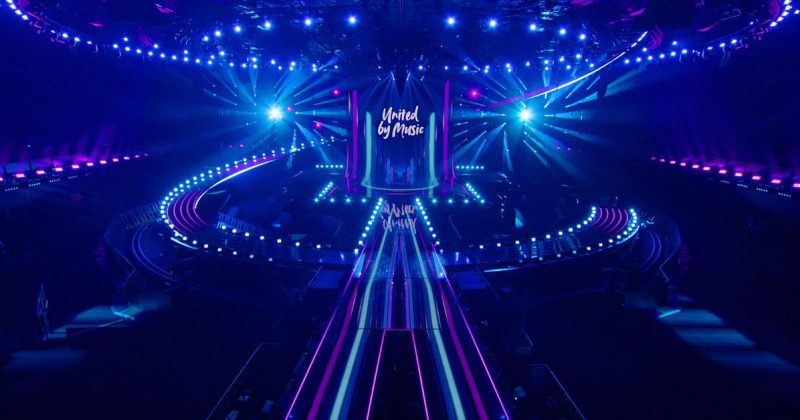






Switzerland is well known as a neutral country that doesn’t intervene in any political dispute, and is also the origin of the Eurovision Song Contest, which initially was made to heal the wounds of Europe after World War II, uniting by music. By supporting the Israeli participation in Eurovision 2026, Switzerland doesn’t really break its neutral policy, it actually maintains it, since the will to expel Israel from the Eurovision Song Contest is political for itself.
The firm Swiss support of Israel, as a neutral country, emphasizes that the Slovene, Icelandic, Spanish, Belgian, Dutch and Irish claims are invalid, and that there is no actual reason to expel Israel from the contest.
According to the Greek website Eurovisionfun: Alongside the strong supporters Austria, Switzerland and the Big-5 country Germany, a number of other countries do not wish for a vote regarding Israel’s participation. They include Greece, Cyprus, Bulgaria, Azerbaijan, Albania, Ukraine, and France.
Also some left-leaning countries that usually sympathize with the Palestinian cause like Norway and Denmark, said that they don’t intend to take the assembly for a vote regarding the participation. Denmark has even said that it will not vote against Israel if the discussion comes to a vote eventually.

Four countries—Ireland, Spain, Slovenia, and the Netherlands—previously threatened to withdraw from Eurovision 2026 if Israel were allowed to compete. The Netherlands even declared it would not participate alongside Israel “even in the event of a complete ceasefire in Gaza.” In addition, Iceland hinted at the possibility of withdrawal but never made an official declaration, while Belgium announced it would wait for Israel’s final participation approval before deciding its own course.
Slovenia and Spain have made some concrete steps towards the supposed withdrawal, while Iceland took the other way and will supposedly participate in 2026 alongside Israel. The other countries are yet to make any steps towards any direction.
The final decision on Israel’s participation may still depend on developments in the political and security arenas. While the ceasefire has temporarily reduced pressure on Israel’s participation, renewed conflict in Gaza could again shift the situation. In the meantime, the debate surrounding Israel’s presence in Eurovision continues to stir tension across Europe, placing Eurovision 2026 before one of the most significant tests in its history—whether it can uphold its apolitical character and cultural values or succumb to external pressures.
Switzerland at Eurovision 2025
“Voyage” is the title of the song performed by Zoë Më, who represented Switzerland in the grand final of Eurovision 2025, held in Basel, Switzerland. Switzerland finished tenth in the final with 214 points – all awarded by the jury. Switzerland ranked second among the juries, but received last place from the public, with zero points.
Since the change in the selection process in 2019, Switzerland has consistently achieved relative success and has regularly qualified for the grand final of the contest.
Eurovision 2025: This was Switzerland’s 65th participation in Eurovision. Switzerland joined the contest in 1956, was one of the seven founding countries, and has won three times over the years. Switzerland’s most recent victory was at the last Eurovision, 2025, with Nemo and the song “The Code”. This win follows Switzerland’s previous victory in 1988 with the song “Ne partez pas sans moi”, performed by the international singer Céline Dion.