
Following the Geneva conference: Belgian-Walloon national broadcaster RTBF confirmed participation in Eurovision 2026 in Vienna, Austria, while issuing a controversial statement regarding the situation in the Gaza Strip.
Belgian-Walloon national broadcaster, RTBF has confirmed that the country will participate in Eurovision 2026, to be held in Vienna, Austria. Belgium becomes the 33rd country to express interest in joining Eurovision 2026, following following Albania, Australia, Azerbaijan, Bulgaria, Croatia, Cyprus, Czechia, Denmark, Estonia, Finland, France, Germany, Greece, Israel, Italy, Latvia, Lithuania, Luxembourg, Malta, Moldova, Montenegro, Norway, Poland, Portugal, Romania, San Marino, Serbia, Sweden, Switzerland, Ukraine, the United Kingdom, and the host country, Austria.



Belgium Before the Conference
Until now, Belgium’s position appeared very inconsistent. The country confirmed its participation on July 8th but withdrew the statement only few days later. In August, reports even suggested that Belgium had already chosen its representative for Vienna, though the broadcaster quickly denied the rumors even when another familiar name associated with representing Belgium. On September 12th, Belgium decided to end the rumors and await the conference outcome, held yesterday (Thursday) in Geneva.
As we can recall, the conference results approved the new rules for Eurovision 2026, set for Vienna, Austria, by majority vote, canceling the vote on Israel’s participation and deciding that Israel will officially participate in the contest. Belgium ranks among countries opposing Israel’s participation, with the Belgian-Flemish broadcaster VRT leading a clear anti-Israeli line. Fortunately, the Belgian-Walloon national broadcaster RTBF takes the reins this year, known as somewhat more moderate and balanced toward Israel compared to its counterpart.
Unlike The Netherlands, Spain, Ireland and Slovenia, which rejected the democratic outcome against them and withdrew, Belgium confirms its participation and will compete in Vienna – but with sharp statements against Israel.
Jean-Paul Philippot, chairman of the Belgian-Walloon national broadcaster RTBF, voiced criticism of the EBU’s conduct in recent years:
“Our participation is therefore accompanied by a clear stance to condemn obstacles to freedom of information, to demand protection for all citizens and journalists, and to ensure their safe presence in the field. Because culture is never entertainment detached from reality. Because public service has a duty to remain faithful to humanity, editorial independence, and freedom”.
He added that the contest’s values matter but cannot exist without absolute independence:
“The Eurovision Song Contest is one of those unique spaces where diversity, inclusion, and artistic freedom converge. Participating in Eurovision 2026 cannot be done without looking at the world as it is, and without remembering that the duty to provide information must be carried out with absolute independence; and that giving citizens the tools to understand the challenges facing the world is a vital democratic foundation”.
He further noted that the RTBF believes its coverage during the contest will help “remind people of the challenges and tragedies these peoples face”.
Philippot addressed the rules critically regarding Israel, stating the Walloon broadcaster will support the new rules but, like its Flemish counterpart, claims more must be done, as the EBU raises Belgian concerns over Gaza events, with heavy fears about protecting civilians and journalists and ensuring full access to document the situation. This issue itself is unrelated to the contest and overshadows Belgium’s true intent to play by the rules for a third consecutive year.
Belgium in Eurovision: Strobing Yellow Light

Belgium has not announced how it will select its Eurovision 2026 representative, but it is likely to opt for an internal selection of both artist and song, as the Walloon broadcaster has consistently done since 2015, unlike its Flemish counterpart, which used national finals for 2023 and 2025.
Despite being one of the contest’s seven founding nations, Belgium struggles significantly, achieving victory only once in 66 participations, marking 40 years this year since singer Sandra Kim‘s sole win with the song “J’aime La Vie” in 1986. A song that set an unbreakable record – the youngest winner in Eurovision history, as she was 13 years and 7 months old at the time of her victory. Belgium reached the top five just eight times – first place once, second place twice (1978 and 2003), fourth place four times (1966, 1982, 2015, and 2017), and fifth once (1958) – while landing in positions 6th-10th another 16 times.
The relegation system did not favor Belgium, yielding low results on the edge of elimination or actual elimination. Its lowest point came early, when 1993 representative Barbara Dex became iconic for all the wrong reasons, despite finishing last, an annual award for the worst-dressed contestant named after her.
Belgium missed the contest three times (1994, 1997, and 2001). With semi-finals, it proved a struggling nation again
Belgium qualified for only 8 finals out of 21 attempts since 2004, including a long non-qualification streak from 2004-2009 and several shorter ones. The eight finals were in 2010, 2013, 2015-2017, and 2021-2023, peaking with fourth places in 2015 with Loic Nottet and in 2017 with Blanche.
Recently, every selection method has backfired: via national final, Belgium failed to qualify for the Eurovision 2025 grand final with “Strobe Lights” by Red Sebastian, via internal, it also failed when Mustii‘s Song “Before The Party’s Over” failed as well and his party was over before it even started.
Belgium at Eurovision 2025:
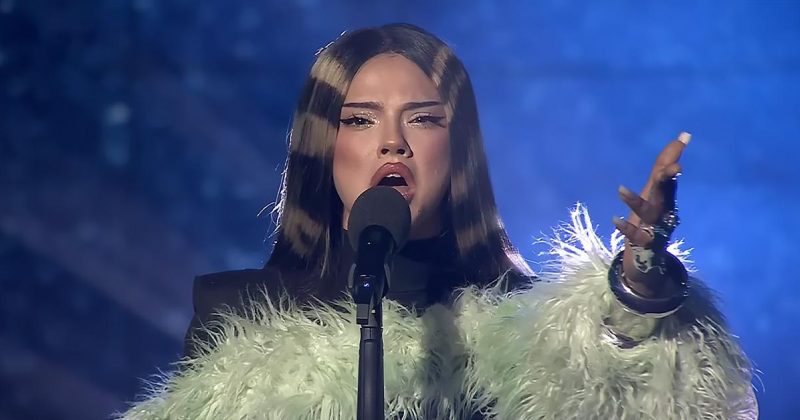
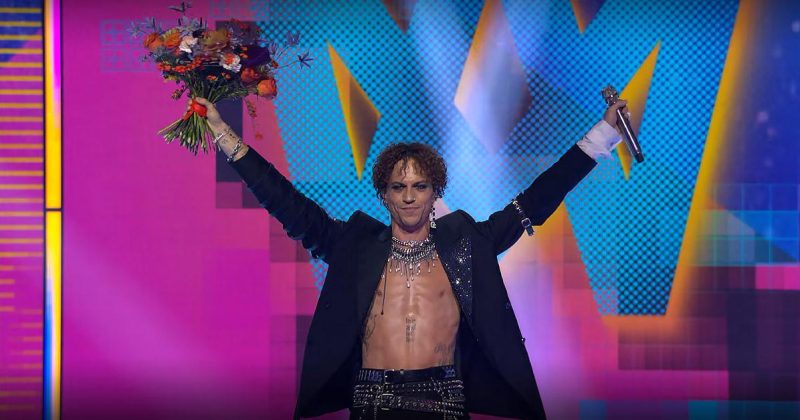
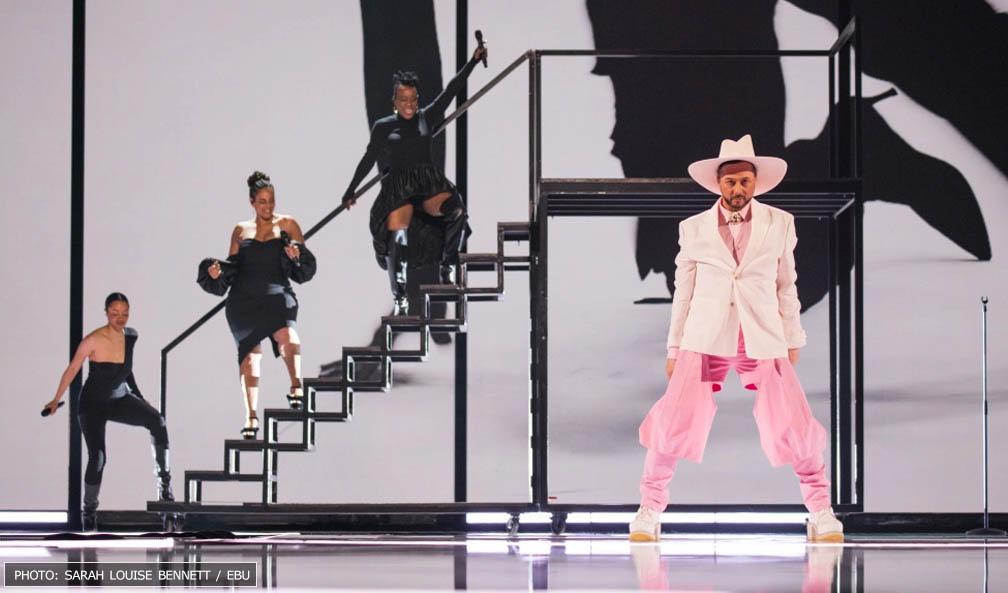
“Strobe Lights” is the title of the song performed by Red Sebastian, who represented Belgium in the first semi-final of Eurovision 2025 in Basel, Switzerland. Belgium did not qualify for the grand final, marking the second consecutive year of non-qualification. Belgium finished 14th out of 15, earning only 23 points.
Eurovision 2026: This will be Belgium’s 67th participation in the contest. Belgium joined Eurovision in 1956 as one of its seven founding nations. The country’s best result came in 1986, when Sandra Kim won first place with “J’aime la vie”.

Email: [email protected]
Phone: +972-50-9441919
Ilay Gaist is a leading Israeli content creator and writer specializing in the Eurovision Song Contest. He is a well-known commentator with extensive expertise in the contest’s history, rules, and dynamics. His passion for Eurovision drives him to deliver rich, professional, and innovative content to his audience.
Ilay holds a bachelor’s degree in Arabic and has a multilingual background. He also engages in cultural research, with a particular focus on global culinary traditions and the evolution of local cuisines around the world.