
In a candid interview, Klavdia reflects on political tensions at the contest, explains her choice to stay neutral, and emphasizes the importance of unity and music above all
In an interview with the television program “Tet A Tet”, Klavdia, Greece’s representative at Eurovision 2025, shared her personal experiences from the contest in Basel and admitted that the atmosphere this year was particularly tense. According to her, the political developments and the war in the background directly affected the backstage environment, creating a sensitive situation in which every gesture or interaction risked being interpreted as a political statement.
Between Music and Politics
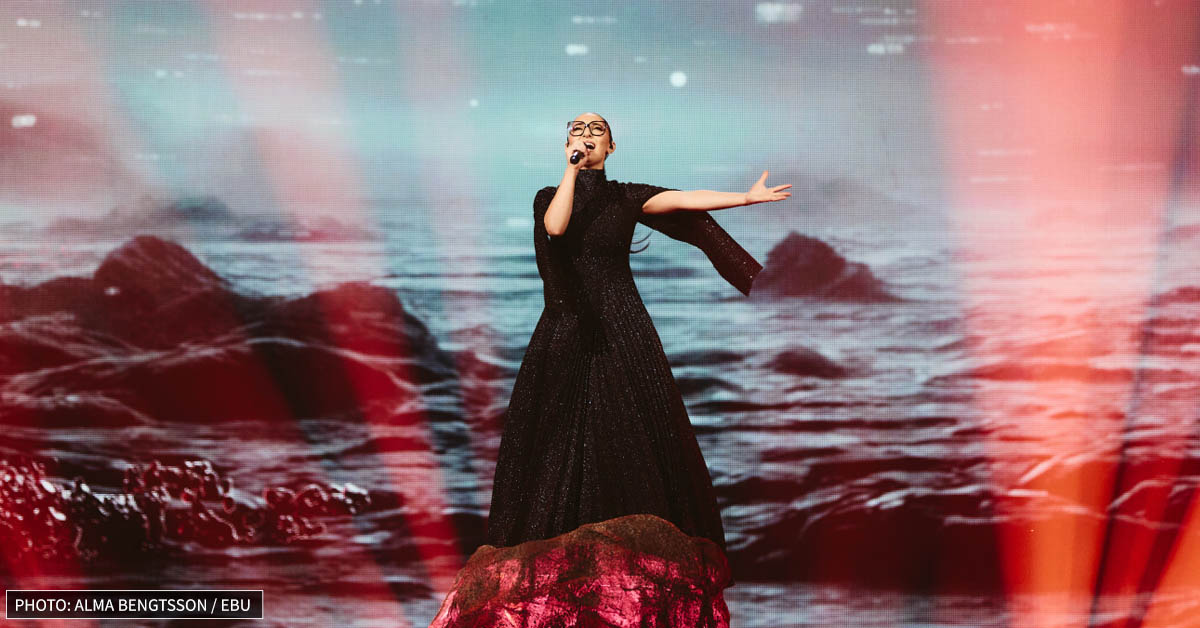
Klavdia confirmed in the interview what many experienced firsthand in Basel. The singer did not hide the fact that the atmosphere was unusually tense. Political developments and the war had a significant impact on the competition, creating discomfort among participants. As she explained, every movement could be misinterpreted, and artists found themselves constantly walking a tightrope:
“It made the whole atmosphere difficult for all contestants, because suddenly Eurovision took on a very heavy political tone. It was connected to an extremely serious political event – the war. It was hard for everyone to know how to behave. If we didn’t greet the Israeli delegation, we would be seen as the bad ones, as if we were excluding people who hadn’t done anything to us. If we did greet them, it would automatically be interpreted as support. We didn’t know how to act”.
Unlike some contestants who chose to take an explicit political stance, Klavdia explained that she preferred to avoid doing so.
“Many contestants chose to take a political position. I wanted it to remain a celebration of music and I tried to protect that, even though there would always be comments. There is never a perfect scenario. I chose to be equally polite and friendly to everyone”.
According to her, this decision was not an easy one, but she believed that maintaining neutrality and mutual respect was the right way to handle such a charged situation.
Coping With Criticism and Media Reactions
During the interview, the singer also addressed the criticism she received after the contest, clarifying that she was prepared for it as an integral part of public exposure. She noted that it was not the criticism itself that troubled her, but sometimes the manner in which it was expressed. Nevertheless, she emphasized that she remained focused on her goal and did not allow background noise to influence her actions. She added that the television world is often driven by ratings considerations, and that extreme or provocative positions tend to receive more attention than balanced discourse.
A Message of Unity After the Contest
At the end of the interview, the singer conveyed a clear message: even in times of global tension, there is room to preserve cultural spaces whose purpose is to bring people together. According to her, the Eurovision experience proved how music can serve as a bridge between different audiences, even when opinions are divided. This approach, rooted in respect, restraint, and unity, strengthened her standing in the eyes of many and set a high standard for future contestants – not only musically, but also in terms of the responsibility that comes with standing on the world’s biggest stage. This stance is far from self-evident, especially in a period when politics plays an increasingly prominent role in the contest.
Greece at Eurovision 2025
“Asteromáta” (translated as: “Eyes of Stars”) is the song performed by Klavdia, who represented Greece in the grand final of Eurovision 2025. Greece finished sixth in the grand final with 231 points.
Eurovision 2026: This will be Greece’s 46th participation in Eurovision. Greece joined the competition in 1974 and achieved its best result in Eurovision 2005 when singer Helena Paparizou won first place with the song “My Number One”.

Email: [email protected]
Phone: +972-50-9441919
Neta Geffen is a respected journalist at Euromix, Israel’s leading news site for Eurovision coverage. Since 2010, Neta has been closely following the Eurovision Song Contest, bringing with him extensive experience, profound knowledge, and a broad understanding of the history, politics, and cultural influences that shape the event every year.
Neta publishes articles, analyses, and up-to-date reviews on all Eurovision developments, including musical trends, format changes, political influences, and audience reactions across Europe and Israel. Thanks to a deep connection to the contest’s history, Neta provides readers with wide-ranging context—from the impact of political events on results, to in-depth analyses of songs and languages within the competition. Neta specializes particularly in the Eurovision rock genre, Balkan ballads, and native language entries, with a special focus on Italian and Greek songs.