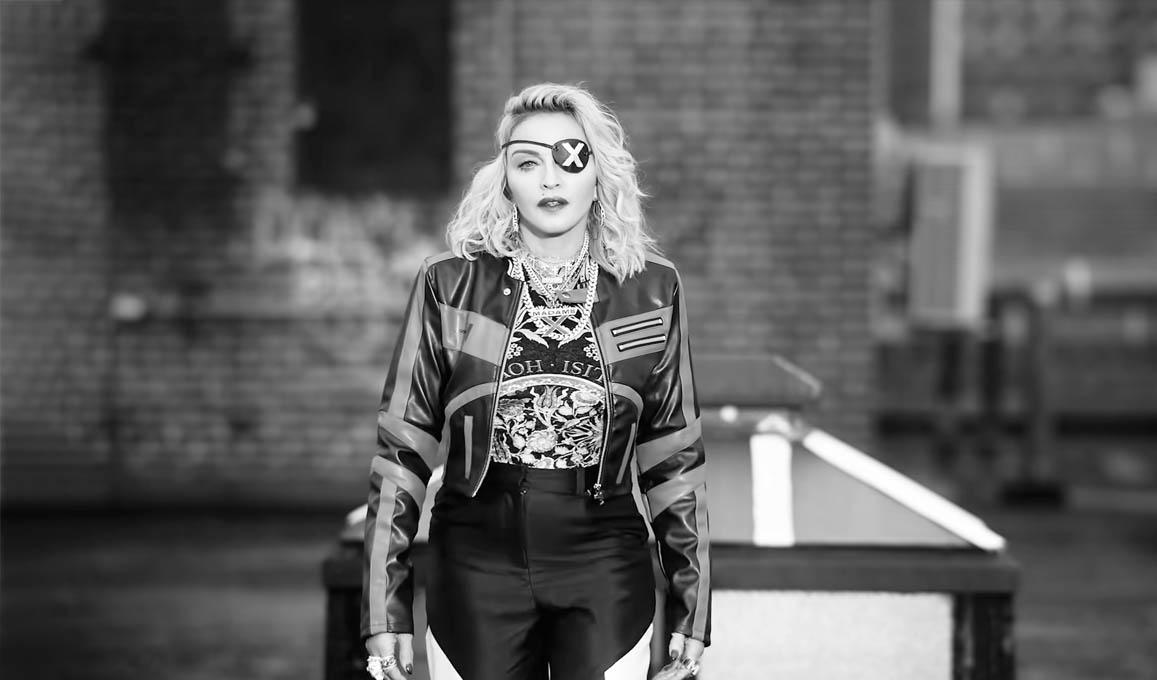
Will the Queen of Pop appear at Sanremo 2026? Reports suggest Madonna may guest star at Italy’s Eurovision selection following her recent Italian cover
In the past 24 hours, extensive speculation has surfaced regarding a possible guest appearance by pop singer Madonna at the Italian Eurovision selection, Sanremo 2026. This event will select the country’s representative for Eurovision 2026, held in Vienna, Austria. These rumors emerged after she released a full Italian version of the beloved hit by singer Patty Pravo, “La Bambola”. The singer, who is competing in the festival this year for the 11th time, published the cover for a campaign with the Italian fashion brand “Dolce&Gabbana”, creating a reimagined interpretation of the famous 1968 song.





According to the Italian news agency Adnkronos, the national broadcaster RAI is interested in hosting the singer. The proposal is currently on the desk of the festival’s artistic director, Carlo Conti, who is considering bringing the singer for a guest performance during one of the festival’s evenings. This possibility arises following a wave of positive social media reactions toward the singer due to the campaign, which even included praise from the original performer of the song.
Madonna and Sanremo: A Celebrated History
If the singer indeed participates in the Italian selection as a guest artist, it will not be her first appearance at the festival. In 1995, Madonna appeared as a guest at the Sanremo Festival with a performance of the song “Take a Bow”, which was accompanied by an unforgettable show that remains etched in the memory and hearts of the audience.
The singer also has a recognized history on the Eurovision Song Contest stage. In 2019, she participated in the main part of the Eurovision Grand Final, performing a medley of her most beloved hits.
Despite the numerous rumors, Madonna’s participation in the festival is not yet official. There are many unresolved issues before the American pop star of Italian descent can appear at the festival, including her busy schedule, as well as financing and advertising agreements.
Although the report is not yet official, the possibility is generating immense excitement among music enthusiasts and fans of the singer, who are eagerly waiting to discover if the Queen of Pop will indeed grace the festival stage.
Sanremo Festival 2026 Dates:
- February 24th – First Evening
- February 25th – Second Evening
- February 26th – Third Evening
- February 27th – Fourth Evening
- February 28th – The Grand Final
Italy at Eurovision 2025
“Volevo essere un duro” (in English: “I Wanted to Be Tough”) is the song performed by singer Lucio Corsi, which came second at the 75th edition of the Sanremo Festival. The song was written by the singer himself along with Tommaso Ottomano. This was the singer’s first-ever appearance at the festival. The song is performed in Italian. The song finished fifth in the grand final with 256 points.
Italy returns to the Eurovision Grand Final Top 5 after last year achieving “only” seventh place.
Eurovision 2026: This will be Italy’s 51st participation in Eurovision. Italy joined the contest in 1956, was one of the seven founding countries, and has won three times over the years. Italy’s most recent victory was at Eurovision 2021 with the song “Zitti e buoni” performed by the band Måneskin.

Email: [email protected]
Phone: +972-50-9441919
Maor Heumann has been writing about the Eurovision Song Contest and following it for over three decades. He has attended five contests and has found something to appreciate in almost every possible musical genre — from the sugary pop entries that finish last in the semi-finals to the quirky avant-garde pieces that even the competition’s juries struggled to connect with. He usually prefers original languages and songs with depth over Swedish-produced English clones — though he doesn’t promise to stick to that rule.
He grew up on the kibbutz of Sara’le Sharon, who instilled in him a love for music and created his first connection to the contest back in 1993 — before most of the current editorial team was even born.