For readers less familiar with the contest’s history, Fokas Evangelinos is widely regarded as a living “Eurovision legend” and a byword for staging success, and he also served as artistic director of Eurovision 2006 in Athens. He is behind some of the most iconic and victorious performances Europe has seen, including Greece’s win with Helena Paparizou in 2005 and Russia’s victory with Dima Bilan in 2008. In addition, he masterminded several unforgettable stagings that finished at the top of the scoreboard, such as Ani Lorak’s performance for Ukraine in 2008, the glass box concept for Farid Mammadov representing Azerbaijan in 2013, and the climbing LED-wall staging for Sergey Lazarev representing Russia in 2016.
In recent years he has returned to directing his home country’s performances on a regular basis. He was responsible for Marina Satti’s Eurovision 2024 staging, and just last year (2025) he directed the successful performance of Klavdia, who finished in an impressive sixth place with the song “Asteromata“. Beyond that, Evangelinos has directed many more artists and countries throughout his long Eurovision career.
Evangelinos, who has once again been appointed by the Greek national broadcaster (ERT) to direct the performance, spoke with great appreciation about the young representative: “Akylas is an exceptionally charismatic creature. I love him like my little brother, and I feel a need to protect him. Our concept for the performance is already complete and locked. We have sent the production team the full rehearsal plan, down to every detail, and now we are moving into practice and fine-tuning.”
From street singer to a pan-European spotlight
Evangelinos highlighted the unique path the young singer has taken: “Akylas deserves our full support, because he brings something completely different from what Greece has sent in the past. He’s a kid who used to sing on Ermou Street (the famous shopping promenade in Athens), and now the whole of Europe is about to get to know him.” The reference to the street underlines Akylas’ authentic journey – from anonymous busker straight to one of the biggest stages in the world, followed by millions of viewers across the continent.
“Videogame” concept on the Eurovision stage
The most intriguing detail to emerge from the interview concerns the visual concept we will see on stage. Evangelinos promised to preserve the singer’s authenticity and distinctive style: “I am not going to change his character. The visual ‘videogame’ style will remain, and we will focus on the journey he will experience on the Eurovision stage. I believe it is going to be magical. I believe in what we have created, and I want us to win.” At the end of the interview, Evangelinos dedicated warm and moving words to the memory of late Greek artist and actor Giorgos Marinos (Giorgos Marinos), with whom he had the privilege of working in the past.
“Even when it seems like Game Over, there is Try Again”: Akylas’ emotional tribute
The “videogame” concept Evangelinos spoke about was not chosen by chance; it is directly connected to the personal and profound message behind the song “Ferto“. In a moving Instagram post, Akylas revealed the meaning behind the music video and dedicated it to his mother: “When she was just 17, my mom had to travel from Georgia to Greece with a baby in her arms,” wrote Akylas. “Life was incredibly hard and money was always scarce, but she never gave up. She raised me and my sister, and to me she is a true hero. She taught me the most important lesson: to never give up.”
Akylas went on to explain the message he wanted to convey in the video: “No matter who you are, where you come from or what hardships you’ve faced. Be proud of who you are. Don’t let anyone take away your sparkle or make you doubt your talent. Keep fighting. Because even when it seems like everything is ‘Game Over’, there is always ‘Try Again’. Believe in yourself. Be unstoppable.”
The dedication to his mother is not new. In an interview he gave this February to Cypriot magazine “DownTown” after winning the Greek national final “Sing for Greece 2026”, Akylas said: “I dedicated the song to her because it contains part of my story – and my story begins with her. I wanted to make her proud. As I grew older, I understood the sacrifices, fears and vulnerabilities of our parents, who grew up in a conservative environment. They need their time, just like we need ours.”
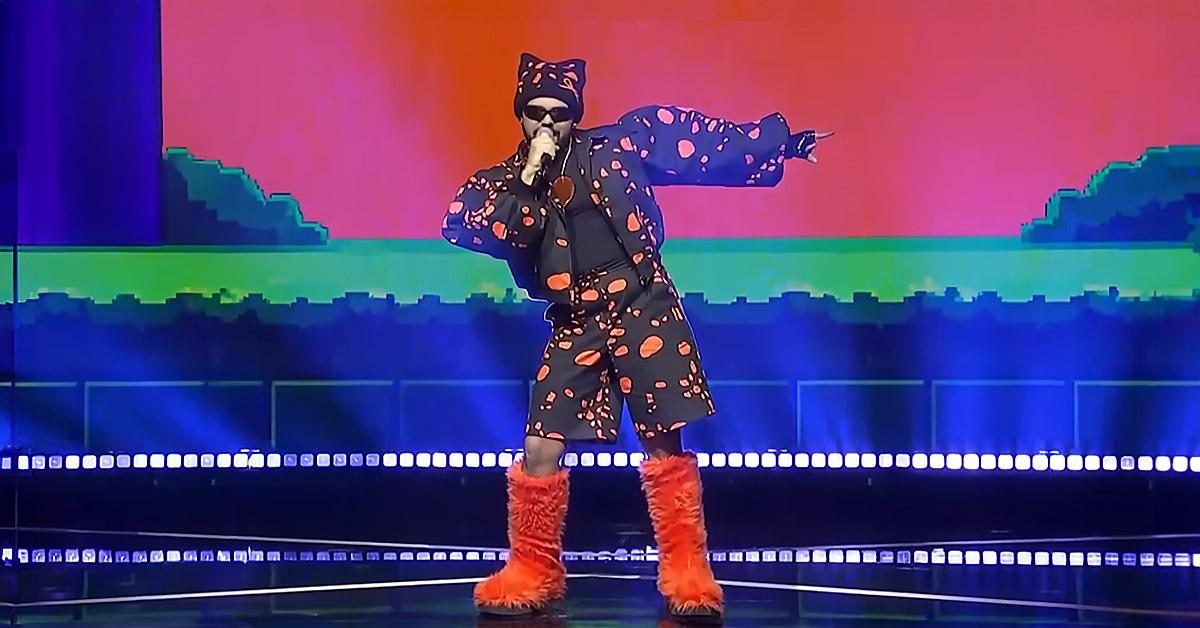 Akylas, whose full name is Akylas Mytilinaios, competed this year for the first time for a place at Eurovision – and clinched first place in the Greek national final. His road to the big stage is far from ordinary: he is the son of a mother who migrated from Georgia to Greece at the age of 17, and he began his musical journey as an anonymous street singer on Athens’ famous Ermou pedestrian avenue.
In recent years he has built a name for himself on the Greek indie scene as an up-and-coming pop singer, thanks to a unique persona and artistic identity that blend pop music, emotional lyricism and a queer-leaning edge. Throughout the national final season, Akylas was considered a leading favourite to win, both domestically and among international Eurovision followers. Data from betting platforms, YouTube and Spotify consistently and clearly pointed to his expected victory – a prediction that indeed came true in the grand final. Since the release of his Eurovision song “Ferto“, social media has been flooded with enthusiastic reactions, and many fans have drawn comparisons between the artist and song and Käärijä, who represented Finland and placed second at Eurovision 2023 with the hit “Cha Cha Cha”.