
Heading to Eurovision 2026: The countries that have never won are arriving on stage hungrier than ever. Just before things get underway, we checked which of them has the most realistic chance this year to make history and bring the trophy home for the first time.
The contest’s historical victory table has remained steady over the years. Israel, with four wins – the most recent being Netta Barzilai‘s “Toy” in 2018. Above it stand Sweden and Ireland, holding the record with seven wins each. However, behind these dominant nations hides a broad group of participants that have never once hoisted the trophy, some of whom have been competing for decades and have even come within touching distance of victory in the past.
The upcoming edition, set to take place in Vienna, Austria, provides a particularly intriguing snapshot. Betting tables suggest a trend of openness and new opportunities, but it is worth noting that the picture is still far from final. The rehearsal stages and the first encounter with the stage could shuffle the deck, completely shifting the betting landscape and catapulting one of these countries toward a historic first victory that will be etched into the contest’s golden list. We set out to check who the current top five countries are among all those yet to win.







A Kangaroo Leap to the Top
If there is any country determined to break its streak of “near-misses”, it is Australia. This year, the distant continent has brought out its biggest guns: megastar Delta Goodrem, performing the song “Eclipse“. As of now, the track sits comfortably at 5th place in the betting odds, generating significant buzz thanks to its powerful pop style and the proven vocal prowess of Goodrem – a beloved and well-known artist who has already cultivated a loyal European fan base over the years.
Expectations for Australia are particularly high given its impressive history in the contest, since joining in 2015, it has consistently secured a spot at the top. Its most remarkable achievement to date was in 2016, when Dami Im nearly made history in Australia’s second-ever appearance with the song “Sound of Silence“. She delivered a flawless vocal performance that earned her first place with the juries, and only the televote left her in second place overall, behind Ukraine.
his year, many are betting that with Goodrem’s charisma and her captivating song, Australia could hoist the trophy for the very first time.
A Mediterranean Fire
Cyprus, the record holder for the most appearances without a win, refuses to back down and continues to bet on catchy, addictive formulas. This year’s representative is Antigoni with the song “Jalla“, which currently holds steady at 10th place in the betting odds. The track blends modern pop with strong Mediterranean ethnic touches, a style that consistently captivates European audiences and brings the house down.
The choice of Antigoni, an artist with explosive stage charisma, reminds many of the incredible journey Eleni Foureira took in 2018 with the hit “Fuego“. That year, Cyprus wasn’t considered a frontrunner at the start, but once live rehearsals began in Lisbon, everything changed. Eleni’s electrifying performance caused her to skyrocket in the betting odds at the last minute, posing a real threat to Netta Barzilai’s top spot. The fear that Cyprus might overtake Israel due to its onstage energy lingered with fans until the results were announced, with Eleni clinching a historic second place, Cyprus’ highest achievement in the contest to date.
In Cyprus, there is hope that the energy of “Jalla” will manage to recreate the “rehearsal leap” effect, and perhaps this time, finally break through the first-place barrier and bring Eurovision to Nicosia in 2027.
Maltese Spell: Aidan Tries to Conquer Hearts
Malta, a country that always arrives with great ambitions and a true hunger for victory, is setting a particularly high bar this year, currently sitting at 11th place in the betting odds. This time, it is sending Aidan with the song “Bella“, a powerful and captivating ballad that emphasizes raw emotion and precise vocal delivery. In contrast to the upbeat tracks that have characterized the country in recent years, the choice of a ballad seeks to tug at the heartstrings of both the audience and the juries alike, aiming to recreate Malta’s greatest past successes.
Malta’s Eurovision history is filled with peak moments where it nearly touched the title, having reached the honorable second place twice. In 2002, Ira Losco charmed Europe with “7th Wonder“, losing the top spot by a razor-thin margin of just 12 points to Latvia, in a tense evening where the final decision came down to the wire. In 2005, it was Chiara who delivered a moving performance of “Angel” and repeated the feat, cementing her status as one of the greatest and most memorable divas in the contest’s history.
Fans and experts estimate that “Bella” has the potential to create an intimate and memorable moment on stage, one that will stand out against this year’s louder and more uptempo entries. If Aidan succeeds in conveying the song’s depth and emotion live, Malta could find itself climbing rapidly up the scoreboard. Just as its great representatives did in the past, on the path to that long-awaited first victory.
The Czech Crossroads: Žižka Aims for the Trophy
Czechia, a country that has begun taking the contest much more seriously over the past decade, currently stands at 12th place in the betting odds. Its representative is Daniel Žižka with the song “Crossroads“, a ballad with a unique character that is hard to find a parallel for in this year’s lineup. The song stands out thanks to the special atmosphere it creates, one that doesn’t rely on standard Eurovision formulas but rather on a distinct, artistic delivery.
Czechia marked its most significant turning point in 2018, when it sent a young, fresh, and charismatic style to the stage with Mikolas Josef. Until that year, Czechia had struggled time and again just to qualify for the final, but Mikolas changed the game. With the hit “Lie to Me“, he delivered a sweeping stage performance featuring memorable choreography and the energy of an international pop star. Despite a severe back injury during rehearsals that threatened to sideline him, he took the stage and earned his country an incredible 6th place, Czechia’s all-time best result, proving that with the right song and artist, it can beat even the most established powerhouses.
This year, Czechia is attempting to recreate that success with a completely different artistic direction. Žižka will need to provide a mesmerizing stage performance to break out from the top twenty and head toward the true summit, attempting to shatter the record Mikolas set eight years ago.
Bulgarian Dark Horse: Dara’s Energetic Comeback
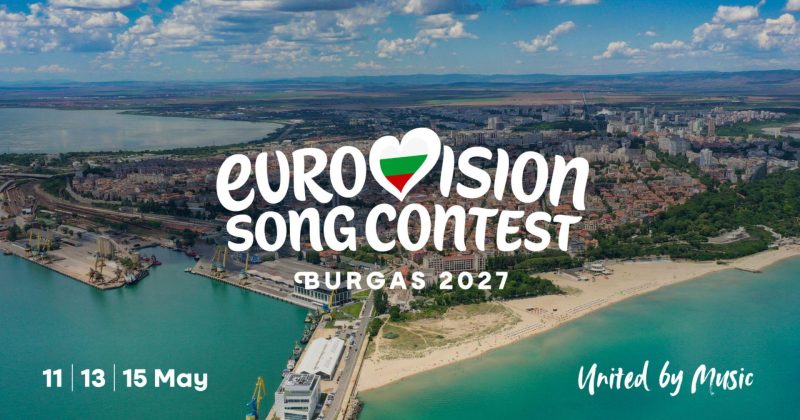
After an absence of several years from the big stage (since their last participation in 2022), Bulgaria is returning to the Eurovision family with renewed energy and a hunger for victory. The country, currently ranked 13th in the betting odds, chose to mark its comeback with a true party banger: the song “Bangaranga” performed by the star Dara. It features a sweeping rhythm designed to get the entire arena on its feet and declare that Bulgaria is back in the game in a big way.
Bulgaria has already proven in the past that it knows how to come within touching distance of the summit, with its peak recorded in 2017 with the historic second-place finish of Kristian Kostov and the song “Beautiful Mess“, That year, the tension in the green room was at its height and the evening was decided in the final seconds of the points announcement, as Kostov finished second in both the jury and televote rankings despite a phenomenal vocal performance, while Portugal clinched the grand victory.
This year, after an absence from the contest, Bulgaria returns with completely different energies. Although it currently stands slightly outside the top ten, Dara’s song is exactly the kind of track that can make a massive leap on grand final night thanks to the televote from home, which surely missed the Bulgarian flavor on the screen. If the stage performance is as powerful as the song itself, Bulgaria’s return could end in a first and historic win that would make up for the “near-miss” of 2017.
List of Countries Yet to Win Eurovision and Their Highest Achievements:
- Croatia: 2nd place (2024)
- Cyprus: 2nd place (2018)
- Bulgaria: 2nd place (2017)
- Australia: 2nd place (2016)
- Malta: 2nd place (2002 and 2005)
- Poland: 2nd place (1994)
- Romania: 3rd place (2005 and 2010)
- Moldova: 3rd place (2017)
- Armenia: 4th place (2008 and 2014)
- Albania: 5th place (2012)
- Czechia: 6th place (2018)
- Lithuania: 6th place (2006)
- Georgia: 9th place (2010 and 2011)
- Montenegro: 13th place (2015)
- San Marino: 19th place (2019)
So, who do you think will be the first to hoist the trophy? Only time will tell…
Eurovision 2026: the 70th edition of the contest will take place in Vienna, Austria, on May 12th, 14th, and 16th, 2026. The Wiener Stadthalle arena, which will host the event, is expected to accommodate around 16,000 spectators per show. The contest returns to Austria following the nation’s third historic win with the song “Wasted Love”, performed by JJ. It will be Austria’s third time hosting Eurovision, after previous editions held in the country in 1967 and 2015.

Email: [email protected]
Phone: +972-50-9441919
Writer and content creator at EuroMix, providing cultural insights into the world of Eurovision. Talor is a second-generation Eurovision enthusiast who grew up attending family viewing parties. The 1999 Eurovision, at just five years old, was the event that shaped his love for the contest. He holds a BA degree in Culture – Creation and Production, and his articles combine academic knowledge with a passion for pop and trash, appreciating humor and clever references in the competition’s songs. He specializes in cultural and social analysis, offering in-depth commentary.
Outside the Eurovision world, Talor works as an independent content and media manager.